


'Farm like your customers are watching you,” is the advice from Peter Fennessy, a partner in the Dunedin based agribusiness and technology consulting company AbacusBio.
'Customers want to know what they are eating and they often want to feel good about how it is produced, so they then want to get closer to your business. There are also examples of animal rights activists using drones to monitor what's happening on feed lots.”
New Zealand farmers can't ignore the demands, of international customers, for ethical farming practices and high food safety standards, he says.
These are likely to be among the many challenges facing farming in the future. Others include more volatility in the climate and in the market.
Economic instability, such as the global economic crisis, is a factor outside of farmers' control and there are bio-security concerns too, as borne out by the impacts of the vine disease Psa-V on kiwifruit.
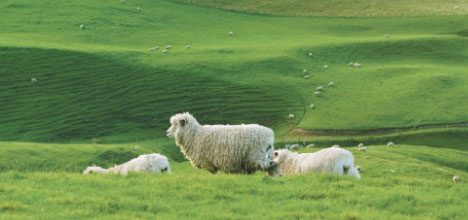
However, on-farm productivity is something farmers can do something about. New Zealand sheep farmers have recorded a massive increase in production in the last 25 years – and Peter believes they can continue to make significant gains.
Gains
Ewe lambing percentages have increased from about 100 per cent 25 years ago to 123 per cent now. During the same period hogget lambs, as a percentage of all lambs, have gone from virtually none to close to six per cent. Average lamb weight has increased by more than 35 per cent, and the weight of lamb sold per ewe shot up by about 85 per cent. Wool production was up by about three per cent. As a comparison, in the same period the average steer weight had increased by about four per cent; and milk solids per cow by about 31 per cent.
These gains in sheep performance are due to a combination of both genetics and farm management, and have led to an increase in productivity per ewe of 2.5 per cent every year for the last 25 years.
'The ram breeding sector has generated a great improvement in breeding stock. There has been an up-take by farmers of new technology and better pasture management, some of it probably due to looking at what dairy farmers are doing,” says Peter.
While farmers can't control what they are paid for their animals, those with the highest productivity have made the most money, Peter says, citing the Beef & Lamb NZ Economic Service data.
Peter asks how can New Zealand improve productivity by another 40 per cent during the next 15 years? While he acknowledges that it seems daunting, he cites a number of opportunities.
These included more use of terminal sires – with all the progeny being slaughtered – terminals grow faster. Using SIL-ACE to locate the good ram breeders is another opportunity.
'Once you get to 140 per cent weaning you can afford to mate half of your ewes to terminals. Doing the little things well can make a big difference,” says Peter. Some things that may have been forgotten about include iodine and selenium. Peter says one AbacusBio client had seen a substantial improvement in weaning percentage during a three-year period after annual treatment of ewes with iodine.
Losses
Reducing ewe losses is important to increasing production, as is improving lambing which can include raising lambing percentages among hoggets.
Mating one-year ewes earlier, to produce early lambs, is another management possibility . As is the use of deep-rooted plants, such as lucerne and shrubs or trees for fodder to replace or complement conventional pasture.
Soil temperature and moisture recorders can give early warnings with some farmers using them to make decisions about when to sell stock, especially when there is a risk of drought.
'Small changes in management can have a dramatic effect on the bottom line. Make a plan, write it down, use it and review it,” says Peter.
Completing a MAgrSc at Lincoln College in New Zealand, and a PhD at the University of Adelaide, Peter then worked as a research scientist at Invermay in New Zealand. After becoming general manager of AgResearch at Invermay, Peter left in 1997 to pursue his long-term goal of developing his own business interests. In 2000, he was involved in establishing
AbacusBio. As a consulting partner at AbacusBio,
Peter works with businesses in a range of strategic
and technical areas. For more information go to
www.abacusbio.co.nz

0 comments
Leave a Comment
You must be logged in to make a comment.