


An industry body wants to improve perceptions and social connections into forestry.
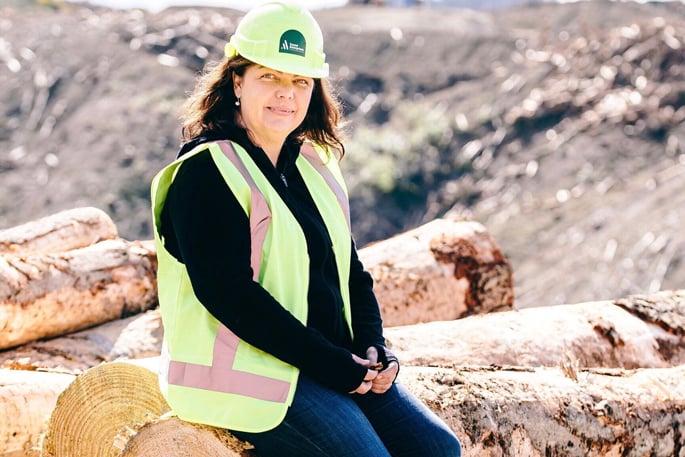
Erica Kinder, chief executive of the Southern North Island Wood Council (SNIWC), has been co-ordinating events and organising board activities since 2018 from her home in Masterton.
“When I started with the SNIWC, which is one of eight wood councils that have formed around New Zealand now, we only had one annual event and that was our Forestry Awards.
“Next year we will host [for the fourth year running], the Golden Loader competition at the Central Districts Field Days, our Forestry Awards, continue the running of Discover Forestry, our educational forestry programmes, as well as planning new face-to-face events for our members like ‘A Day at the Races’.”
Launched in 2015, the Southern North Island Wood Council has a membership of more than 25 forestry companies, log transport companies, sawmills, nurseries, contractors and other forestry associations that are all based across the lower North Island.
It is the largest geographical wood council region in New Zealand, covering Taranaki, Wellington, Rangitīkei, Tararua, Wairarapa and Manawatū regions, which can make co-ordination a challenge for events, says Erica.
The SNIWC is a non-profit organisation, with its own constitution and rules, and is governed by an executive committee acting as a board, elected from the members at each annual meeting to represent their interests. Membership is voluntary and open to any company or individual with an interest in the local wood industry.
Erica has been in the industry since she left college at age 18, becoming interested when a representative of the University of Canterbury brought along brochures on the sector to the boarding school she attended.
University degree
In a class of 50, she was one of only three women studying towards a Bachelor of Forestry at the Christchurch campus at that time.
After completing the degree, Erica ran log logistics operations for 15 years before having a break to raise a family and then linking up with the SNIWC.
She says as well as promoting forestry within their region, the SNIWC has a goal of bringing their forestry community together.
“Often forestry workplaces are long distances from towns and isolated, and bringing forestry teams together allows connections, discussions and renewed friendships that can foster collaboration within the industry.
“The bad reputation that forestry has developed in the New Zealand media, especially in farming communities, has discouraged forestry staff from promoting themselves or their workplaces, with many workers keeping their heads down.”
She says the SNIWC provides opportunities for forestry staff to participate in local community events and showcase their jobs proudly, boosting the morale and productivity of these workplaces.
Discover Forestry was launched by the SNIWC six years ago and, with industry funding, has now delivered feel-good forestry and wood-based educational programmes across New Zealand.
“This has been a real showcase of the pride our members have in forestry,” Erica says.
“Discover Forestry started with a few school days locally, but has grown to involve five staff and more than 100 events across New Zealand.
“The board has supported the idea that we can only change perceptions through education, and then set out to do just that.
“We have all realised the lack of a national promotional effort in this area, and anything currently in the public arena is not in the right format to attract the next generation of foresters.
Wider audience
“By default, we are reaching a wider audience of parents and teachers and revealing our forestry story.”
“We talk about the forests and where they have come from and it’s amazing how little the children know.
“They think we just cut down trees, but really we are forest farmers, planting and looking after them and consider ourselves stewards of the land.”
Erica says one of the key focuses for her and the SNIWC generally is to break down misinformation about what forestry is.
“This is especially critical in secondary schools, where students are beginning to look at career options.
“Mechanisation is massive in the industry now,” she says. “Working in forests isn’t any longer about a man on the ground with a chainsaw.”
“The harvesting process is handled by extremely sophisticated machinery, needing operators with fine motor skills and clever heads.”
Erica says she has been surprised to see that the issue about getting the real message through to students is more about educating teachers who themselves have preconceived ideas about what goes on in the forest.
“We’ve found students are actually really keen to learn about forestry and to consider it as a viable career path.
“But it’s getting the message through to teachers that is our concern, as they are often the gatekeepers of what information the students have access to.”

0 comments
Leave a Comment
You must be logged in to make a comment.