


Farmers are facing higher levies for a mandatory livestock tracing programme from today, despite most opposing cost increases.
OSPRI — funded by the industry and Government — runs the National Animal Identification and Tracing (NAIT) programme, tracking livestock movements for biosecurity and animal disease management.
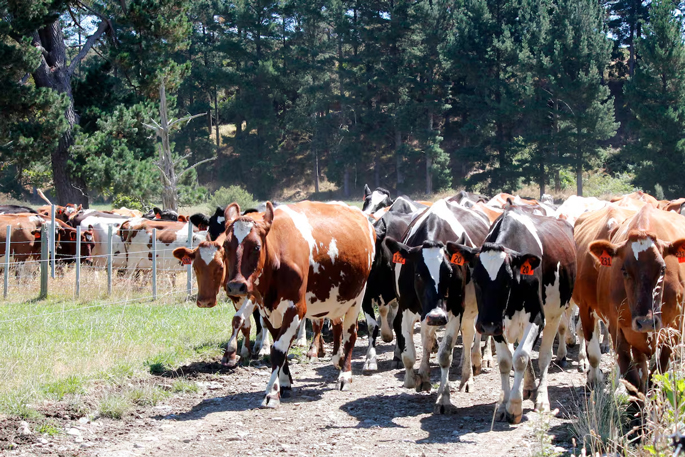
Its board decided to raise prices for NAIT ear tags by 39% to $1.35 for deer and cattle, and slaughter fees up 28% to $1.91 per cattle beast, from September 1.
During consultation in June and July, levy increase proposals were supported by industry groups such as DairyNZ and Beef+Lamb New Zealand.
But 63% of 69 submitters — including farmers and meat processors — opposed them, because of concerns about affordability, governance and confidence in delivery.
Deputy chief executive Simon Andrew said it made the decision around levies carefully.
“There were mixed views on the levy increases itself, and that’s understandable in terms of an added cost of their business,” he said.
“So we had to balance those concerns around the affordability themselves with our responsibility to modernise the NAIT system and maintain a fit-for-purpose and reliable traceability system.”
Levies would help fund a new replacement software for the NAIT service.
Earlier reports cited concerns about the current platform’s unsatisfactory farmer user experience, frustrating technological barriers to compliance and limited data access.
Andrew said it was working with an experienced New Zealand third-party provider — which he did not name — to build and develop the new software.
“First and foremost, it’s going to be modernised to the point that it’s enhanced for modern-day applications, whether that’s on your phone, a tablet or your desktop computer.
“The current system is not effective in terms of that particular situation. It’s very clunky to use on your phone, for example.”
Andrew said it would have guided workflows for required actions for its users, and links with other third-party integrators, such as the Livestock Improvement Corporation’s MINDA herd management system, among others.
West Otago sheep farmer Mike McElrea of Tapanui agreed that the NAIT software was hard to use for particular functions such as downloading information, that he hoped would improve.
Farming in an area once considered a bovine tuberculosis (TB) buffer zone in the 1990s, he said disease testing was most important.
However, he said testing was not as frequent as it should be, which representatives told him was because of funding issues.
OSPRI faced a $1.38 million funding shortfall due to historic under collections of beef and dairy levies, that new levy revenue would address.
Andrew said levies were based on forecast slaughter numbers, which did not always line up.
“The levy increases are also on the basis of under collection and recovering under collection in terms of the levy previously,” he said.
“It’s important that we go through a reconciliation process and set the levies based on that moving forward as well.”
The consultation document said it would contribute levies to the under collections to “restore the intended funding contribution split between industry and government”.
OSPRI also worked to tackle bovine tuberculosis in livestock herds by controlling possums, a common vector of the disease, in addition to Mycoplasma Bovis testing and surveillance.
Recently, OSPRI announced changes to its TB-Free programme, including carrying out less blanket testing across all farms in surveillance areas and doing more testing in higher risk areas it said would reinvest savings back into possum controls.
There were 17 herds infected with TB nationwide, including five in Hawke’s Bay, four in Waikato, three in Otago, and one herd each in Bay of Plenty, Canterbury, Manawatū-Whanganui, Marlborough and the West Coast.
TB-wildlife risk remained across 4.8 million hectares.
This story was first published on rnz.co.nz.


0 comments
Leave a Comment
You must be logged in to make a comment.