


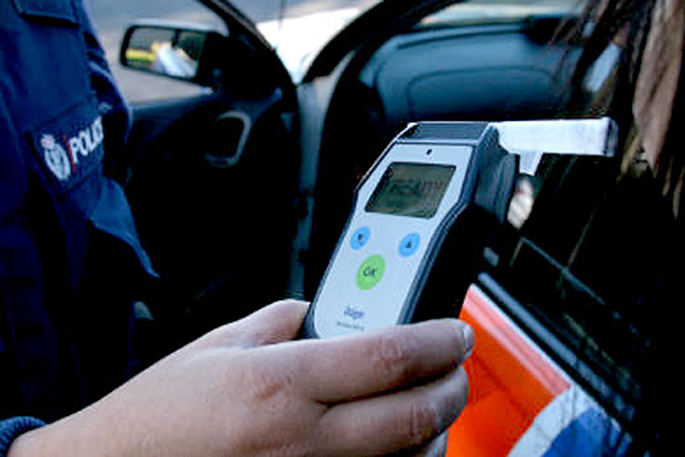

When a driver admitted he’d been drinking alcohol at a police checkpoint, the officer immediately issued an infringement notice for driving with excess breath alcohol.
It wasn’t until later that evening on January 29, 2024, that the officer realised he hadn’t conducted an evidential breath test to see how far over the limit the driver was before issuing the notice.
Instead of admitting his mistake, the Waikato officer falsely recorded that he had conducted an evidential test and made up a fake alcohol reading at the checkpoint in Morrinsville.
Police notified the Independent Police Conduct Authority (IPCA), which investigated whether the officer’s actions constituted a breach of criminal law and whether police had conducted appropriate inquiries when the matter came to light.
Police initially dealt with the officer’s conduct as an employment issue, without conducting a criminal investigation to explore whether it amounted to a breach of criminal law.
In a decision released today, authority chairman Judge Kenneth Johnston, KC, said IPCA’s preliminary findings were that the officer’s actions were dishonest and the driver was wrongly issued an infringement notice.
It considered the officer’s conduct constituted a criminal offence, as well as a breach of the police Code of Conduct.
“On that basis, despite police having concluded this matter by way of an employment process, we asked them to conduct a full criminal investigation as we were concerned that potential criminal liability had been prematurely dismissed,” Judge Johnston said in his decision.
He said the police investigation found insufficient evidence to support criminal charges in relation to the officer’s conduct and advised against prosecution.
“We reviewed the police investigation and agreed with this finding, accepting that the prospect of conviction was very low based on the admissible evidence available,” Judge Johnston said.
Police also explored its process in dealing with the matter and the IPCA’s concerns that the officer’s conduct had initially been dealt with prematurely without a criminal investigation.
“Police acknowledged they had erred in this regard and there were lessons to be learnt with how they dealt with this case. We are satisfied they have taken appropriate action to address this.”
During the criminal investigation, the officer resigned.
Brianna McIlraith is a Queenstown-based reporter for Open Justice covering courts in the lower South Island. She has been a journalist since 2018 and has had a strong interest in business and financial journalism.
Join the NZ Herald’s Open Justice team for Case by Case, a video and podcast series examining the disputes and decisions making headlines across New Zealand.


0 comments
Leave a Comment
You must be logged in to make a comment.