


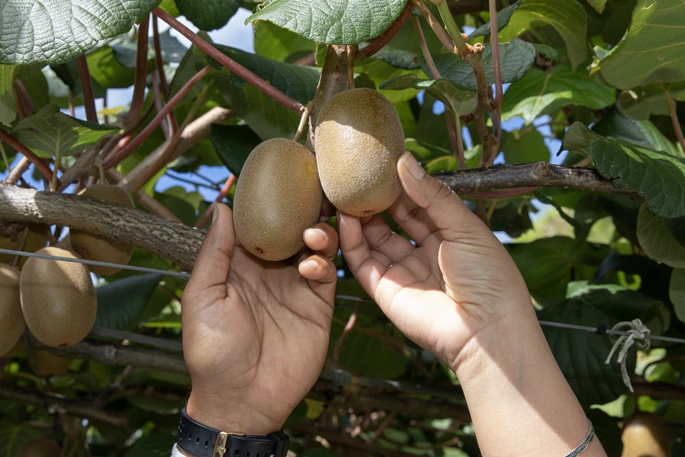
The Bay of Plenty’s biggest business is on track for another strong season, with Zespri now about 60% through its global sales programme and on course to complete sales over the next 10 to 12 weeks.
Speaking on The Country, Zespri chief executive Jason Te Brake said all fruit had already been packed between March and May, with the focus now on securing strong returns for growers as the marketing season enters its final phase.
“We’re probably getting to that real critical point of just finishing off the season and focusing on getting good value back to our growers over the next few months,” he said.
Te Brake said the kiwifruit industry continued to play a major role in the Bay of Plenty economy and local communities, as well as other growing regions around New Zealand.
The update comes as Zespri begins consulting growers on two major strategic issues: the potential commercialisation of a newly developed green kiwifruit variety, and whether the company should source fruit from China to help protect its position in that market.
Te Brake said the new green variety was showing strong promise, both in orchards and throughout the supply chain, but questions remained about how it would fit alongside the long-established Hayward green kiwifruit.
“We’ve got to figure out whether this adds additional demand or whether it’s more of a replacement for Hayward going forward.”
The discussion around China centres on unauthorised plantings of Zespri’s gold kiwifruit variety, G3, which were established more than a decade ago.
China is already the world’s largest kiwifruit producer, but its harvest is counter-seasonal to New Zealand’s.

New Zespri chief executive Jason Te Brake.
Te Brake said Chinese consumers still showed strong demand for New Zealand-grown fruit.
However, Zespri increasingly faces competition from unauthorised G3 fruit towards the end of New Zealand’s selling season.
“We need to make sure we’ve got the right options in front of us about how we have the best fruit available for our consumers at any given time, and potentially sourcing fruit out of China may be the best way to do that.”
The company is also investing in research aimed at extending the availability of New Zealand-grown kiwifruit. However, Te Brake acknowledged that locally grown produce remained highly attractive to consumers in every market.
“When local fruit hits the market, it is really highly sought after by consumers.”
Industry confidence also appears to be strengthening after several challenging years.
Te Brake said orchard prices in the Bay of Plenty were holding up well, supported by strong returns and improved production levels.
“It’s been able to come back from where we were. We had a pretty challenging couple of years here, so being able to have a couple of good seasons under the belt means that there’s a bit more confidence there.”
Zespri is holding its annual meeting this week and will also release an updated forecast on the season’s performance before embarking on a two-week grower roadshow.
The scale of the kiwifruit industry’s contribution to the region remains significant.
Te Brake said Zespri returned about $3.6 billion to the New Zealand economy last year, with about 85% flowing into the Bay of Plenty through grower returns.
“There’s a good level of confidence in the industry at the moment,” he said.

0 comments
Leave a Comment
You must be logged in to make a comment.