


When a fledgling Katikati was being shaped 150 years ago, as the Ulster Irish settlers arrived, a church was initiated to help the community flourish.
Today that same church is still supporting the community, and this month its congregation and the public celebrated 150 years since it was established in Katikati.
Folk gathered on Sunday inside St Peter’s Anglican Church, on the corner of Carisbrooke St and Beach Rd, for a service led by Bishop Philip Richardson.
With the first service held May 11, 1884, St Peter’s is Katikati’s oldest church and one of two original pioneer churches in the Bay of Plenty, according to Western Bay Community Archives.
The Rock on the Hill, written by former Bay of Plenty journalist Elaine Fisher in 2009, chronicles the first 125 years of St Peter’s and tells its story in-depth.
Town’s first pastor
According to the book, it was Reverend John Crossley who became Katikati’s first Anglican pastor.
George Vesey Stewart brought more than 600 settlers from Ireland, England and Scotland to 10,000 acres of land at Katikati. The first ship, with 238, arrived in September 1875.
“It was Vesey Stewart who also ensured the first church in Katikati would be Anglican. He invited Rev John Crossley of St Mathew’s Church, Belfast, to join his special settlement,” the book said.
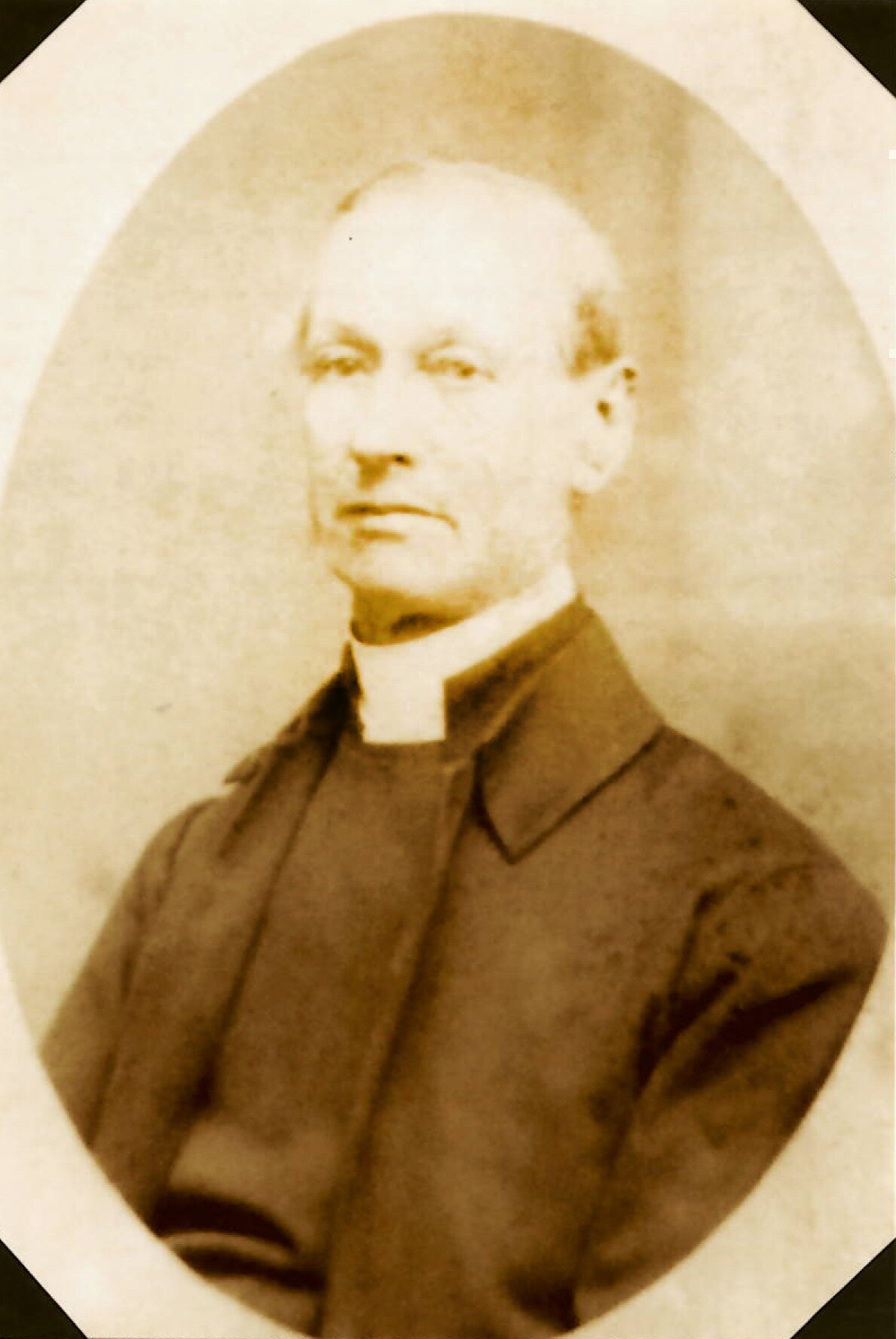 Katikati’s first Anglican pastor, Reverend John Crossley. Photo / Western Bay Community Archives
In a letter from Vesey Stewart to Crossley, dated February 3, 1875, it read: “I wish to inform you that you have been appointed on behalf of the Bishop of Waiapu … as the future Pastor of the Special Settlement at Katikati, New Zealand”.
However, the book explains that it was nearly 10 years before St Peter’s Church was built on the hill overlooking the Uretara Stream, and Crossley didn’t live to preach in it. Initially, worship took place in private homes, schools, the local store and even the public house.
Settler Sandy Turner donated the land in 1882, the church was designed by Irish immigrant Philip Walsh and the foundation stone was laid April 1883. The building’s interior was built from locally milled kauri. But it wasn’t until May 1884 that the building was consecrated.
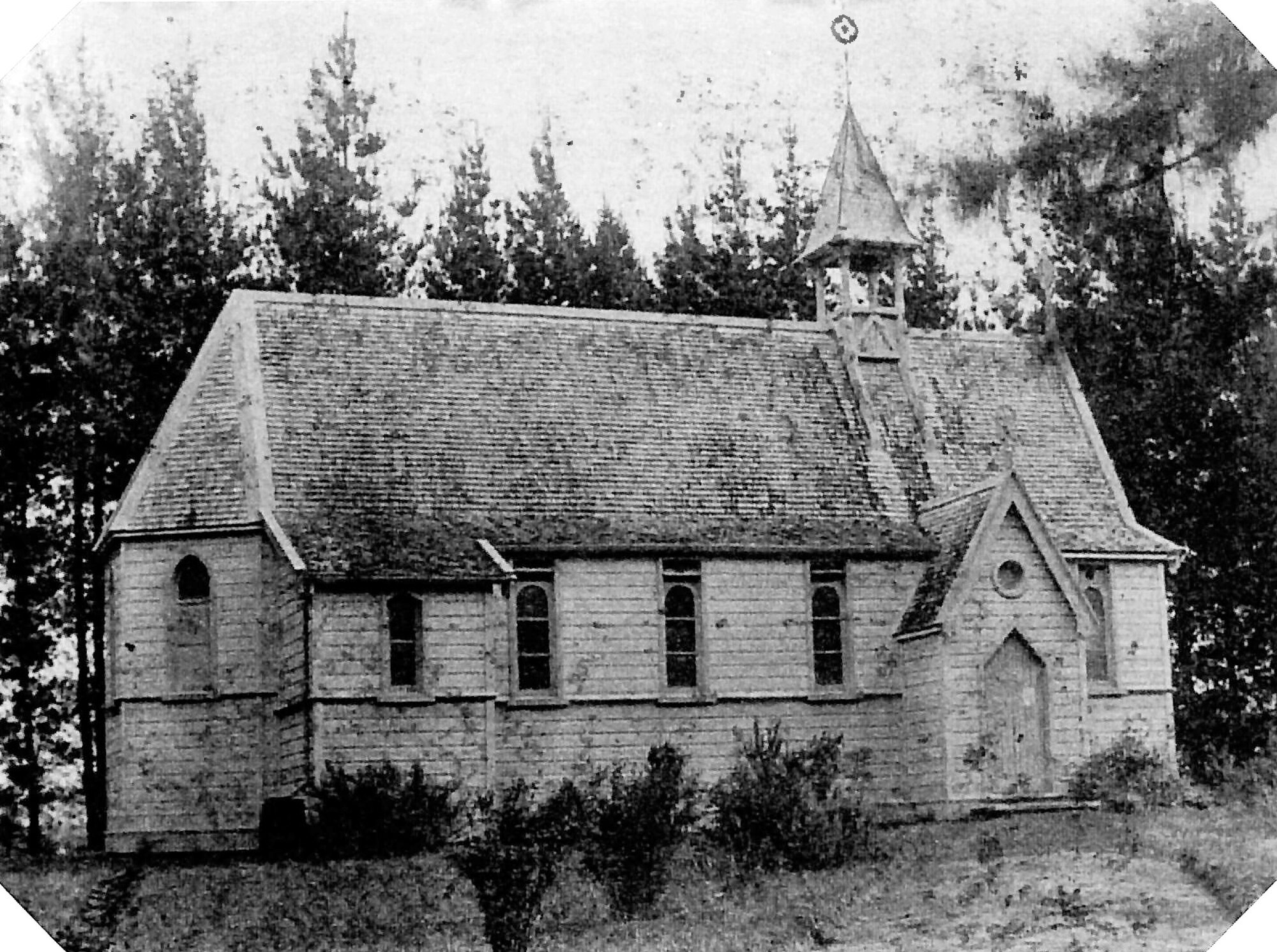 St Peter’s Anglican Church in 1897/1899. Photo / Emily Surtees / Western Bay Community Archives
A financial misunderstanding between the Church Building Committee and builders William John Gray and Robert Simms saw Gray lock out the bishop until he received full payment – so the consecration happened at No 2 School across the road.
29 vicars
In 150 years, 29 vicars have served St Peter’s – with a few leaving quite an impression.
One was Rev William Katterns. The appointed clergyman served as vicar from 1886-1915.
According to Katikati Open Air Art, “In 1897 Rev Katterns established an experimental ostrich farm [just south of the town] to supplement his small stipend as Anglican vicar”.

In 1887 Reverend Katterns established an experimental ostrich farm and within three years had 15 birds. Only problem was they frequently escaped, as seen in the mural by Malcolm Pitkeathly. Photo / File
Within three years he had 15 birds and the challenge was keeping them from escaping rudimentary fencing; sometimes they found their way to the main street. Today, a Main Rd mural depicts Katterns and his ostriches.
The Rock on the Hill details how early church members lived through a measles epidemic, the Long Depression, and a 1906 earthquake. By 1926, a church hall was added to the site. To attract a vicar, the church had a vicarage in one form or another from the 1920s. The vicarage was located next-door from 1978.
The church hall’s kitchen and toilets were given a facelift in the early-1990s, and in 2003, a worship centre built between the historic church and the church hall joined the facilities into one structure.
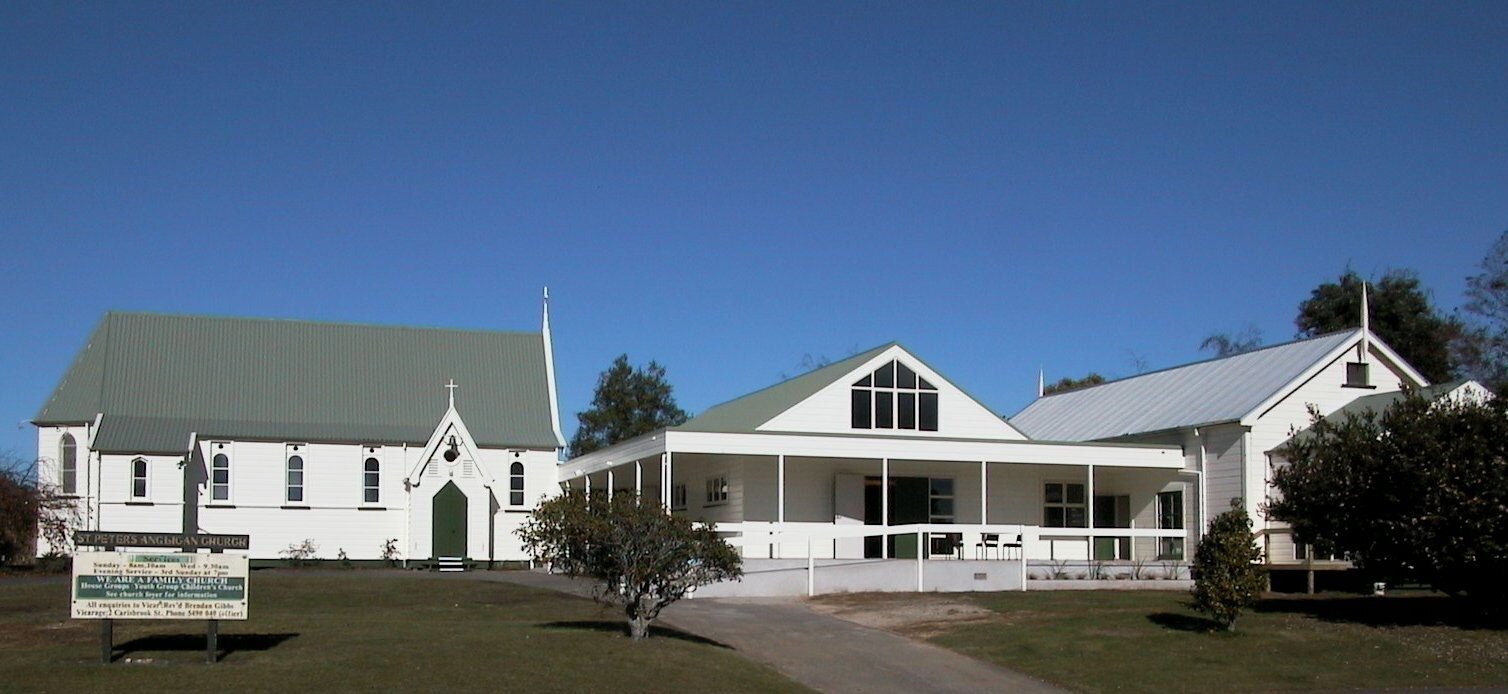 Saint Peter's Anglican Church Katikati and, to the right, its new $250,000 worship centre. Photo / Elaine Fisher
Bob Delbridge told the Katikati Advertiser in July 2003, when it opened, that it had taken “a good deal longer to fundraise for and build the new worship centre than the pioneers took to build the original church”.
A haven
Today, he told Katikati News he was proud of what the church had achieved across its 150 years.
For him, the newest development, a new five-bedroom vicarage next door that was built after the previous residence was destroyed by fire in March 2025, was a substantial achievement.
“It was a horrific thing to happen but the outcome – a new vicarage – has been positive,” Bob said. “We currently have no vicar so we hope the new home will be a drawcard for one.”

Katikati residents Margaret and Bob and Delbridge read scriptures inside St Peter’s Anglican Church – as they both have done for about 50-60 years. Photo / Merle Cave
Bob and his late wife Audrey joined the church in the 1970s. Today, with wife Margaret Delbridge, they said the church had achieved much success inside its walls and outside, in the community.
Margaret, who joined the church in 1965 with her first husband, said it had become a family to them.
“I think it’s always felt like a bit of a haven. We’ve been without a priest at other times and we’ve just all pulled together. We support each other well. Even though many of us are old, we still care for any members when they’re ill, etc. Meals and all sorts of things go out to help them.”
Beyond the walls
The congregation also runs the facility and supports the wider community in many ways.
Margaret said the church holds two Sunday services, at 8am and 10am, and a Wednesday service. The historic part of church is still used for 8am Sunday services and other events on request. The church holds christenings, weddings and funerals for members and the wider community.
“Bob and I were married here.”
She said the church does outreach work too, such as the Salt luncheon.
“Salt stands for Solos At Lunch Together and is aimed at people who live alone.
“We hold this once monthly at the church. For $5, a guest receives a lovely meal and company for a few hours.”
The church also lends its facility weekly for Student Pancake Thursday during school terms.
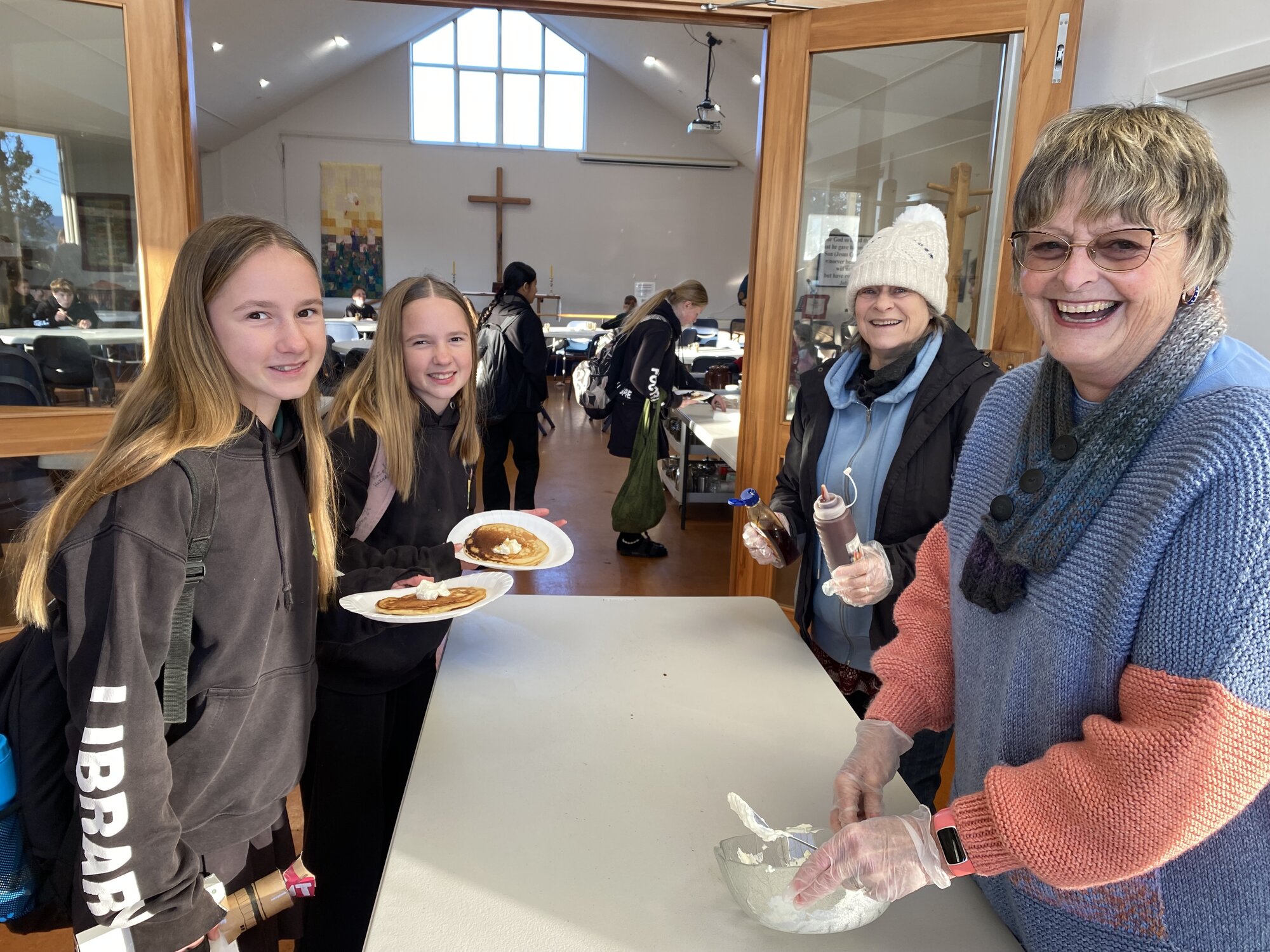 Year 8 twins Ada and Hazel Warren at Student Pancake Thursday inside St Peter’s Anglican Church. Photo / Merle Cave
The initiative, started by Katikati Baptist Church leader Patrick Rounds and supported by local businesses, had become a highlight for the wider community with young families.
Each school-aged child is given a warm pancake and welcome by volunteers. “I think it is appreciated by the community,” Margaret said.
In fact, the wider community walks in and out of the church every day due to it hiring rooms to a range of community activity providers. The floors have seen all types of dancing – Scottish, line and ballet – exercise classes, card groups and more.

The longest-serving vicar of St Peter’s in Katikati in more recent history, Reverend Brendan Gibbs, who gave 24 years to the church. Photo / File
The church also supports Katikati Christian Foodbank. Margaret runs the foodbank’s garden on MacMillan St.
“That’s an outreach to give fresh vegetables to people who need it.”
The op shop based at the church offers the community low-cost clothing and profits go back into running the church and also supporting its mission work, she said.
The property is run by church members themselves.
“Brent [Bowman] is the property manager, Steve and Adreinne Harlan run the op shop. A team set up our technology, others do the flowers and cleaning,” Margaret said.
Never just Sundays
They also provide spiritual guidance in the community.
“We run house groups, where we meet in homes weekly and fortnightly and study the Bible together on a more detailed and intimate level,” Margaret said.
“People who attend these have another layer of help because they know those who pray and study beside them know what’s going on in their lives [and can offer assistance, if required]. So the church doesn’t just operate Sundays – it goes through the week, and into the community.”
Just as we suspect it did 150 years ago.

0 comments
Leave a Comment
You must be logged in to make a comment.