


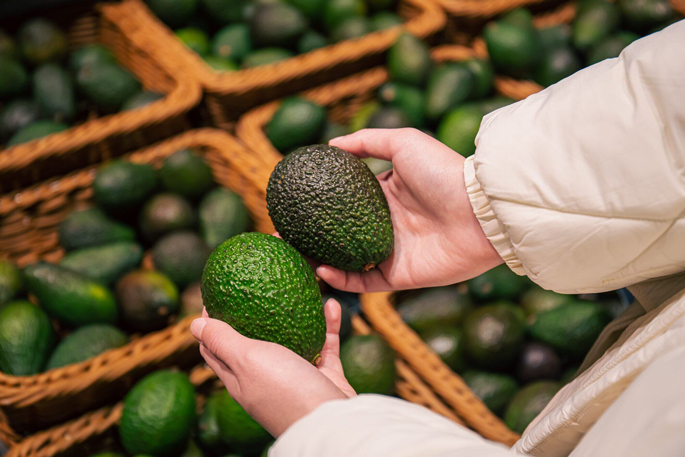
While the fuel crisis is biting, there’s growing confidence in the avocado industry’s position.
New Zealand Avocado chief executive Brad Siebert said avocado’s inclusion in the New Zealand–India Free Trade Agreement provides encouraging signals for long-term export opportunities.
“Our reputation for trusted trade systems, ease of doing business and counter-seasonal supply continues to differentiate the industry.
“The focus remains on being a high-trust, high-quality seasonal supplier where New Zealand fruit is ‘waited for’ as a preferred supply.”
Siebert said an encouraging early season milestone was the industry’s first co-ordinated presence at the Canadian Produce Marketing Association trade show in Toronto.
NZ Avocado attended alongside four self-funded exporters, supported by a New Zealand Trade and Enterprise-funded ‘Avocados from New Zealand’ booth.
Siebert said the event represented more than just another trade show appearance – it reflected a deliberate shift toward presenting New Zealand avocados collectively under a stronger country-of-origin story focused on quality and supply chain integrity.
“A striking takeaway from the event was that around 70% of the produce professionals there simply did not realise avocados were commercially grown in New Zealand.
“With roughly 90% of Canadian avocado supply currently sourced from Mexico, New Zealand remains relatively unknown in this market.
“However, once buyers were introduced to the New Zealand story, and to how our seasonal supply window complements existing programmes, conversations became highly positive.
“The feedback reinforced that there is genuine long-term potential to grow awareness and demand for New Zealand fruit in Canada and other North American markets.”

New Zealand Avocado chief executive Brad Siebert. Photo / Supplied
Siebert said the avocado industry was mindful of the challenges of recent years, including weather disruption, shipping volatility, volume peaks and increasing competition.
“The direct and indirect impacts of the Middle East crisis are already emerging through early signals of shipping disruptions and freight increases, while growers continue to feel the pressure of higher fuel, fertiliser and other orchard input costs.”
Export season
The New Zealand avocado industry was gearing up for one of its larger export seasons in recent years, with the 2026–27 crop estimated at around 7.8 million trays.
“It is a substantial lift on the weather-impacted season just completed, and growers, packers and exporters around the country are now preparing for one of the most significant export opportunities in recent years,” Siebert said.
Of that 7.8 million tray total, around 4.8 million trays are earmarked for export and an estimated 2.7 million trays for the domestic market.
Siebert said if the estimate holds, export volumes would return close to the record levels last seen in 2021.
“Importantly, the season ahead is not just about larger volumes. It is about how effectively the industry delivers on demand through co-ordinated market timing, fruit quality and supply chain execution.”
He said the biggest change this season was where the fruit would be heading.
Last season, only about 21% of export volumes went to Australia, as exporters successfully diversified programmes across Asia and North America.
While that diversification remains strategically important and continues to build long-term resilience, current estimates show about 55% of export volumes flowing into Australian retail, wholesale and food service channels in the year ahead.
Siebert said Canada, South Korea, Hong Kong and China could collectively account for close to 30% of export volumes, with Japan, Singapore, Taiwan and Thailand also remaining important destinations.
Australian demand
“The stronger Australian demand is expected to improve overall grower return potential, while still maintaining meaningful programmes into Asia and North America.
“Diversification remains critical to the industry’s long-term strategy, but strong Australian demand provides an important commercial foundation as the industry works through a significantly larger crop.”
Siebert said Kiwi shoppers could still expect plenty of avocados on supermarket shelves, though local supply may look a little different this season.
“Historically, the local market has absorbed around 40% of the total crop.
“With more classes of fruit earmarked for export, and export pack-out rates projected to lift from around 50% to 60%, the local market could see lower overall volumes than the three million trays supplied locally during the 2025–26 season.”
Siebert said the timing may also look different.
“With a larger proportion of fruit moving through export packing earlier in the season to meet market demands, the local market could see periods of peak volumes that will require close monitoring and careful alignment between promotional activity and fruit availability.
“Early season export market activity will focus on quality and provenance, with local market messaging concentrating on versatility and stronger value-driven retail promotions as supply volumes increase.”
Siebert said these remain early estimates and were still subject to crop load, harvest timing, fruit quality and changing market conditions.
“Larger crop volumes also place additional pressure on harvest timing, packhouse throughput, logistics and shipping co-ordination, and maintaining fruit quality throughout longer supply chains into export markets remains critical to protecting New Zealand’s reputation.”

1 comment
Fingers Crossed
Posted on 17-06-2026 08:35 | By Thats Nice
Great news for the Avo growers........ hopefully and long may it last. It's well overdue for them.
Leave a Comment
You must be logged in to make a comment.