


A Tauranga-based education charity is set to take its science programme nationwide.
House of Science has secured a major Government contract to supply experiment kits to primary and intermediate schools.
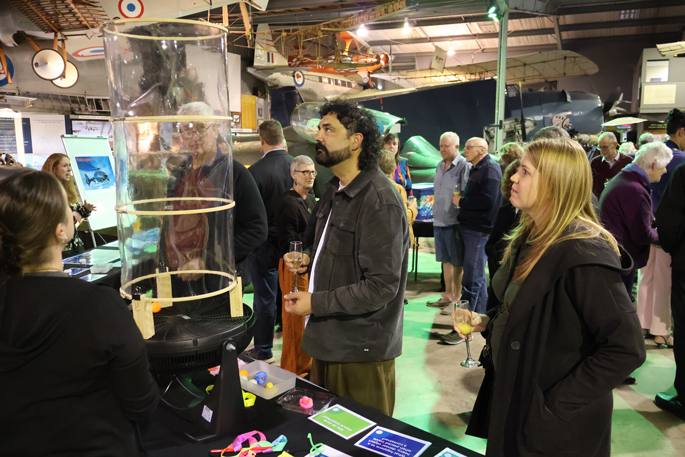
The charity marked the milestone on Tuesday night, bringing together its network of volunteers, supporters, sponsors and staff for the first time since being named the national provider.
Chief executive and founder Chris Duggan described the achievement as a turning point for the organisation.
“This is a defining moment for House of Science and reflects the exceptional capability and commitment of our team,” Duggan told attendees at the celebration event held at Classic Flyers in Tauranga.
“None of this would have been possible without our incredible network of educators, funders and advocates. That ongoing support is the foundation of everything we do.”

House of Science chief executive Chris Duggan, left, handed over a “thank you” medal to Rika Milne of the Marine Stewardship Council (sponsors of two HOS kits), pictured with HOS manager for corporate services and strategic growth Sandra Kirikiri and resource design manager Jane Hoggard. Photo / Supplied
The Government would invest $39.9 million over four years in the programme, which aims to deliver hands-on science learning resources to classrooms across the country.
Duggan said the organisation expects to reach full national coverage by early 2027.
“This contract gives us the ability to fulfil our mission at a national scale,” she said. “It’s a long-held vision which is now within reach.”

A crowd of nearly 100 supporters and sponsors attended the event. Photo / Supplied
The funding comes after a challenging period for the charity, with some sponsorship support declining in 2025 while operational costs – including transport and kit components – increased.
“But that only strengthened our resolve,” Duggan said. “The team showed unwavering commitment during what was an exceptionally demanding year.”
The celebration followed the release of a new report by independent analytics firm ImpactLab, which highlighted the programme’s growing impact.
The report found House of Science achieved a social return on investment of $21.90 for every dollar spent in 2025, up from $12 the previous year.
“As participation increased, total social value rose substantially, driven by many more students engaging in hands-on science learning,” the report said.
“Overall, the results indicate that House of Science continues to deliver strong impact, maintaining outcome quality per student while significantly increasing total value across the education system.”
Tauranga MP Sam Uffindell, who attended the event, said the results were “unprecedented”.

Tauranga MP Sam Uffindell addressed the crowd, describing House of Science’s community impact as “phenomenal”. Photo / Supplied
“This will move the dial and give a generation of Kiwi kids the opportunity to explore and excel in Stem,” he said.
House of Science was founded in 2013 after Duggan, then head of science at Tauranga Girls’ College, identified a gap in science education at primary school level.
Motivated by an Education Review Office report showing only 27% of schools offered effective science programmes, she left her role to establish a shared resource system to support teachers.
Today, the organisation provides science kits containing equipment and lesson plans, allowing schools to access high-quality resources without the cost of buying their own.
Duggan said the model helped break down barriers to science learning.
“Science is an expensive subject to resource. By creating a shared library, schools can access quality equipment and deliver engaging lessons with confidence.”

0 comments
Leave a Comment
You must be logged in to make a comment.