


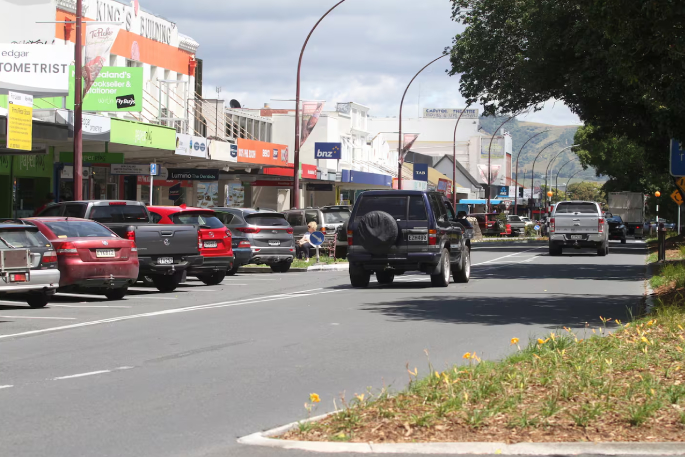
Updated liquefaction maps are now available for Te Puke, showing how properties could be affected during a large earthquake.
According to Western Bay of Plenty District Council, liquefaction occurs when shaking from an earthquake causes soft, wet soil – typically silts and sands – to behave like a liquid, potentially affecting homes and property.
In a statement, the council said the new maps take into account soil type, groundwater levels and earthquake strength. Three risk categories are identified, with some properties having one or more of these categories mapped:
- Liquefaction damage is unlikely – a probability of more than 85% that liquefaction-induced damage will be minor in a one-in-500-year earthquake shaking event.
- Liquefaction damage is possible – a probability of more than 15% that liquefaction-induced ground damage will be minor to moderate (or more) in a one-in-500-year earthquake shaking event.
- Liquefaction category is undetermined – a liquefaction assessment has not been undertaken for this area, or there is not enough information to determine the appropriate category with the required level of confidence.
The council said the new maps replace previous maps from a regional study in 2021, which was based on a basic level of assessment. A more detailed study has since been done, which improves the accuracy of the maps.
“As a result, many ‘undetermined’ areas have been re-categorised as ‘unlikely’, including the large majority of residential properties. The number of properties shown as ‘possible’ has also significantly reduced.”
Western Bay of Plenty District Council and Bay of Plenty Regional Council regularly update the natural hazards maps for the district, because the Resource Management Act and Bay of Plenty Regional Policy Statement have requirements relating to how councils manage natural hazard risks.
As the mapping of each hazard is completed, landowners are notified and the information is put on Western Bay of Plenty District Council’s website, property files and in any Land Information Memoranda (LIMs) requested for properties.
The maps are also used when processing resource consents, project information memoranda and building consents, to ensure that the risk from natural hazards to people and buildings is assessed.
Western Bay of Plenty District Council interim general manager strategy and community Emily Watton said the new information would improve understanding of how properties in Te Puke may respond during an earthquake.
“Updating the accuracy of liquefaction maps is important to meet legislative requirements and ensure that natural hazard information is current,” Watton said.
“The mapping information will help people make informed decisions about building, buying property, and preparing for future events.”
Watton said letters had been sent to landowners affected by the latest liquefaction maps and the new information had been included on the council’s Natural Hazards’ webpage at: www.westernbay.govt.nz/property-rates-and-building/natural-hazards.

0 comments
Leave a Comment
You must be logged in to make a comment.