


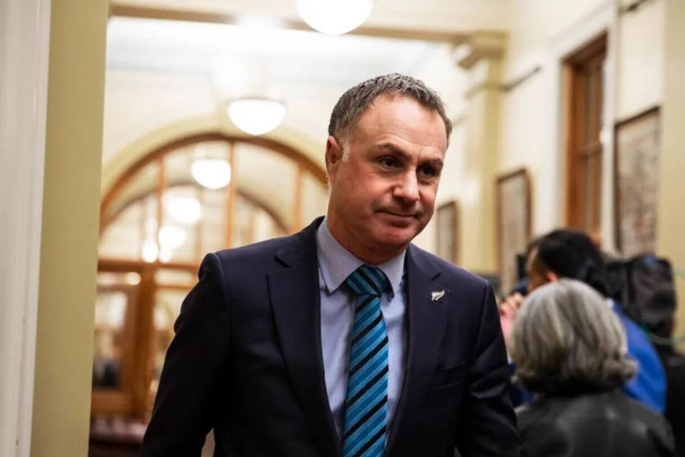
The Local Government Minister is pushing back at criticism of his rates cap proposal – reassuring councils they have the tools and the time to comply with any new rules before they’re introduced.
Simon Watts has begun considering feedback from councils on a plan to cap rates rises from 2029, possibly at 2% to 4% a year.
Many councils and mayors have raised concerns, with Christchurch’s Phil Mauger warning it will have significant implications for key services and infrastructure and Wellington’s Andrew Little warning it could lead to higher fees for swimming pools, recreation centres and other community facilities.
Auckland’s Wayne Brown has been particularly outspoken, donning a “rates cap” hat during a council meeting to mock what he called a “piece of ridiculous legislation” and holding up a can of baked beans representing how much he said ratepayers would save each month under the change.
Other mayors – like Dunedin’s Sophie Barker and Tauranga’s Mahé Drysdale – have told Newstalk ZB a rates cap would mean cutting services and making sacrifices.
“The rates cap is hard because we’re not buying pies at the supermarket – we’re buying roads, bridges and things like that,” Barker said.
“We’ve heard stick to roads, pipes and all that core infrastructure, but we won’t be able to afford even the core infrastructure at a 4% rates hike,” Drysdale said.
Watts said the Government was aware of the risks of underinvestment and the need to support growth and would give councils time to plan and adjust by implementing the change in stages.
But he also pointed to the need to contain rates rises – with Newstalk ZB analysis showing rates have surged at a record pace over the past three-year electoral term.
“I expect councils to make full use of the funding and financing tools available to them – ensuring fees and charges accurately recover the costs of providing private-good services, using debt financing to spread the costs of infrastructure over time and maximising the new funding and financing tools,“ Watts said.
“If a council believes it cannot undertake vital work within the target range, it has the option to apply for a variation. Any approval will require a clear plan for returning to the target band over time.”
Auckland Council officers claim the rates cap will lead to higher costs for Auckland ratepayers and have suggested the Government could instead consider a rates “target” – similar to the Reserve Bank’s medium-term inflation target – with consequences for councils that are outside that range without due cause.
Watts said the Government had consulted on the policy design and would be considering all feedback before making any final decisions.
Michael Sergel is Newstalk ZB’s business reporter. He’s been covering business, politics, local government and consumer affairs for more than a decade.

4 comments
Good in the minister
Posted on 14-03-2026 11:28 | By Kancho
Go for it Simon Watts someone has to reign in councils to concentrate of essentials not fluffy nice to have or worse stupid stuff. He has more power than we poor rate payers so use it .
Just
Posted on 14-03-2026 12:58 | By Merlin
Just trying to get votes without any logic behind the proposal.Stay out of local affairs you were elected for Central Government and not doing a very good job at that.
A rock and a hard place
Posted on 15-03-2026 08:14 | By Don Twori
we are caught between absolutely extravagant council spending (like the Tauranga City Council's new admin building) and a national government with no ideas other than "do nothing, but spend less").
The Master
Posted on 16-03-2026 12:55 | By Ian Stevenson
A rates cap is 100% necessary on two factors: -
1 As a % increase i.e. no more than CPI
2 As a $ value per ratepayer as a maximum
What is missing in Councils generally across NZ is "ACCOUNTABILITY, OPEN and TRANSPARENCY" 24/7.
Councils must be focused on essentials, efficient and economic in what they do. (Yes, I realise that is logically to be seen as a joke, as its a complete contradiction to reality in any Council... that is what they are, not what they should be.
Essential means: - three waters + roads.
In addition all "non-essential" activities should be either fully user pays or don't happen.
Leave a Comment
You must be logged in to make a comment.