


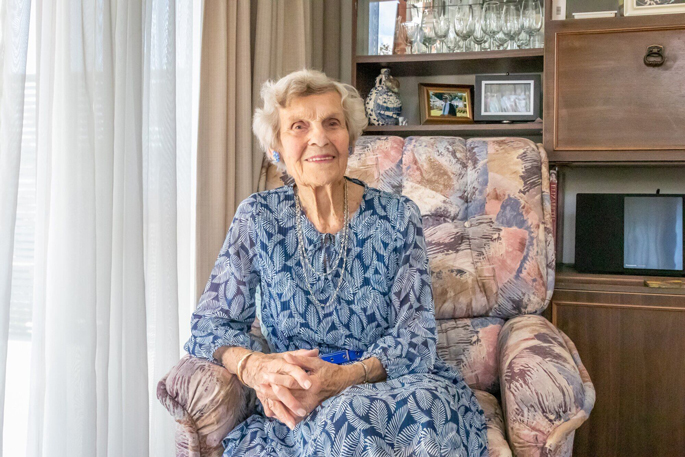
“My first day at school.” Tuesday, February 3, 1931. “My very first.” Excitement tempered by first day jitters probably.
Aged six, and in the moment, she wouldn’t have stopped to read the signs. No-one did. The air had grown still, and oppressive. The sea, quiet and calm. And a most peculiar colour. Ominous, suggested reports of the time.
“I remember the morning vividly.” And for one tragic, destructive, life-changing reason.
Because Veronica Miles had been at school just an hour-and-a-half when a city heaved upwards, swayed and rocked like a ship at sea, then tumbled and crumbled in ruins. It was 7.8 on the Richter scale – energy likened to a 100 million tonnes of TNT, and the roar of an express train. Then a city burned, with many of Napier’s wooden buildings fuelling the fire.
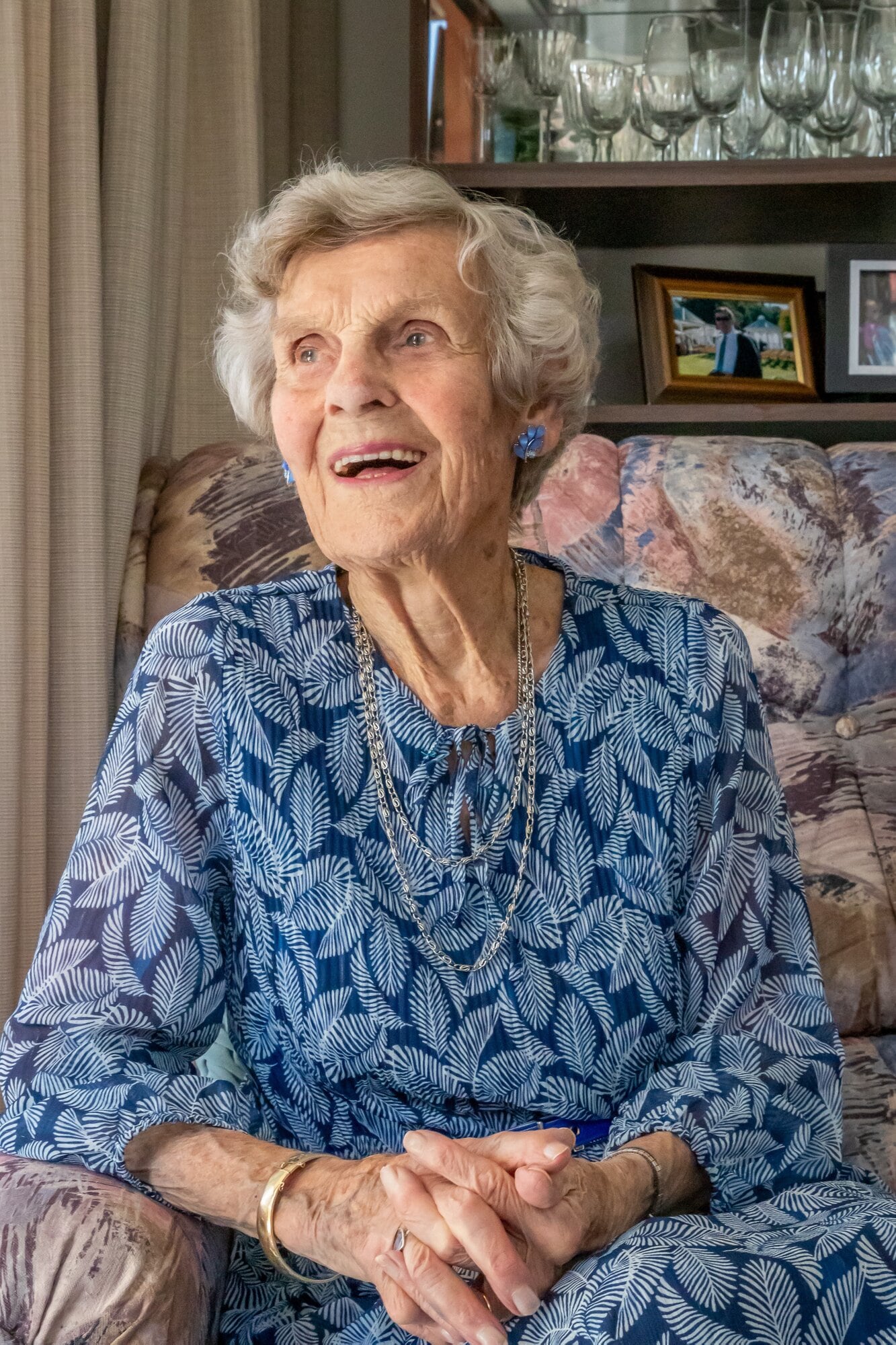
Veronica Miles survived New Zealand’s deadliest natural disaster. Photo / Kelly O’Hara
It was playtime at Napier Central Primary School, 10.47am, on February 3, 1931.
“We were all outside and suddenly kids everywhere were falling about uncontrollably.”
The earth was convulsing. ”We had no idea what was going on.” But she clearly remembers the wall. Oh yes, the wall.
A survivor
“A huge brick wall, the side of a building, a classroom. It disintegrated in a big heap of bricks right in front of us. It just tumbled down.” She pauses, reflectively. “Mmmmm…” A scary moment 95 years ago. “I don’t know what I thought. But I suppose I was scared. Very scared.” And when the dust and smoke had settled, and the fires doused, the 1931 Napier Earthquake, New Zealand’s deadliest natural disaster, had claimed 256 lives.
Veronica Miles (nee Thomas), now a resident at the Althorp retirement community in Pyes Pa, has just been to the 2026 reunion of 1931’s Napier earthquake survivors.
‘Refugees’ they called them. It’s on her reunion name tag – ‘Veronica Miles, nee Thomas, Refugee’. A refugee in her own land. People displaced by the earthquake. There were many. But few these days.
“Perhaps just eight or 10 of us survivors this reunion.”
So, 95 years after the event, and aged 102, nearly, Miles’ story becomes an increasingly significant document of record. “It was important for me to go back to Napier and say, ‘Yes, I was part of that’.” She’s a sliver of history. And a survivor.
Before the earthquake, she was ravaged by whooping cough, the virulent respiratory infection and a significant cause of child mortality. Then she was hospitalised with bacterial scarlet fever, another child killer. She pulled through both.
‘Go home’
Then the earthquake. “Things were different – not many health and safety protocols in those days,” Miles recently told The Weekend Sun.
Especially in the face of a full-blown disaster. “The teachers didn’t know what to do with us. Finally, they told us to go home. I can still see it.”
Miles and her sister, wandering bewilderedly down the street, not far from where a CBD had crumbled and burned. Where the missing, the injured, the dying, and the dead, lay in the rubble.
“We were protected. Weren’t allowed to see that. Weren’t allowed anywhere near town.” The new entrant only got to understand the scale and gravity over time. “It’s confusing – some is what you know and remember, but most is from reading or hearing stories.” But she wasn’t completely spared of upset.
Blood streaming
One encounter, one image, is etched. An injured woman, wide-eyed with fear, standing at her gate as Miles and her 10-year-old sister Lorna passed by. “There was blood streaming from her head.”
Two confused schoolgirls walked on by until they were rescued by their father out looking for them on his bicycle. “He’d been all over the road – he couldn’t ride straight because the road was rocking and rolling.”
Two minutes after the first rumble, after the first deadly jolt, it was over. Nature’s evil deed done. And what wasn’t levelled was burning – a hot, dry day and flames fanned by a strong easterly breeze. A fire brigade stood by powerless because the quake had taken out the water supply. A perfect storm.
“No one, absolutely no one was brave enough to go home to sleep that night – just in case it tumbled on them,” recalled Miles. So the neighbourhood set up a tent village in the still-trembling college grounds across the road. There were more than 500 aftershocks in the fortnight after the quake.
In fact, Miles never lived in her “old, not flash, wooden home” on Napier Hill again. “It was still standing but a mess. Cupboards thrown open, stuff flung everywhere. So sad.” Earthquakes take no account of a family’s feelings. A free-standing wardrobe had fallen across her Mum and Dad’s bed. “Now had they been in bed when earthquake struck…?” Miles winces at what might have been.
The Thomas family was spared personal injury but not psychological scars.
“Mum refused to go back to that house. She was so upset, she was ill. [She] Almost had a breakdown. But I understand. As an adult she would have been more in touch with the catastrophe around her.” Later in life Miles pitied her “poor” father. “He must have nearly had a divorce on his hands.”
The refugee
When the Thomas family was evacuated from “tent town” to “refugee camp” in Palmerston North, that was the end. They would never return to Napier. Not as a family.
The refugee camp was a showgrounds pavilion. “Yards and yards of scrim. Straw-coloured scrim. Partitioned off into scrim cubicles. Each cubicle a temporary home, offering some privacy, to a refugee family.” Later they would be billeted with local families, spend time with grandparents before establishing life again in Marton in the Rangitīkei District.
Now, 95 years later in Pyes Pa, the 1931 quake remains the defining moment of a long, resilient life. “Oh yes, I think so.” Set aside World War II, the Apollo moon landing and all the technological advances.
“The Napier earthquake is always there, [I’m] always thinking about it, I am always learning something new about it.” Not all of it uplifting.
Like a tragic act of mercy. Historic records tell of a doctor, and a husband, forced to make the decision to administer a fatal injection to the man’s wife trapped in the rubble as savage flames swept towards her. “Rather than let her suffer! It must have been awful.”
And that’s the reason Miles had returned to Napier for four or five survivor reunions.
“As I said, it’s important to be able to say you were part of that.” Part of New Zealand’s biggest natural disaster.

0 comments
Leave a Comment
You must be logged in to make a comment.