


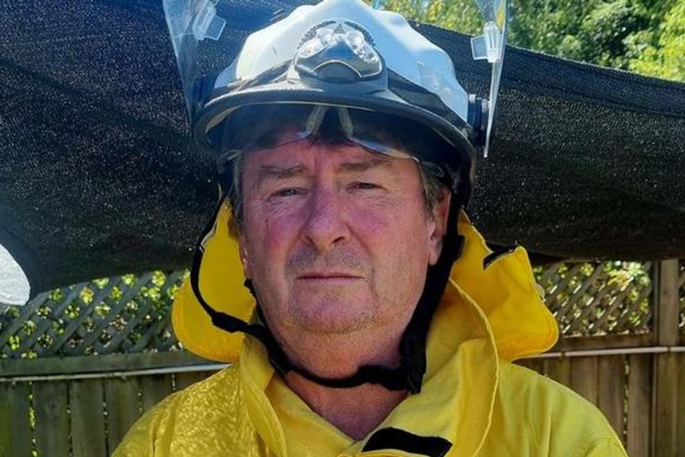
Volunteer firefighter Peter Ottley still remembers his world turning upside down.
Two weeks after a callout to a fatal bus crash, he said, he lost the plot.
He has PTSD (post-traumatic stress disorder), but like all emergency volunteers, he is not eligible for ACC (Accident Compensation Corporation) cover for mental injury.
Ottley was frustrated, because all volunteers got were apologies.
“‘We’ll do our best’, but there is no best, because money is more important than life.”
Volunteers have been lobbying the Government to change the legislation for years. In 2025, a petition with 36,549 signatures was unsuccessful.
Now, Land Search and Rescue is pushing the Government to reconsider, saying January’s Mt Maunganui tragedy showed the level of trauma they were repeatedly exposed to with no long-term protection.
Long-time emergency volunteers Jarrad Scott and Peter Ottley were desperate for change.
“The fact that you can go out and be drunk and wrap a car around a power pole and be covered by ACC, but if you’re volunteering to save lives, you’re not covered.
“It’s ridiculous,” Scott said.
Under current legislation, ACC could provide broad physical injury cover to volunteers – the same as that available to all New Zealanders. If a physical injury resulted in a mental injury, that was also covered by ACC. But unlike employees, volunteers did not get any support for mental injury caused by what they saw on the job.
Or in other words, if you have not broken your leg or you were not being paid, ACC could not do anything to help mentally unwell volunteer emergency responders.
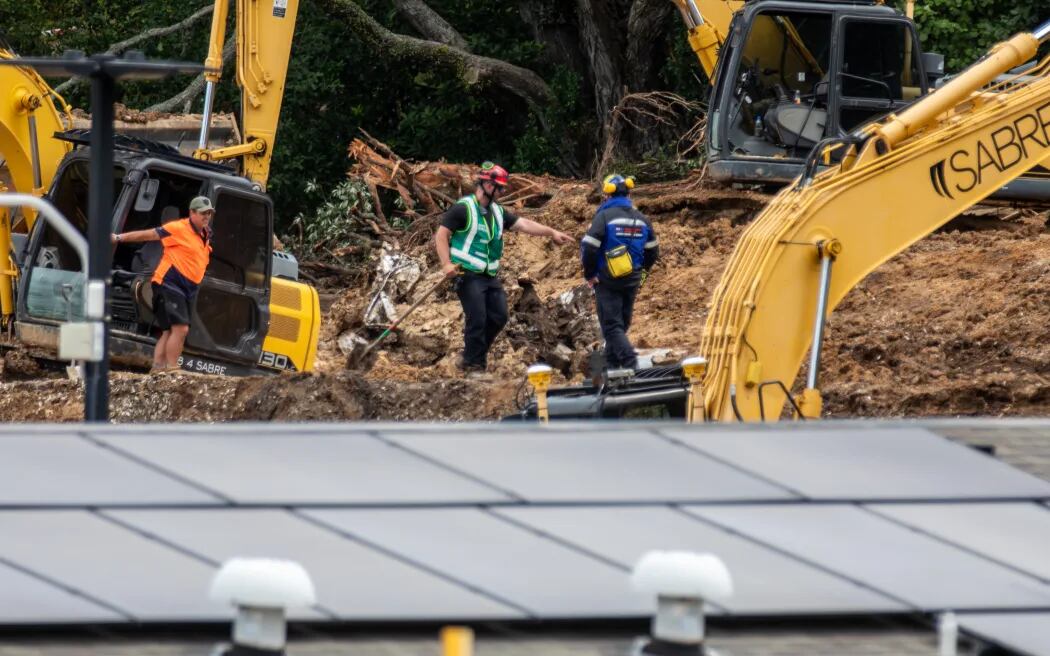
Crews work on the Mount Maunganui slip site, where six people were killed by a landslide in January. Photo / Nick Monro, RNZ
The cumulative load
“I was the guy that always thought I was strong and could deal with any situation. And then everything sort of accumulated where it sort of built up.”
Scott had 20 years with Land Search and Rescue (LandSAR). Two years ago, that all stopped.
He was called out to a report of a missing person. At the briefing, he realised he knew the missing person quite well.
Scott said he was advised not to attend, but he insisted.
“I wasn’t forced to go, I wasn’t asked to go, I was told not to, and I still went against that.”
Why? The reason he volunteered in the first place.
“On the hope that he was okay and, you know, we could help him.”
The team could not help him, and Scott assisted in body recovery.
It was after this that Scott began to struggle. He admits some of this was his responsibility because he ignored LandSAR advice and went to the scene anyway.
LandSAR provided Employee Assistance Programme (EAP) assistance, in-person counselling and debriefs, before he was told to go to a GP.
The doctor tried to arrange psychologist treatment and filed an ACC claim – only for it to be turned down.
“I got a phone call from ACC and the lady said, really sorry to tell you, we know you’ve been through a horrible thing, but you’re not covered, and your claim’s going to be declined ... because I am a volunteer.
“I asked them ... what about the guy standing next to me in the blue uniform doing the same job at the same time, same scene. Is he covered?
“And she said yes, because he’s being paid.”
At this point, Scott said, his mental health was getting worse by the day.
“The constant flashbacks and daymares, I call them, it’s like a nightmare, but during the day, it’s just ... insane.”
Because of his volunteer status, he was denied not only ACC care but also salary compensation.
Eventually, Scott was diagnosed with PTSD, and LandSAR was able to fund specialist treatment EMDR (eye movement desensitisation and reprocessing), which helped dramatically.
He said LandSAR had done everything it could to support him, but the legislation continued to hurt.
“It’s too late really to help me, but I want people going forward to be covered.
“The system’s so flawed that you’ve got a whole nation that runs on volunteers, and none of us are covered. St John’s and Fire, Coast Guard, but none of them are covered, and they all see horrific stuff.”
Rescuing their own
LandSAR chief executive Wendy Wright agreed the legislation fell short.
“When we look at the reliance we have as a country on volunteers across emergency services and search and rescue, 95% search and rescue workforce are actually volunteers.
“They do it because they want to serve their community.”
And that was part of the pressure.
“When you have a situation like you do at Mount Maunganui, that is the local Tauranga volunteers, and they’re ... supporting their own community.”
Wright said sometimes it was the cumulative effect that created a mental injury. Other times, just one event like the Mauao landslide would be enough.
The cost of volunteering
Peter Ottley was also familiar with this battle. He did not know if he would ever be able to return to work.
His wife worked two jobs to keep them afloat.
Ottley was a volunteer firefighter in Kingston for 13 years, but in December 2024, his life changed after he attended a bus crash.
“I turned the world a little bit upside down and lost the plot.”
It was PTSD. He became incredibly angry, irritable, and anxious.
“Didn’t want to be around people ... my anxiety was going through the roof.”
Like Scott, Ottley’s PTSD was not from one event but built from 13 years of serving the community.
Fire and Emergency said crew safety was a top priority and it provided comprehensive support, including free counselling and psychological support.
Scott said Fire and Emergency was doing what it could and funding EMDR sessions, but it did not have a system for people like him.
Govt sympathetic, but doesn’t want change
Parliament has shown little interest in making changes to the system, despite the fact that volunteers make up 86% of the front-line workforce of Fire and Emergency.
In late 2025, Parliament agreed volunteer firefighters offered vital services to New Zealand, but it did not want to change the legislation over fears of setting a precedent.
“We do not consider it practical for all types of volunteers to be provided with ACC workplace coverage.”
It said the estimated cost of providing equitable cover for Fire and Emergency volunteers was $244,533 a year, or roughly $20 per volunteer firefighter annually.
ACC Minister Scott Simpson said his focus was on ensuring the scheme was sustainable for future generations, not expanding.
Labour’s ACC spokeswoman, Camilla Belich, had a different view.
The party was so compelled by the examples in last year’s petition that it created a member’s bill asking for volunteer firefighters to have the same cover as their paid counterparts.
“We haven’t been approached by other occupations to date, but we’ll be happy to consider those alongside this change if necessary.”
Belich said Labour would have a full ACC policy going into the election.
Volunteers a ticking time bomb
Both Scott and Ottley knew they were not the only ones.
“I’ve got no doubt that there’s volunteers out there that have been suffering through PTSD, potentially taking their own lives, but there’s just no need for it,” Scott said.
Around 25 Fire and Emergency volunteer firefighters responded to the Mount Maunganui landslide.
“You don’t get a choice of where you go or what you’ve got to do. We [volunteers] go and do what we have to do, we’re more often than not there well before the full [paid] people ... sometimes it’s at least an hour to two hours before anyone else comes to help or support us ... and the volleys pretty much are out straight away, bang,” said Ottley.
He said it was unbelievable volunteers could get paid time off for a broken leg, but their minds were not valued the same.
“It should be automatic that, if someone needs help or whatever it is that, it’s done ... but money is more important than life.”
He said emergency volunteers were a ticking time bomb, seeing trauma after trauma, waiting to go off.

1 comment
#DireEmergency
Posted on 27-02-2026 08:38 | By rogue
This government seem set on destroying the fabric of society.
This story is a part of the www.direemergency.nz that the Professional Firefighters Union has been trying to get across to the media and public for the couple of years.
Professional Firefighters have been working on an expired Collective Employment Agreement for over 600 days, the harm that the job does to mind and body is being flatly ignored by Brooke van Velden MP. As Internal Affairs minister her portfolios have been tipped on their heads with no action or input.
Please have a look at www.direemergency.nz or the New Zealand Professional Firefighters Union Facebook page, every word spoken helps.
Leave a Comment
You must be logged in to make a comment.