



Some Tauranga business owners pleased by new police powers to make homeless people and beggars move have also expressed concern about their long-term effectiveness.
Local social support groups warned the law change risked causing “real harm” to vulnerable residents and said it was not a solution to underlying issues.
Under the plan, police could issue move‑on orders to anyone aged 14 and over begging or rough sleeping, or whose behaviour was considered disruptive, threatening or intimidating.
Orders could exclude a person from an area for up to 24 hours. Breaches carry a maximum penalty of a $2000 fine or three months in prison.
Homelessness-related complaints to theTauranga City Council have more than doubled since 2021, and while several CBD business owners told the Bay of Plenty Times they backed the tougher approach, some doubted its effectiveness.
Mas Eden, owner of Turkish to Go on Devonport Rd, said he often dealt with people requesting food or approaching customers for money.
“Some homeless people are nice, and I’ve given them food,” he said.
“But others cause big disturbances when drinking or taking drugs, and won’t take no for an answer.”
He doubted fines or prison time would be effective, given some people had already been trespassed from multiple sites.
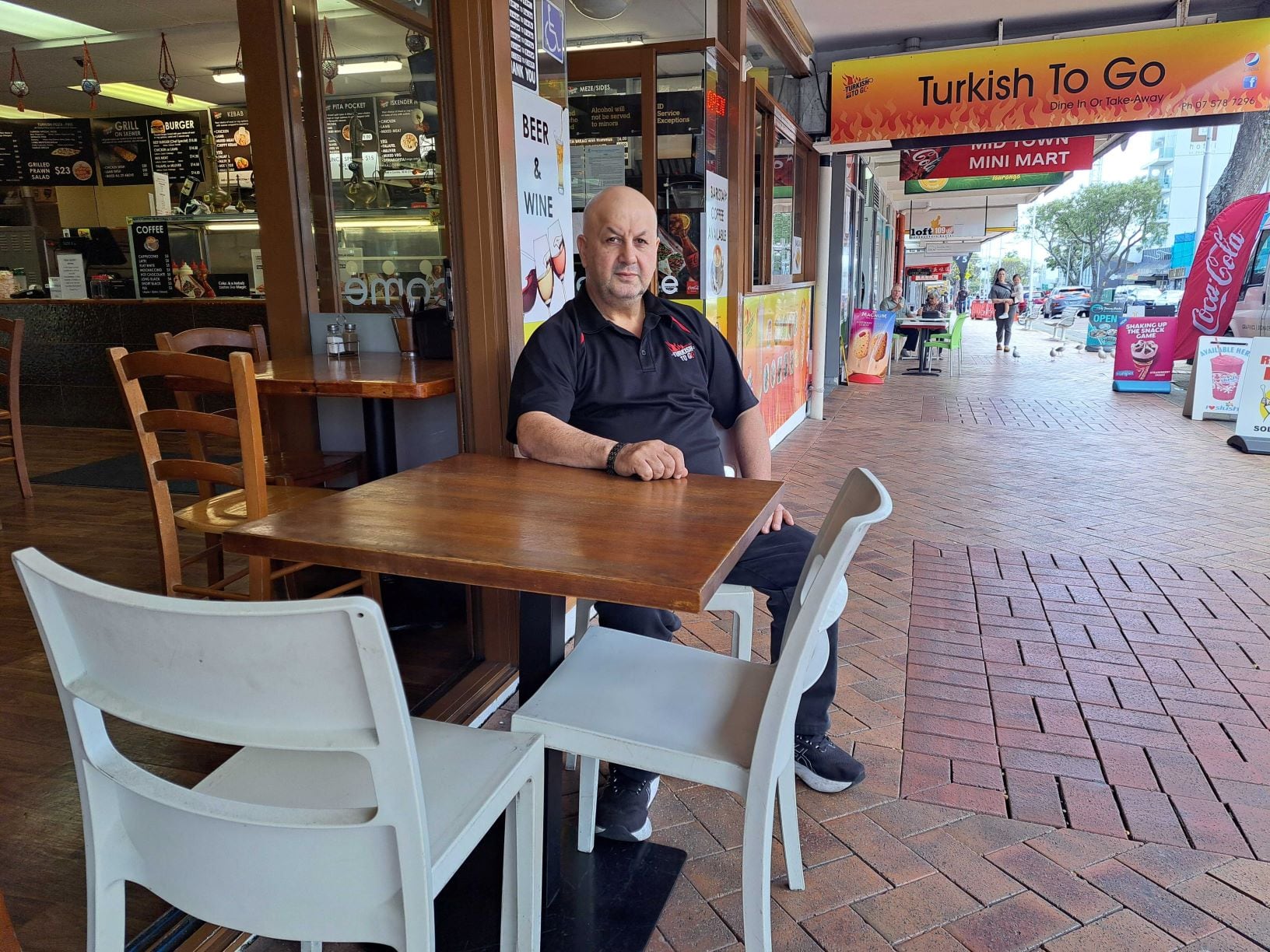
Turkish to Go Tauranga cafe owner Mas Eden. Photo / Sandra Conchie
“Something needs to be done, but when people are moved on, they also need support – whether that’s help finding work or access to addiction or mental health programmes.”
Tauranga City Lotto owner Raj Kumar said he was “50/50″ on the new powers.
“Not all homeless people cause problems,” he said. “But when some are using drugs and yelling at people, it negatively affects our business and our customers.”
One retailer, who asked not to be named for safety reasons, said the new powers were overdue.
“There is too much begging, too many disruptions and sometimes shoppers are hesitant to come inside when homeless people are gathered outside.”
“I understand some of the homeless have mental health issues – but I’m also trying to run a business."
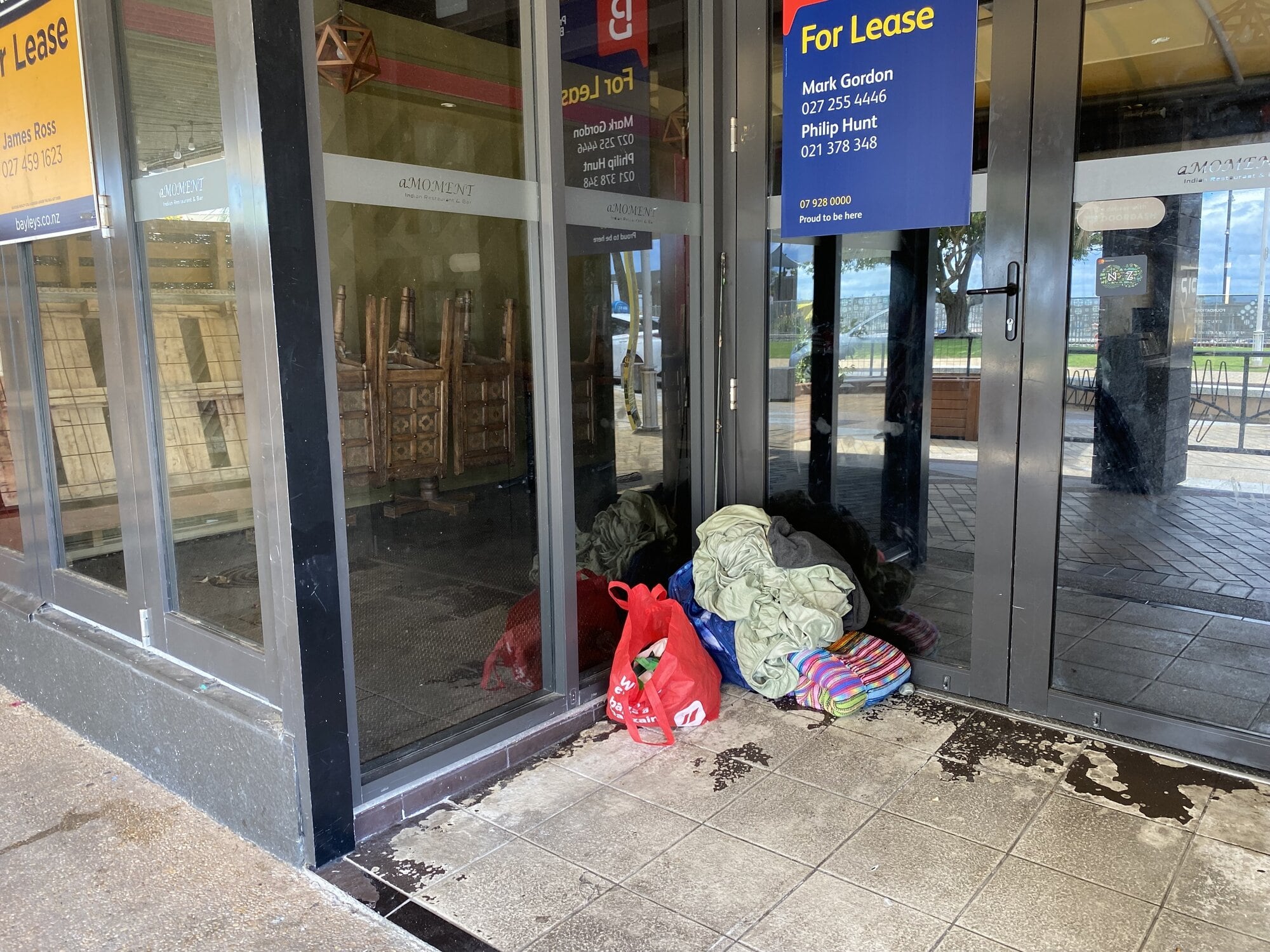
Belongings left in a doorway on The Strand, Tauranga. Photo / Ayla Yeoman
Another CBD owner, who also spoke on the condition he was not identified, said he had also experienced homeless people begging for food, and a homeless youth recently broke a window, which he could not afford to fix.
Stronger measures were essential to protect businesses and rebuild customers’ confidence in visiting the CBD, he said.
The general manager of service organisation Under the Stars, Ani Stace, said she understood concerns about safety in public spaces, but feared move-on powers would “cause real harm” to some of the city’s most vulnerable residents.
“Every week we see people sleeping rough, battling addiction, navigating mental illness, or simply stuck in a system with too few pathways forward – they don’t wake up on cold concrete and think ‘today’s a great day to disrupt the peace’.”
Stace said moving homeless people around did not move them closer to a home, treatment, or stability – it simply made their suffering less visible.

Under the Stars strategic general manager Ani Stace.
She urged the Government to ensure “robust, funded support services” sat alongside the new powers.
Wayne Shadbolt, who runs the Tūmanako Project at Oak Lane Community Church (formerly the Lifezone Church) in Judea, said the change would be like a “two‑edged sword”.
“You can move people on, but without the proper supports, the underlying issues remain.”
A “genuine solution” was needed.
“Many of our homeless are dealing with mental health and addiction challenges. There has to be more government funding for voluntary support service providers who are working with them.”
What the politicians say
Tauranga MP Sam Uffindell said business owners and city councillors had specifically requested move‑on powers and the Government had delivered.
“This will make our city safer,” he said.

Tauranga MP Sam Uffindell. Photo / Rosalie Liddle Crawford
Uffindell acknowledged the city continued to grapple with deep‑seated addiction and mental‑health problems, particularly relating to methamphetamine.
He said there was still much work to do to support these “vulnerable” members of society.
Labour MP Jan Tinetti criticised the plan as a “band‑aid” measure that would not fix the housing shortage in Tauranga or across the country.
“People here are already under pressure from rising costs, and we need real solutions.”

Labour MP Jan Tinetti.
Tinetti said the Government cut the funding and stopped public housing builds, which had cost construction jobs and left Tauranga short of homes families need.
“They made the situation much worse, and this announcement doesn’t change that.”
Tauranga Mayor Mahé Drysdale welcomed efforts to address homelessness issues, but said move‑on powers alone would not deliver a long‑term solution.
“Like many cities, Tauranga is experiencing the impacts of homelessness and disruptive behaviour.”
He said it was positive to see the Government looking at ways to respond, but short‑term move‑on orders treated symptoms rather than the underlying causes.

Tauranga Mayor Mahé Drysdale. Photo / NZME
“People cannot simply be moved on without somewhere appropriate to go.”
Drysdale said addressing homelessness remained a focus for him and the city councillors.
Meaningful progress required a “co-ordinated, multi-agency” effort involving the council, central government agencies such as health services, housing providers, police, iwi and community partners.
Move-on orders
The Government has agreed to amend the Summary Offences Act to provide police with the power to issue move-on orders to people who are:
– Displaying disorderly, disruptive, threatening or intimidating behaviour
– Obstructing or impeding someone entering a business
– Breaching the peace
– Begging, in all forms
– Rough sleeping
– Displaying behaviour indicating an intent to inhabit a public place.
These rules will come into effect after a law change, likely before the November election.
Sandra Conchie is a senior journalist at the Bay of Plenty Times and Rotorua Daily Post who has been a journalist for 25 years. She mainly covers police, court and other justice stories, as well as general news. She has been a Canon Media Awards regional/community reporter of the year.

1 comment
Ghost Town
Posted on 26-02-2026 07:28 | By Thats Nice
Unfortunately, there's more homeless in Tauranga CBD than shoppers.
Leave a Comment
You must be logged in to make a comment.