


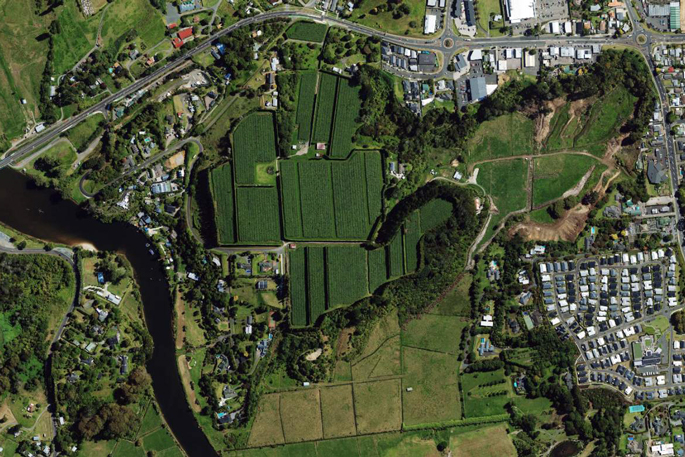
Tauranga City Council is abandoning plans for housing on land it bought in Bethlehem 25 years ago.
The council has instead gone “full circle” to again wanting to use the 22ha Parau Farms – Pōteriwhi – site for the original purpose it was purchased for: a major sport and recreation hub.
The land is located off State Highway 2 at Parau Drive on the lower Wairoa River.
The council bought the site in 2000 for future development as sports fields. It has been operating as a kiwifruit orchard in the meantime.
In 2021, amid concern about Tauranga’s growing housing shortage, the Crown-appointed commission governing the council decided to look at selling some of the land for housing.
The council investigated this with Kāinga Ora and Ngāti Kahu and ran a public consultation.
About two-thirds of the feedback was opposed to housing, with concerns about the loss of green space and the need for recreational space.
In 2023, the commission approved an alternative mixed-use urban development involving up to 300 homes and some recreation facilities.
The council applied for the project to be considered for inclusion in the Government’s Fast-Track Approvals Act schedule, but it missed out.
On Tuesday, elected members of the council’s City Futures Committee voted unanimously to prefer the Pōteriwhi land be used as a mix of active and passive reserves for sports and recreation, and not for housing or other urban development purposes.
They agreed to rescind key commission decisions on Pōteriwhi.
A staff report for the meeting said the council last developed major active reserves in the 1990s, with Gordon Spratt Reserve in Papamoa and Waipuna Park in Welcome Bay.
There was a shortfall of sports fields, outdoor courts, major playgrounds and active reserves in the west of the city, with a longer-term need for more indoor courts and potentially a new pool facility.
“In some cases clubs are now capping membership, which puts up barriers to participation and the associated health and wellbeing benefits,” the report said.
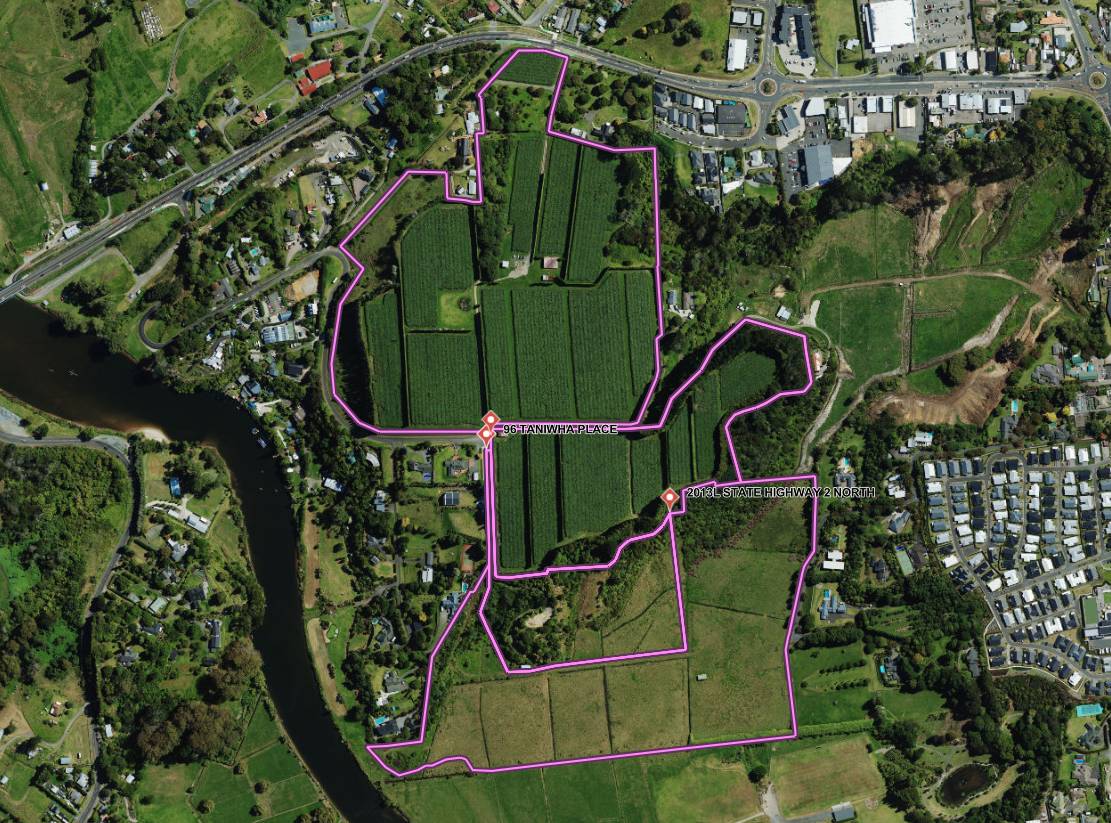
The site would include sports fields, cricket ovals, indoor courts and more. Photo / NZME
Pōteriwhi could provide for up to six sports fields and “a range of other sport and recreational outcomes, play facilities, walking, cycling and water access connections to the Wairoa River esplanade and ecological and historical reserves”.
Two concept plans have been developed.
The first includes six rugby/football fields, two cricket ovals, three to four hardcourts, an “option for three indoor courts”, clubrooms, play facilities, gardens and more.
The second concept sacrificed one field and oval for more courts.
The report said things had changed since the commission’s housing decision.
While housing was still a feasible option for the site, enabling it became more difficult and uncertain, while plans to put sports fields elsewhere also hit barriers.
The net cost after selling land for housing for a mixed housing/recreation development at Pōteriwhi, plus four fields at Tauriko West, was estimated at $31.2 million to $21.4m.
Using it for active reserves alone, with two fields at Tauriko West and “100 houses not displaced” was $33.3m.
During Tuesday’s meeting council strategic planning and partnerships, spaces and places manager Ross Hudson and head of city planning and growth Andrew Mead recommended the land be used solely for sports and recreation.
Hudson said the low-lying position of the site made it difficult and more expensive for wastewater infrastructure development.
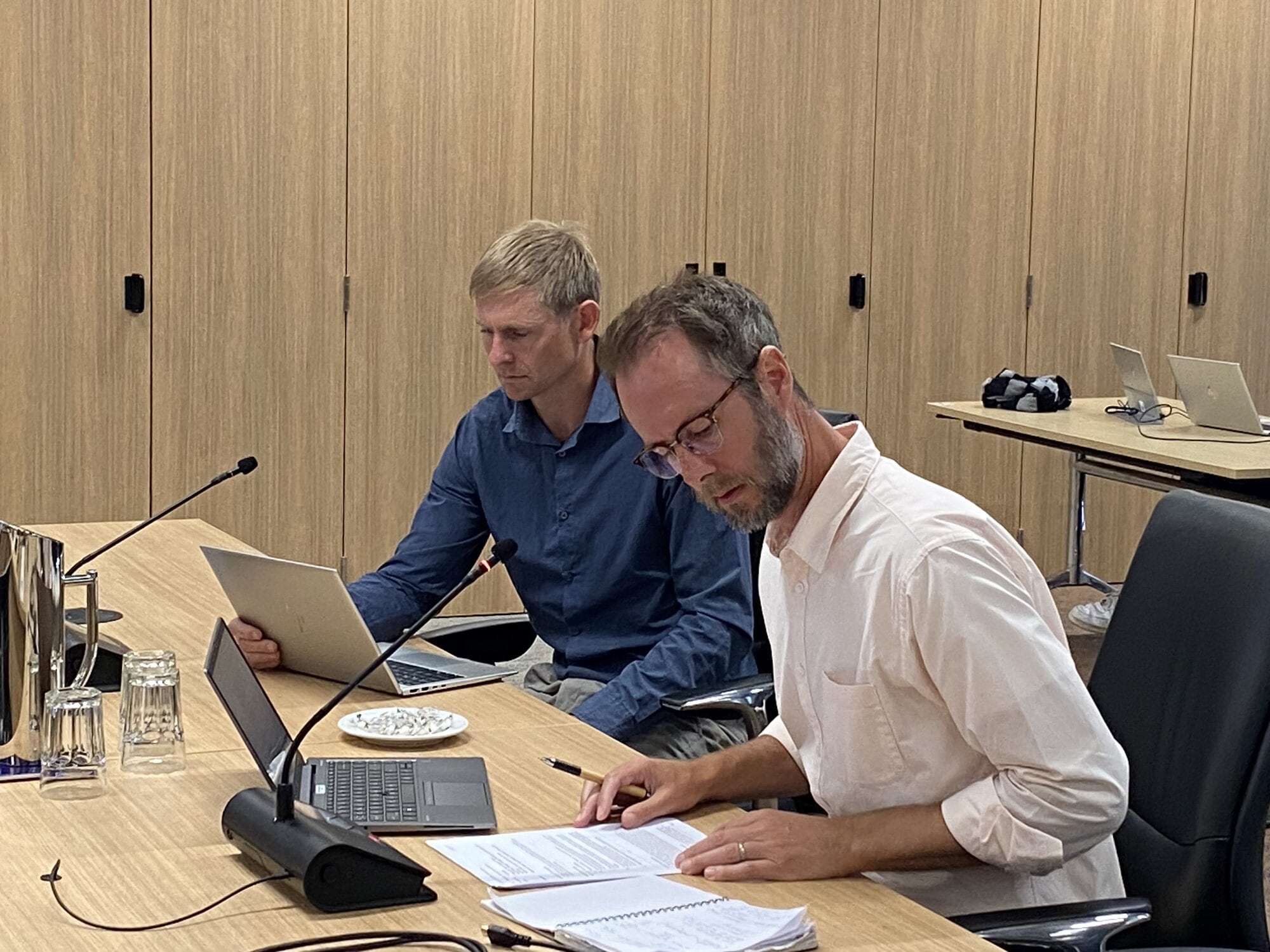
Tauranga City Council head of city planning and growth Andrew Mead and strategic planning and partnerships, spaces and places manager Ross Hudson. Photo / Ayla Yeoman
Bethlehem ward councillor Kevin Schuler, a former All Black, said he wanted to be able to walk his grandchildren to their sports.
He said the western side of the city was lacking in these facilities.
Tauranga Mayor Mahé Drysdale said the west had a big “deficit”.
“We can do housing better elsewhere.”
Te Papa Ward councillor Rod Taylor said he was glad to see the council had “gone full circle” by keeping the plan to have a recreational site.
The option to use the site for recreation was supported by tangata whenua as the preferred option.
The council approved staff to progress the reserves option by undertaking stakeholder engagement with elected member input, detailed design and implementation planning.
They would report back to the committee with a proposed implementation plan for consideration for the upcoming Long-Term Plan.
Ayla Yeoman is a Local Democracy Reporting journalist based in Tauranga. She holds a Bachelor of Arts majoring in communications, politics and international relations from the University of Auckland, and has been a journalist since 2022.
LDR is local body journalism co-funded by RNZ and NZ On Air.


0 comments
Leave a Comment
You must be logged in to make a comment.