


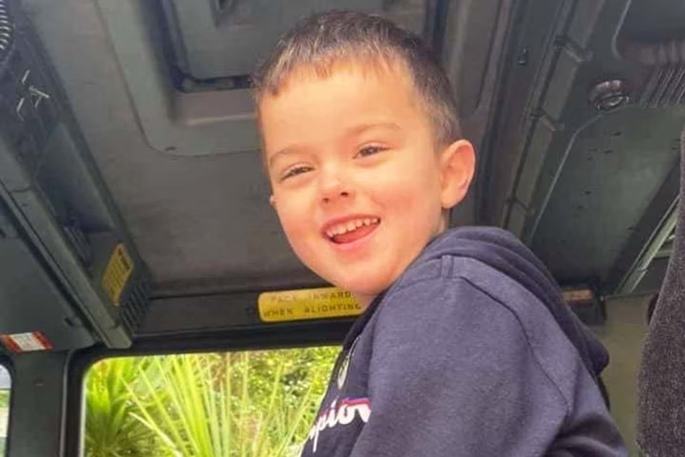
New Zealand has made no significant improvement to children’s safety since the high-profile death of Malachi Subecz in 2021, a new review has found.
Another 24 children were killed by their caregivers between December 2021 and June 2025, according to the Independent Children’s Monitor (ICM).
Most of the children were under the age of 5 and many were babies, and most perpetrators were known to police, the review by the independent Crown entity revealed today.
Oranga Tamariki was aware of half of those children before their deaths because someone had made one or more reports of concern about them
This is ICM’s second review into what has been done about recommendations from the Director General of Health following Malachi’s death.
The review looked into the progress made by agencies to improve child safety and found Oranga Tamariki lacked the resources to properly respond to reports of concern.
“Tamariki are still no safer now than when Malachi died,” the report read.
In 2021, 5-year-old Malachi Rain Subecz was tortured and murdered by his caregiver Michaela Barriball, who is serving a life sentence with a minimum non-parole period of 17 years.
Malachi’s sole parent was his mother, Jasmine Cotter, who was jailed in June 2021 for importing drugs and signed over guardianship of her son to her then-friend, Barriball.
His death became one of New Zealand’s most high-profile child murders and prompted multiple inquiries and reviews.
The six government agencies that were in contact with Malachi, Barriball and Cotter all conducted practice reviews.
These agencies were the New Zealand Police, the Department of Corrections, Oranga Tamariki, the Ministry of Social Development, the Ministry of Education and the Ministry of Health.
In 2022, the agencies jointly commissioned a review of the children’s sector from the Director-General of Health at the time, the late Dame Karen Poutasi.
Poutasi’s review found children continued to fall through gaps of the safety net designed to protect them.
She made 14 recommendations for improving child safety and last year the Government accepted all of them.
As of 2026, only two of those recommendations had been implemented.
“Our review also found that even if everything Dame Karen said was needed to close the gaps is done, we are not confident that Oranga Tamariki will be able to respond appropriately,” Independent Children’s Monitor chief executive Arran Jones said.
 Oranga Tamariki is still not always able to respond when it needs to keep a child safe, the review found.
While the number of reports being made to Oranga Tamariki were increasing, the number of reports local offices took action on had not risen and remained at 40,000 across nine years.
Jones said people had to make multiple reports to Oranga Tamariki before action was taken.
Meanwhile, Oranga Tamariki staff were concerned about being unable to physically visit children because of limited resources, he said.
The review found some Oranga Tamariki offices took no action on more than half of the reports passed onto them from the national contact centre, despite those reports being considered serious enough to warrant a response.
The ICM also found most other Government agencies were making reports of concern to Oranga Tamariki and had “put some training in place for staff in lieu of Oranga Tamariki providing this”.
Chief Ombudsman John Allen said the review’s findings raised the need for “cross agency collaboration, for health, education, welfare and justice, to keep working together for a better care and protection system.”
“This is the type of shift that Dame Poutasi was calling for.”
If you are worried about the safety or wellbeing of a child, contact Oranga Tamariki by calling 0508 326 459.
If you think a child is in immediate danger, call 111.
FAMILY VIOLENCE
How to get help:
If you're in danger now:
• Phone the police on 111 or ask neighbours or friends to ring for you.
• Run outside and head for where there are other people. Scream for help so your neighbours can hear you.
• Take the children with you. Don't stop to get anything else.
• If you are being abused, remember it's not your fault. Violence is never okay.
Where to go for help or more information:
• Women's Refuge: Crisis line - 0800 REFUGE or 0800 733 843 (available 24/7)
• Shine: Helpline - 0508 744 633 (available 24/7)
• It's Not Ok: Family violence information line - 0800 456 450
• Shakti: Specialist services for African, Asian and Middle Eastern women and children.
• Crisis line - 0800 742 584 (available 24/7)
• Ministry of Justice: For information on family violence
• Te Kupenga Whakaoti Mahi Patunga: National Network of Family Violence Services
• White Ribbon: Aiming to eliminate men's violence towards women.
How to hide your visit:
If you are reading this information on the Herald website and you're worried that someone using the same computer will find out what you've been looking at, you can follow the steps at the link here to hide your visit. Each of the websites above also has a section that outlines this process.
Janhavi Gosavi is a Wellington-based journalist for the New Zealand Herald who covers news in the capital.

1 comment
Absolutely Shocking
Posted on 19-02-2026 09:20 | By Yadick
Absolutely shocking, appalling and ridiculous. What a mind numbing headline!
Nip it in the bud by if they want to close ranks on the perpetrators then prosecute them all. Take the would be sentence, divide it between all of them and send them to different prisons.
Alternatively lock them all up until they start giving up leading information that results in a prosecution.
Leave a Comment
You must be logged in to make a comment.