


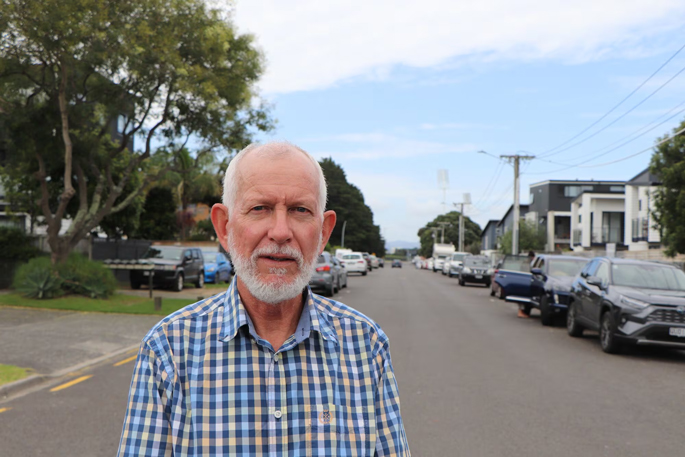
Plans to reduce a Mount Maunganui street to one lane and add more parking are opposed by a local who says hundreds of motorists will be inconvenienced.
Tauranga City Council has agreed to make Miro St, by Blake Park, one-way and add 22 extra angled parks at a cost of up to $315,000 - or $14,318 per park.
Half of the new parks would be on Miro St and half in a new recessed parking bay on Matai St.
The council also agreed to potentially expand the one-way street system in the future to the northern section of Miro St and Tawa St, and – in a split vote – to build a new footpath costing up to $150,000.
Miro St resident Richard Longley addressed the council meeting on Tuesday, saying the change would “inconvenience hundreds of people daily who have to drive approximately 900m around the block”.
He estimated more than 300 people lived on the affected section of Miro St, which he said had 128 dwellings.
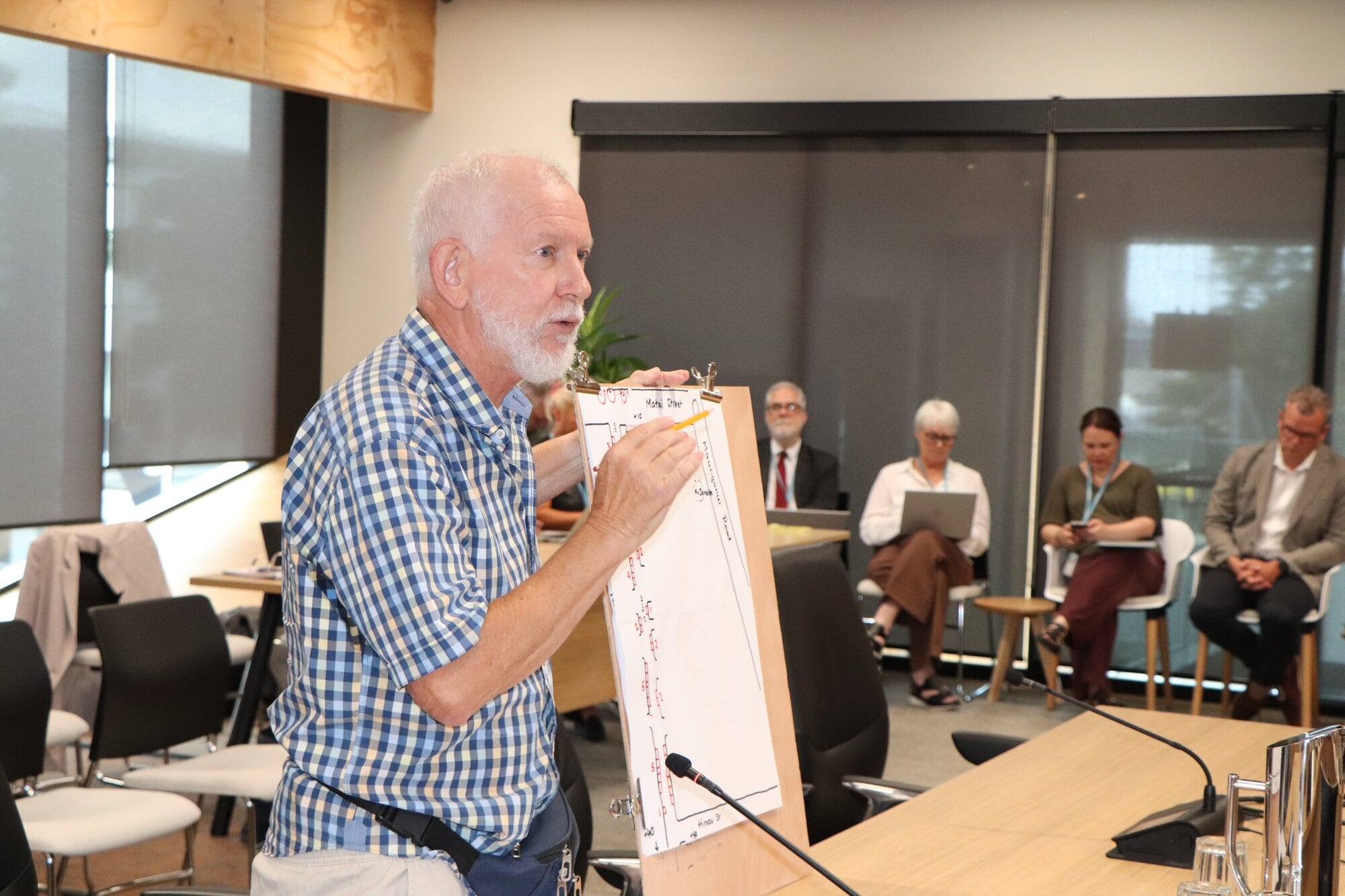
Miro St resident Richard Longley presenting his suggestion to the council in Tuesday's meeting. Photo / Ayla Yeoman
The 70-year-old retiree supported adding more parks but believed there were ways to do this without resorting to a one-way system.
Longley hoped he could rally together enough of his neighbours to change the councillors’ minds.
He has been visiting neighbours with a petition asking the council to keep the street two-way and add more parks, and plans to take it to the mayor if it shows a majority in support. He said he had developed a new proposal for how this could be done since presenting an initial proposal at the meeting.
A report by project manager Kurt Graham and transport system operations manager Shawn Geard said Miro St was experiencing significant parking pressure due to the residential intensification, nearby businesses, and Blake Park sporting facilities.
“The Miro St community has notified the council of the issues and requested improvements.”
The current layout featured a two-way street with parallel parking on both sides of the most impacted section between Matai St and Hinau St, totalling 37 spaces.
The report said the parking demand outweighed capacity, and parking on berms was the norm, with as many as 18 vehicles on the berm observed during surveys.
This reduced pedestrian safety and connectivity, damaged berms and caused visibility issues at property access points.
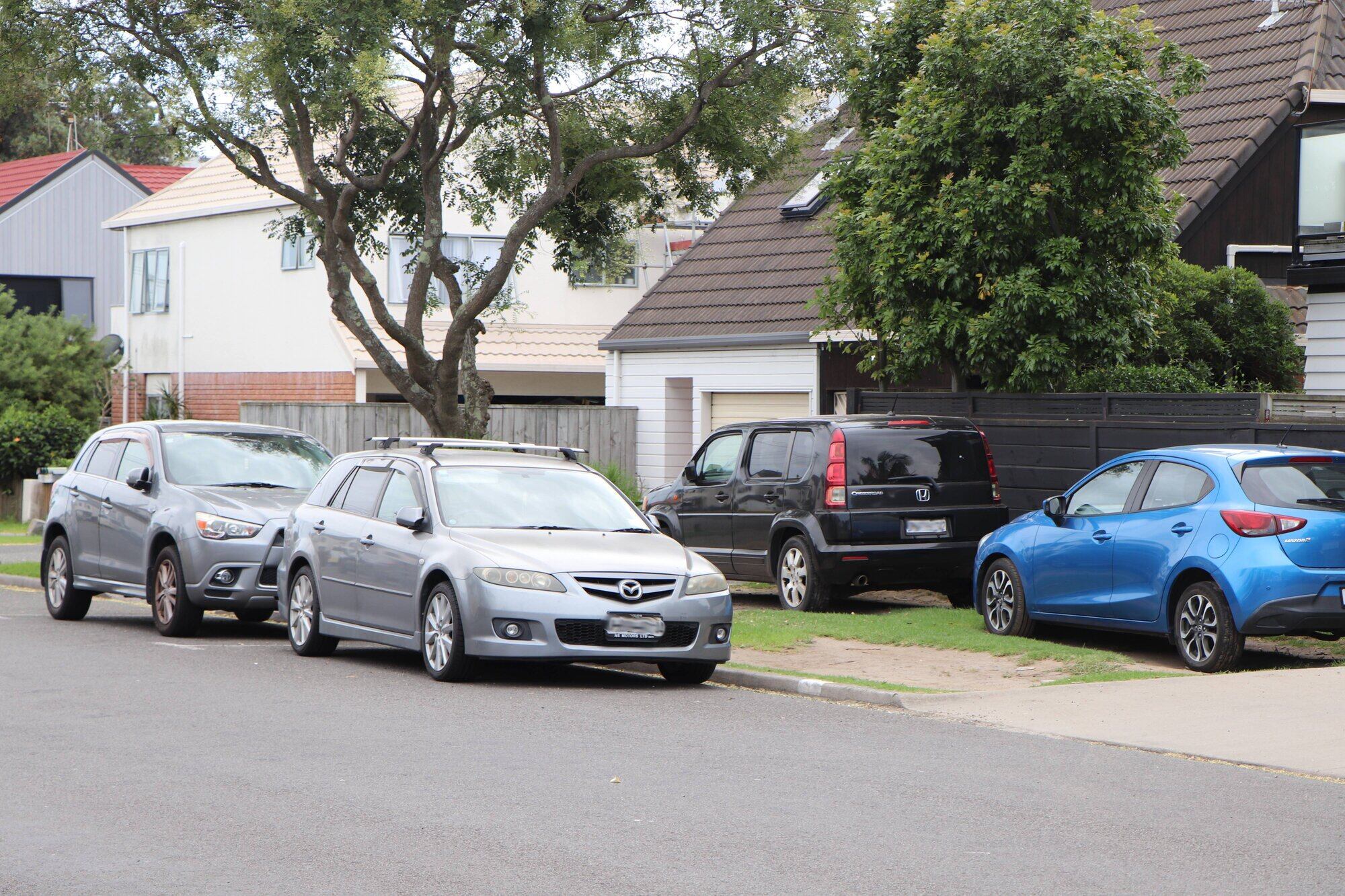
Berm parking on Miro St. Photo / Ayla Yeoman
Council staff found the most cost-effective way to give residents better parking options was making the street one-way and adding parks.
An online survey found 41 people, including 23 residents of the neighbourhood, backed this option, compared to 19 opposed, including eight residents.
Building a footpath on the eastern side was recommended to ease berm parking issues without banning the practice outright, which would require a bylaw.
The council also considered two options to keep the street two-way and add parking.
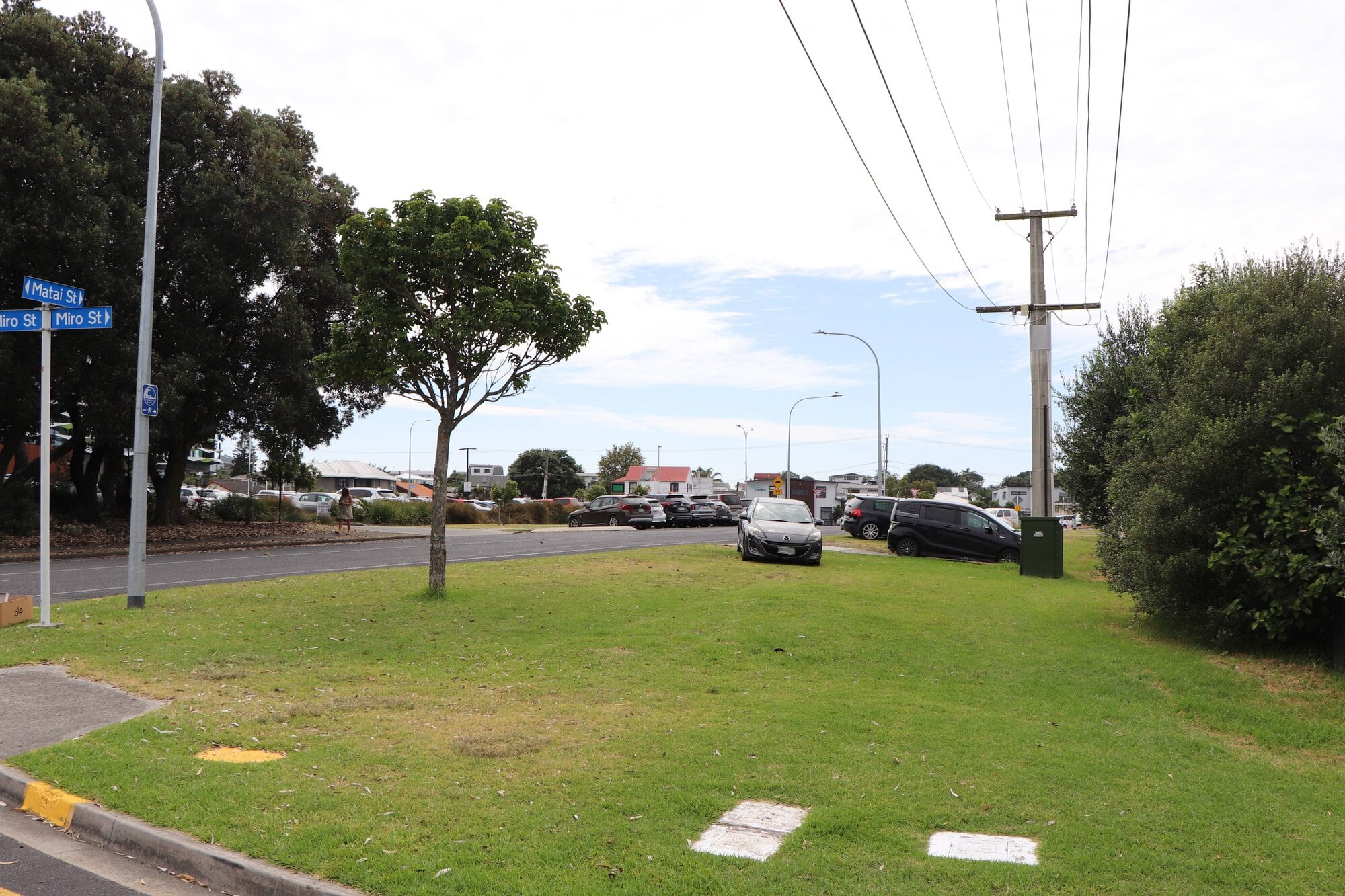
Eleven new parking spaces would be constructed in a recessed parking bay on Matai St. Photo / Ayla Yeoman
Widening the road to change parallel parking to angled parking on one side would add 40 parks for $1.15 million or $28,750 per new space.
A hybrid option with smaller recessed parking bays would add just two more parks than the one-way proposal, but would cost $520,000, or $21,667 per space, the council found.
The main risk of the one-way option was the need to make a bylaw change, while the two-way options’ risks centred on the possible need to relocate underground services.
Solution ‘not perfect’
Graham told the meeting the change was in response to several complaints the council had received about insufficient parking.
He said he had reviewed Longley’s initial proposal to keep the street two-way, adding 90-degree angled carparks and a 30km/h speed limit.
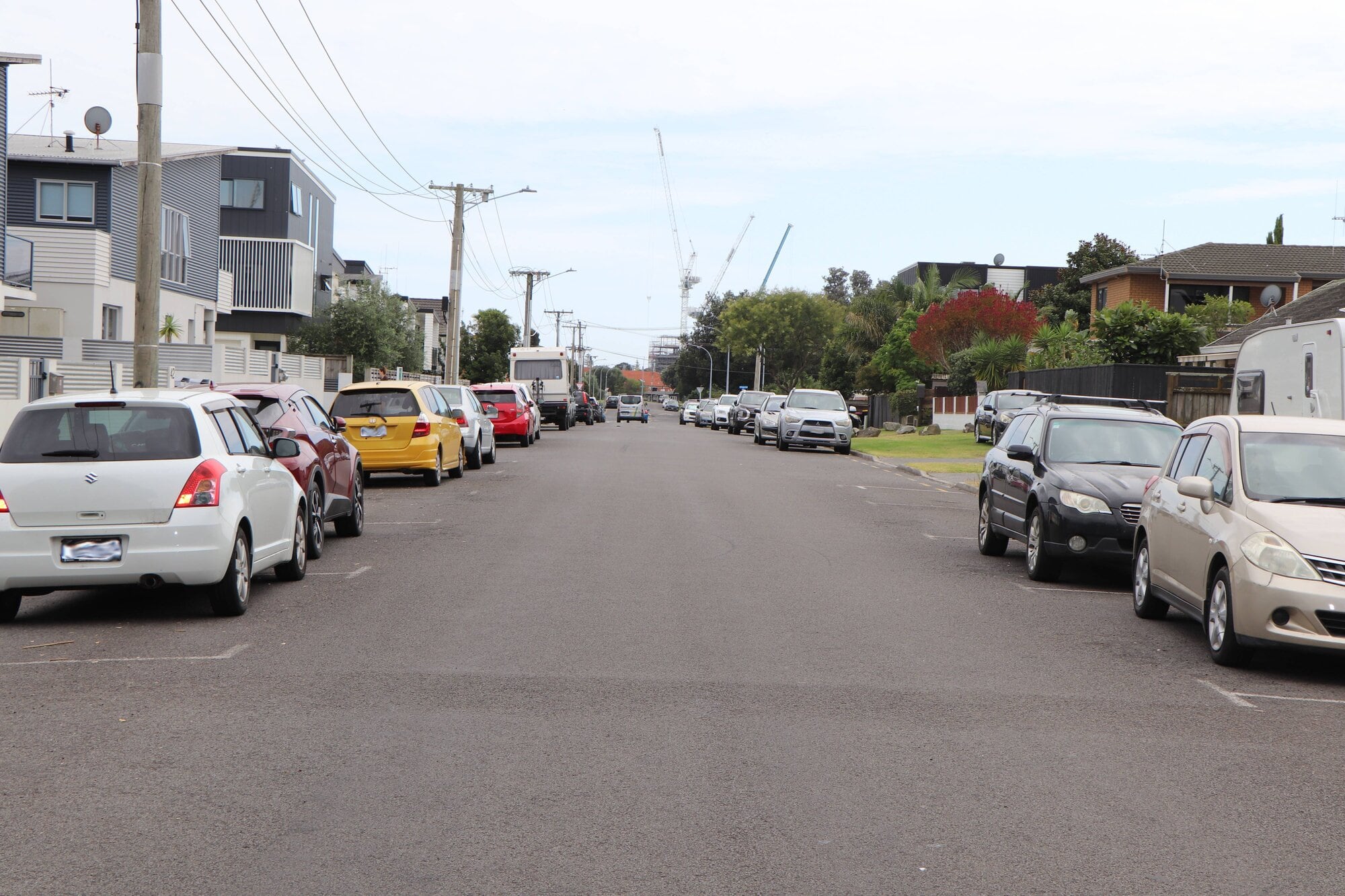
The current car parking situation on Miro St. Photo / Ayla Yeoman
Graham said there was fundamentally not enough room to increase parking that way, and widening the road would increase the cost. The council would struggle to get the reduced speed limit approved.
He admitted the one-way solution “was not perfect” but said it was a trade-off between the costs and available space.
The footpath would also help clear crowds spilling on to the street when Blake Park and Bay Oval events ended.
Geard said the one-way street would be northbound to ensure cars could get out of Blake Park as quickly as possible.
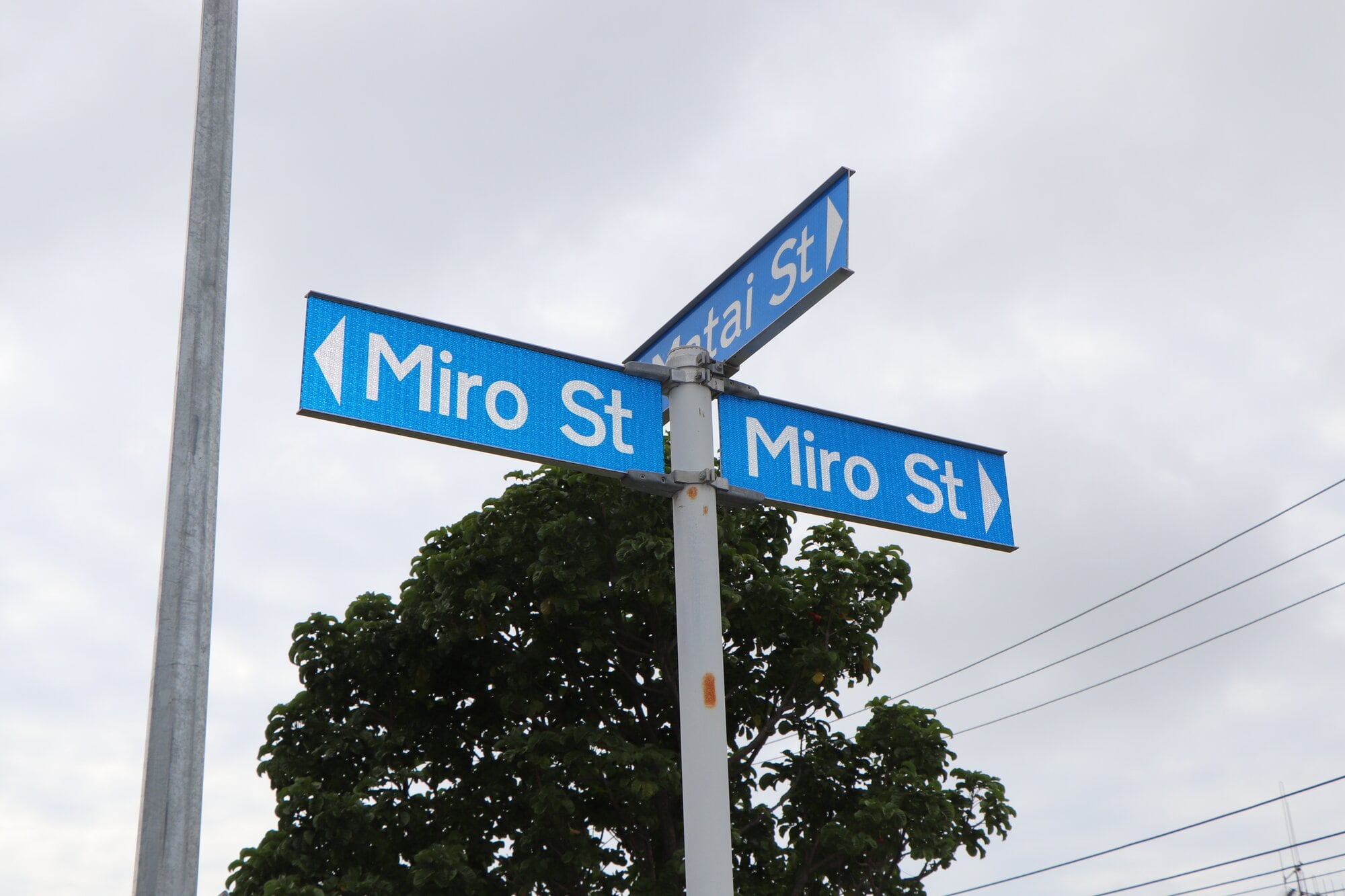
Miro St is located in Mount Maunganui by Blake Park. Photo / Ayla Yeoman
He said it would add 500m of driving distance coming from Maunganui Rd, and slightly longer – about a minute of driving – coming from Totara St.
The work would be started alongside planned resealing of Miro St in March/April to minimise cost and disruption, and would be completed in stages during this financial year.
What other residents think
Miro St residents Hannah Gavin and Kayla Steel told Local Democracy Reporting that their flat of five usually had three cars parked off street and two on the berm.
Steel said the change to a one-way street would be “annoying”, and when the pair returned late from working at a bar in Mount Maunganui, it would be a nuisance having to loop around to get home.
Yunhai Wang, on the other hand, said he was not bothered by the one-way idea.
“That’s not a problem for me.”
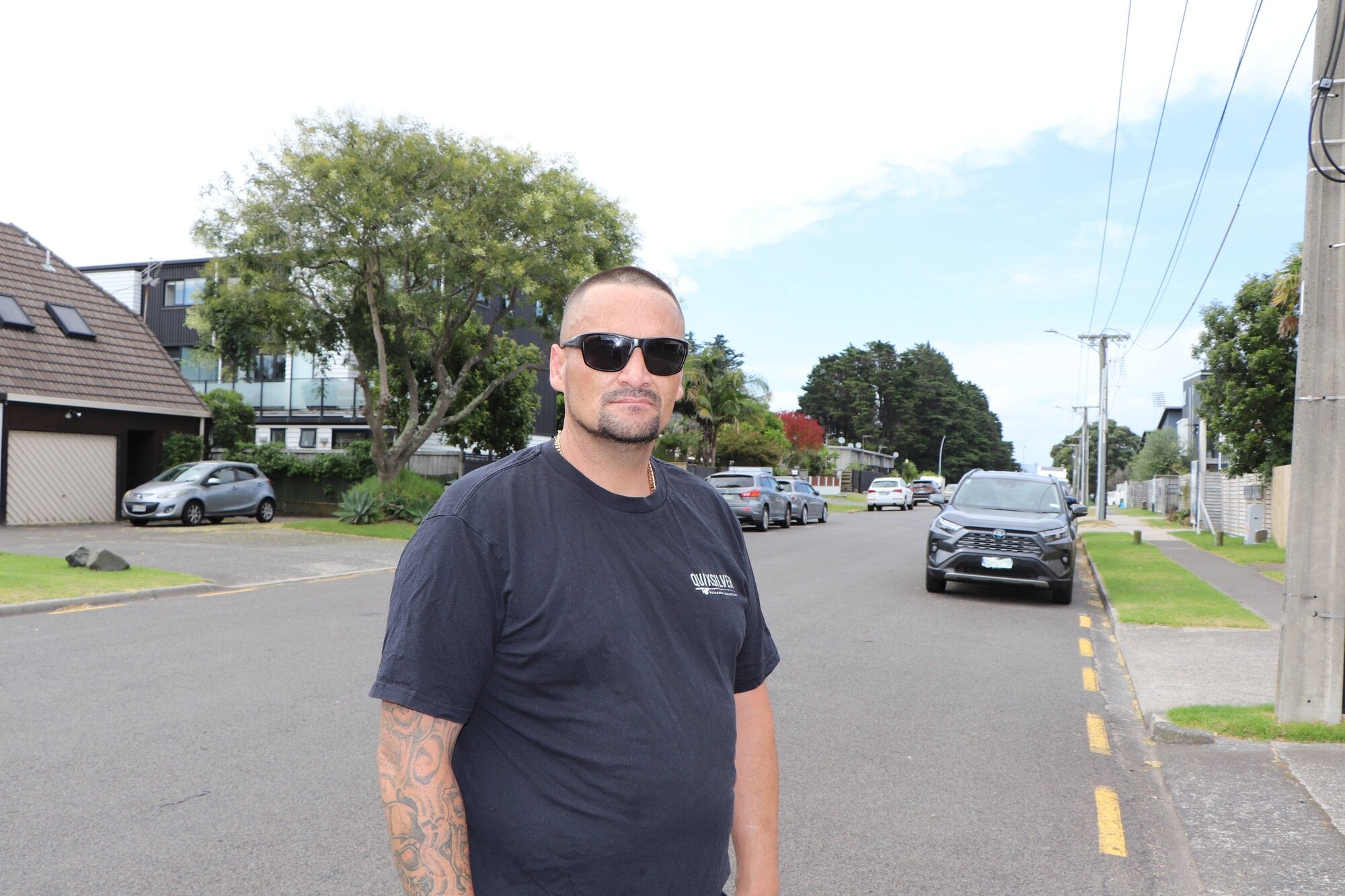
Miro St resident Phillip Morgan. Photo / Ayla Yeoman
Another resident, Phillip Morgan, said he had plenty of off-street parking and preferred to keep the street as it was.
“I’d rather have them fix up the parking and stuff like that and keep it two-way.”
Ayla Yeoman is a Local Democracy Reporting journalist based in Tauranga. She holds a Bachelor of Arts majoring in Communications and Politics & International Relations from the University of Auckland, and has been a journalist since 2022.
LDR is local body journalism co-funded by RNZ and NZ On Air.


0 comments
Leave a Comment
You must be logged in to make a comment.