


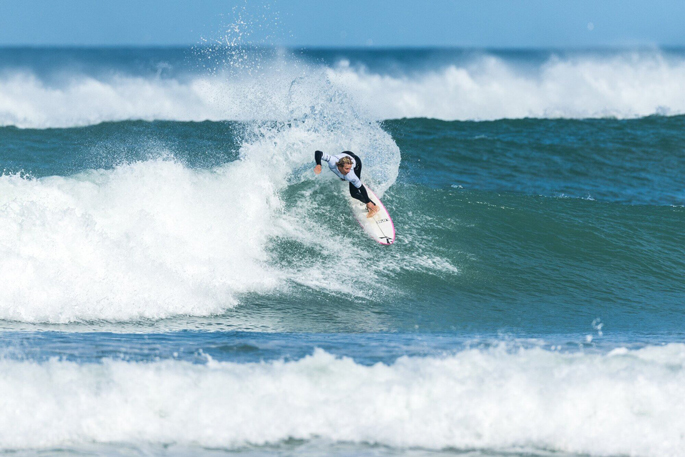
At 18, Levi Stewart was in the prime of his junior surfing career, competing in a Surf New Zealand contest at Piha Beach on Auckland’s West Coast.
The Waihī-born surfer was navigating the challenging Piha bar in pumping conditions when things went wrong.
“The waves were quite big,” Stewart said in a statement to SunLive. “I was just going for a bit of a turn when I got caught in the lip and thrown down into the water. I got bent in half, pretty much.”
The impact was devastating. Stewart broke his back in four places.
As a teenager, he didn’t initially grasp the severity of the injury, assuming it was a setback that would heal quickly.
“I thought I’d be fine in two weeks,” he said. “But once I found out the extent of the injury, it was a real shock. The pain was excruciating.”
Barely able to walk, Stewart spent months confined to bed.
“The first few days were horrific – just painful and scary. I had pain down my legs and couldn’t do much at all.”
For his mum, Joy de Lautour, who lives at Waihī Beach, watching her son struggle was heartbreaking.
“Levi had gone from being a promising young surfer to being on practically full bed rest,” she said. “It was incredibly sad to see both his mental and physical struggle.”
Stewart was forced out of the water for more than a year, only beginning to feel normal again around 18 months after the accident. The physical toll was immense, but the mental strain proved just as challenging.
“It was a very long road back to recovery,” he said. “At first, I thought I’d get through it quickly. When you’re young, you think you can overcome anything. But after about eight months, I felt like I was going backwards. I started doubting whether I could ever surf again at the level I wanted.”
His mum recalled countless appointments with spinal specialists and long periods where progress felt slow.
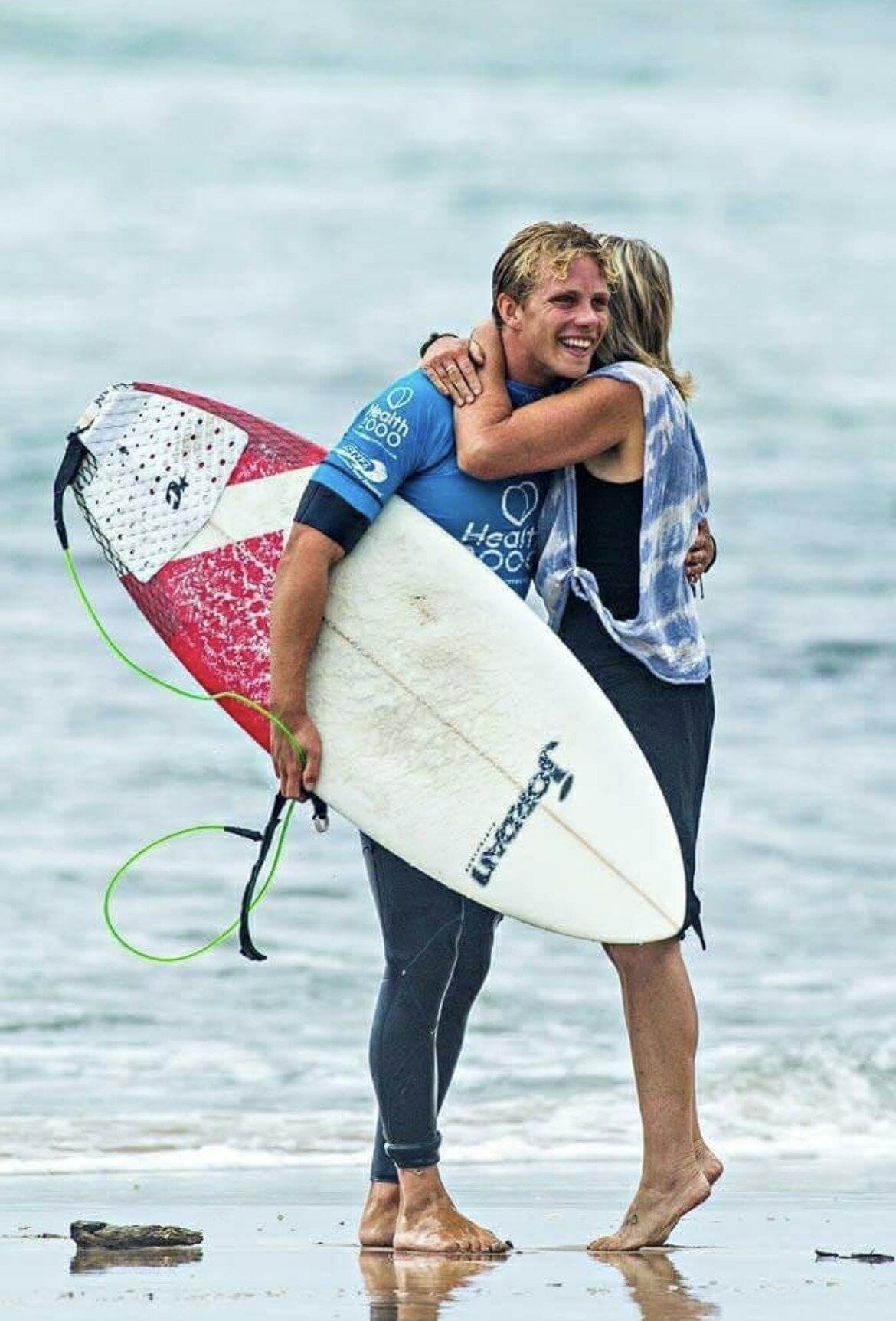
Levi Stewart and his mum Joy de Lautour. Photo / Cory Scott
“Then hope started appearing when Levi was able to swim and slowly became stronger,” she said. “The positive post-it note goals on his wall were starting to come true.”
Around the one-year mark, Stewart reached a turning point.
“I flicked a switch in my mind,” he said. “I thought, ‘These are the cards I’ve been dealt. I can either feel sorry for myself or do something about it.’”
He committed fully to rehabilitation — swimming, physiotherapy, massage and strength work — often training two or three times a day.
“As my physical condition improved, my mental state lifted too,” he said. “It was about taking ownership of my recovery.”
After nearly two and a half years, Stewart returned to competition. He still vividly remembers his first surf back at Waihī Beach.
“That first surf was emotional,” he said. “I caught a few waves, then came back onto the beach and bawled my eyes out. I was just so happy to still be able to do it.”
For his mum, the moment brought both relief and anxiety.
“I had that fear that Levi’s back would give way,” she said. “But mostly, it was the wonderful feeling of being back in that happy place – a mum watching her son surf.”
Now 30 and living in Brisbane, Stewart said surfing is far more than a sport. It’s a place of clarity and calm.
“Every time I come in from a surf, I’m probably a better person,” he says. “I don’t need anything except my board. Out there in the ocean, everything makes sense.
“Now, I surf purely for the love of it,” he said. “The thrill, the peace – it’s about that connection to the ocean.”
Just when Stewart believed he’d overcome the worst, fate struck again. Three years ago, at 28, he suffered another serious back injury.
“The surf wasn’t even that big,” he said. “But I got bent around, felt something go, and then the pain down my legs was terrible.”
The second injury proved just as serious as the first and effectively ended his competitive surfing career.
“It was a different challenge,” he said. “Being older and knowing what I’d been through made it mentally confusing.”
Recovery took another 18 months to two years. Stewart said support from ACC was critical during both rehabilitation journeys.
He said the mental toll weighed heavily, particularly during the second recovery.
“The injury gave me time to think about what I wanted to do next.”
With a support system in place to help him regain focus and confidence, Stewart eventually returned to study and teaching.
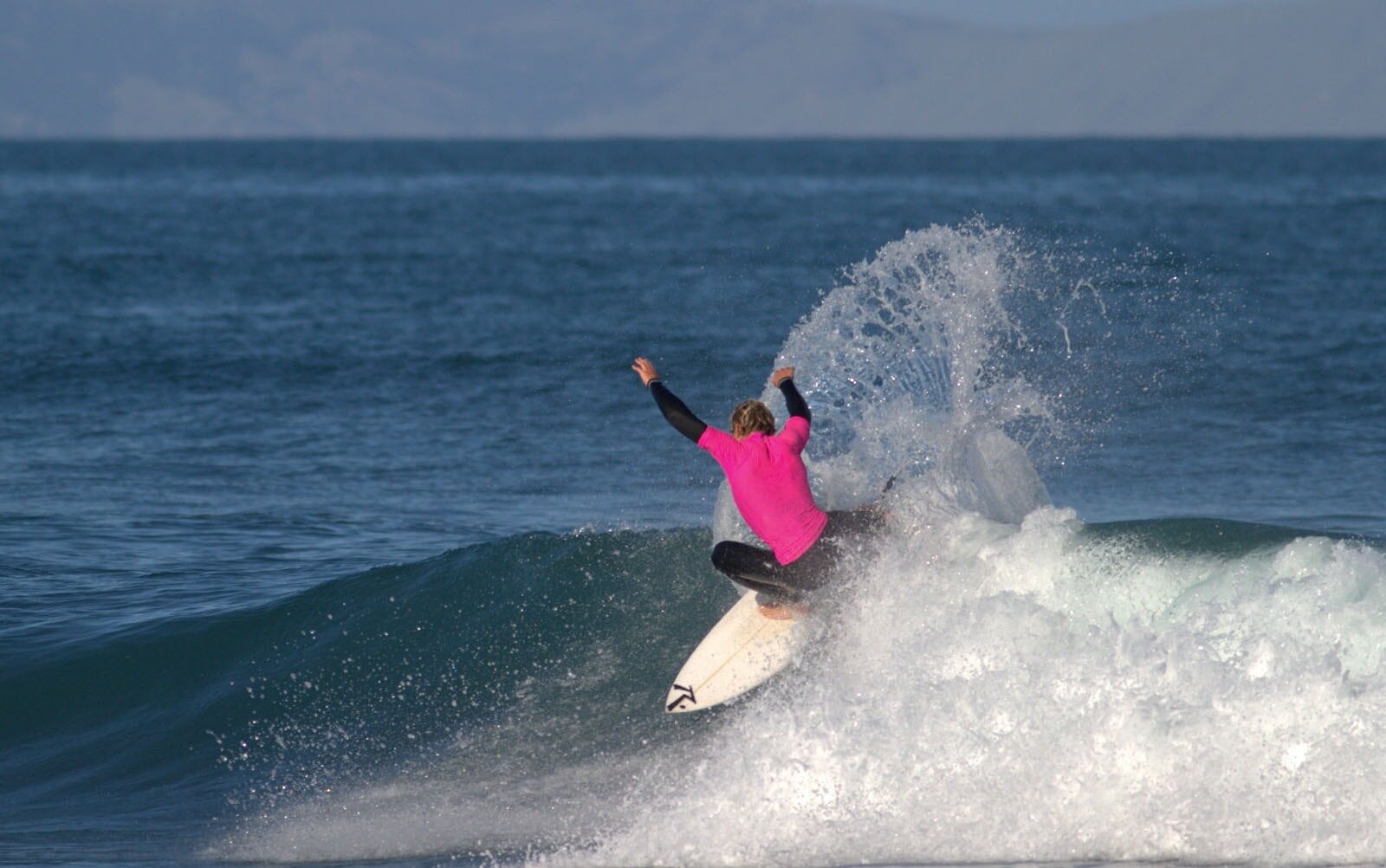
Levi Stewart. Photo / Colin McKenney
Despite everything, Stewart feels incredibly fortunate.
“Breaking my back in four places – most people wouldn’t be able to do what I’ve done,” he said. “I think about that every time I’m out surfing or running.”
He’s acutely aware of how differently his life could have turned out.
“I know I could have ended up in a wheelchair that day. I pinch myself every time I’m able to be out there.”
In 2025, ACC accepted almost 6000 surfing-related injury claims, costing more than $15 million to help people recover.
ACC injury prevention leader James Whitaker said anyone entering the surf needs to respect the ocean.
“The ocean is beautiful and provides a lot of joy, but it’s also bigger and more powerful than any of us,” he said.
Whitaker encouraged surfers to assess conditions before paddling out, while Stewart stressed knowing your limits.
“If you’re unsure, it’s better to be cautious,” Stewart said. “You’re not just risking yourself, but others who might have to rescue you. The ocean is unpredictable – we need to respect it."
Tips for staying safe in the waves
-Check it before you charge it: take it easy on your first rides until you’ve worked out how shallow it is and identified any other hazards (crowd, close-out sections etc).
-Surf in conditions that match your ability: if in doubt, don’t go out.
-Give others plenty of room: if they’re up and riding, leave them to it.
-Always wear a leg rope.
-Stay with your board: it’s an awesome flotation device.
-Cover your head when you fall off: it happens to everyone, regardless of ability, so it pays to do what you can to prevent head knocks, cuts and concussion.

0 comments
Leave a Comment
You must be logged in to make a comment.