


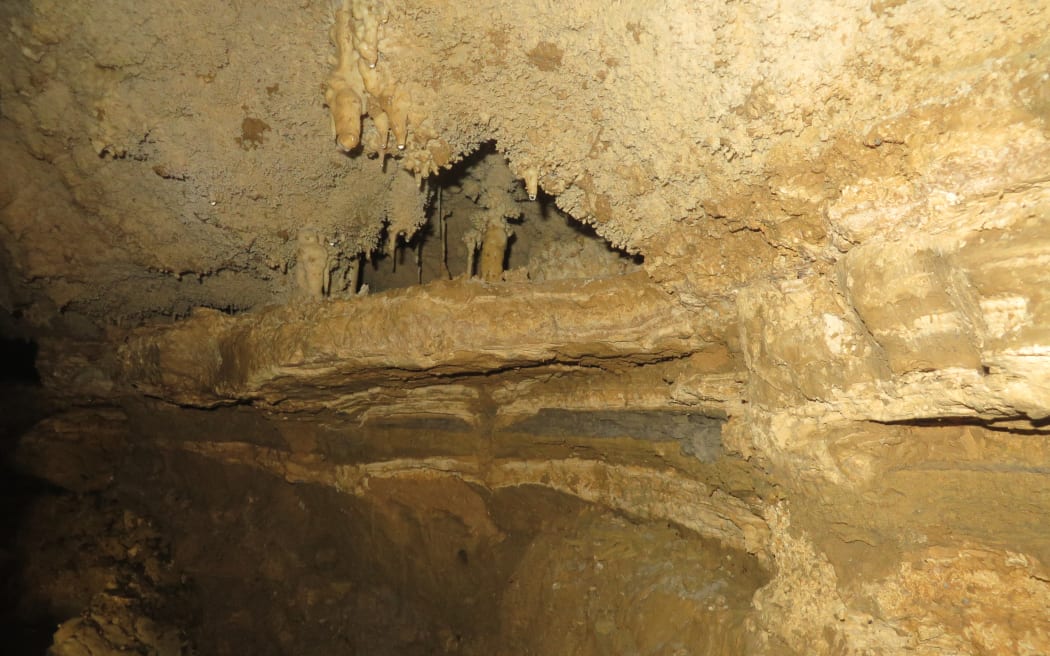
Evidence of deadly ash clouds deep in the country’s underground caves shows there’s no escaping massive volcanic eruptions.
Authors of the new study, Nowhere to Hide, published in the scientific journal Geology, said the discovery of pyroclastic flows in Waitomo caves showed even running underground won’t save you in a gigantic volcanic eruption.
Research supervisor, volcanologist Dr Simon Barker, said evidence of such flows were traced to five eruptions in the Taupō Volcanic Zone, including the second largest on Earth in the past two million years.
He said the clouds of hot ash, pumice and gas could rapidly travel up to 100km, destroying everything in its path.
Barker said not only did the discovery demonstrate the scale of such eruptions and their impact, filling a crucial gap in New Zealand’s natural history, it also pushed back the age of the caves to at least 1.5 million years.
Research ‘daunting’ but worth it
Although he’d been in Waitomo caves as a tourist and done a spot of blackwater rafting, Barker said his first foray as researcher into caves as deep as 60-70m was entirely different.
“It’s just remarkable the things that you see down there and some of the tight spaces you squeeze into.
“In one of the caves you had to wade through water that was up to our neck level. It’s pretty daunting walking through black water with a light and you don’t know how deep it is underneath – if you’re going to step into a hole.”

Researchers studied the Waitomo region.
It was a challenging research environment but very much worth the effort, he said, given what they’d managed to uncover.
Barker said despite the Waitomo cave network being well explored, the layers of ash plastered on the ceilings and walls, some up to half a metre thick,had never been traced to its source – until one of his PhD students, Sneha Suresh, decided to take a look.
He said found evidence of pyroclastic flows – deadly clouds of hot ash that many would associate with the fatal Mt St Helens eruption in 1980.
It was the first time evidence of volcanic eruptions had been found in the Waitomo region, he said. some cases, the eruptions filled caves with ash from top to bottom.
“It’s kind of how we came up with the title of the paper... ‘Nowhere to hide’.
“There’s nowhere safe if one of these big hot clouds is coming towards you. If you think you can run into a cave, it’s still going to go underground and fill the cave.
“That was a really fascinating finding for us and it’s the first time globally anyone has ever documented pyroclastic flows as going into these types of caves.”
Gigantic eruptions with widespread impact
Barker said a key part of the research was geochemically “fingerprinting” the ash to known eruptions in the Taupō Volcanic Zone.
“That tells us the timing of the eruption and when it went into the cave, and provides a whole new way to date the caves themselves.”
He said the usual technique of using stalagmites and stalactites to put a minimum age on a cave, was limited to about 500,000 years old.
“So this allows us to date the caves to some of the oldest eruptions and extends the known age of Waitomo Caves back to 1.5m years as a minimum, which is pretty fascinating.”
Not only was the research a “win-win” for understanding the timing of eruptions and cave age, it also revealed clues about New Zealand’s natural history and the evolution of its species, Barker said.
He said digging below a layer of ash from one million years ago in a cave known as Moa Eggshell Cave, revealed the oldest fossils of certain types of frog and bird species ever found – providing new information on what New Zealand looked like at the time.
He said they found evidence of historic eruptions that were so big they would have destroyed large chunks of the North Island, including one of the oldest and largest in Taupō from about 350,000 years ago.
“It’s the second-largest eruption on Earth in the past two million years and it was about five times the size of the one that created Lake Taupō.”
Barker said such gigantic eruptions could have influenced the evolutionary path of New Zealand’s flora and fauna.
“These pyroclastic flows wipe out landscape completely: nothing would survive.
“[A] flow that goes from the Taupō region all the way to Auckland and all the way down towards the lower North Island – effectively cutting off all corners of the North Island – that’s going to have some pretty substantial impacts on all living things.”
“These eruptions could actually have dictated a lot of the spread of different species of plants and animals that we see in the North Island.”
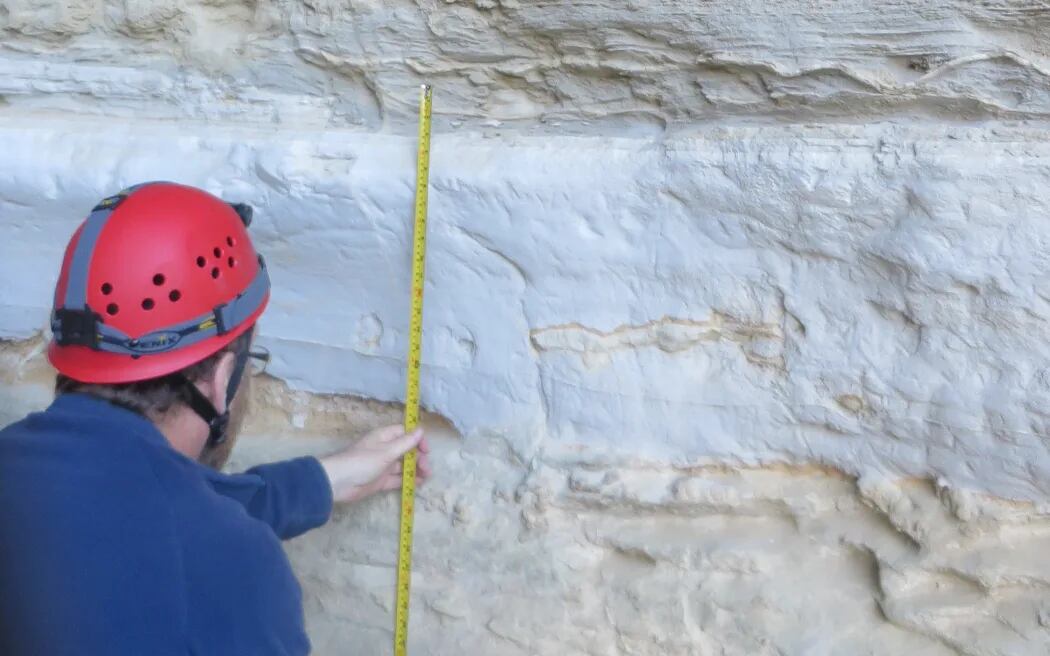
Pyroclastic flows - deadly clouds of volcanic ash - can be measured in the Waitomo region.
Barker said eruptions of this magnitude were at the extreme end and filled a gap in the knowledge about what the biggest eruptions could do.
He said it was a case of when not if they would happen again, but said there would likely be warning with significant unrest in the lead-up, or at least, “you’d hope”.

0 comments
Leave a Comment
You must be logged in to make a comment.