


For 2025, ACC has paid out around $7 million for the 219 motorcycle-related injuries in the Bay of Plenty region up until July 20.
That’s compared to the 376 motorcycle-related injuries in the Bay of Plenty region in 2024. These injuries came at a cost of $12.7m.
ACC has released these numbers as part of Motorcycle Awareness Month (MAM), which begins today.
MAM was launched in 2017 when some of the riders at Ride Forever analysed injury statistics and understood the need for greater awareness of safety.
They underlined that many riders hurt themselves when they ride their bike for the first time after a long winter break.
MAM is run by ACC, the Motorcycle Safety Advisory Council (MSAC), NZ Police, local councils and NZ Transport Agency Waka Kotahi (NZTA).
ACC injury prevention leader James Whitaker said spring was the perfect time to be thinking about riding your motorbike safely.
“As we come into September, it’s a great time of year and we want motorbike riders to celebrate their love of riding and get back on the open road,” he said.
“As you get back on the bike, make sure you’re ready to get the most out of your time on your bike.”
In 2024, ACC accepted cover applications for 4739 motorbike-related injuries at a cost of $150m to help people recover.
This was the highest number of injuries and the highest cost in the past five years.
The cost of active claims in 2020 was $109m.
Ministry of Transport data shows there were 292 deaths on New Zealand’s roads in 2024, and 53 of these were people on motorcycles. Up until August 19 this year, there have been 196 fatalities on the nation’s roads, with 26 of them on motorbikes.
In 2024, the Auckland region had the highest number of motorbike-related accidents with 1145 claims, followed by Waikato (657), Canterbury (654) and Bay of Plenty (334).
The age group with the highest number of motorbike-related injury claims was 15- to 19-year-olds (680), ahead of the 20-24 age group (636).
Males (3848) had more than four times as many motorbike-related claims as females (886) in 2024.
Almost half of new claims for motorcycle-related injuries in 2024 were soft-tissue injuries (2187) and the most commonly injured parts of the body were the shoulders, knees and arms.
Whitaker said motorbike riders and car drivers were both responsible for reducing motorcycle fatalities and injuries.
“We can all do a lot better,” he said.

In 2024 ACC agreed to cover 376 motorcycle-related injuries in the Bay of Plenty region. The cost of helping people recover was $12.7 million. Photo / ACC
Riders need to make sure their gear and bikes were in good condition before hitting the roads, while car drivers should keep an eye out for motorcyclists, particularly at intersections.
Car drivers were at fault in 90% of crashes between cars and motorbikes at urban intersections, Ministry of Transport figures show.
“We’ve all got to be more aware of the dangers at intersections,” Whitaker said.
“When you’re sitting at an intersection – look again for motorcyclists, not just your gap. Check your blind spots too.”
A phenomenon called saccadic masking makes it less likely that drivers will see motorcyclists on the road.
The research shows when a person moves their eyes, they jump from Point A to Point B and don’t move smoothly like their brain leads them to believe they are doing. It’s the same process as when a video camera records frames – each “jump” our eyes make (called a fixation) is a frame.
“Our brain merges each fixation into what we think is a smooth picture, but the movements between fixations (called a saccade) are extremely blurred and aren’t helpful images for our brain to process, so it doesn’t,” said Whitaker.
“While turning your head and looking at an intersection, each saccade acts as a blind spot. If a motorcyclist happens to fall in one of these saccades, you won’t see them.
“The faster you move your head, the longer the saccade and the higher the risk of you not seeing motorcyclists or any other smaller road-user.”
Whitaker encouraged all motorcyclists to complete a Ride Forever course.
ACC data shows that riders who have completed a Ride Forever course are up to 50% less likely to lodge a motorcycle-related accident claim than non-trained riders.
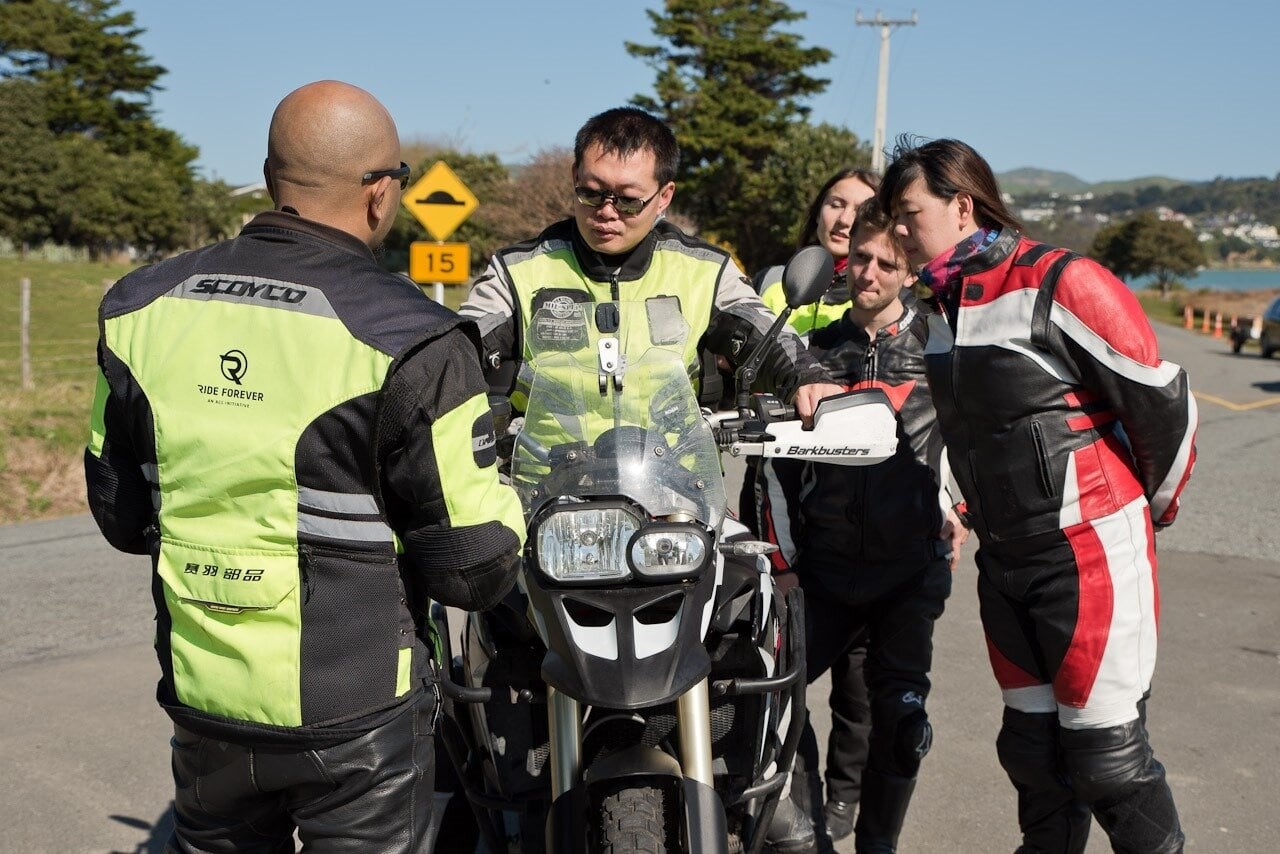
Motorcycle Awareness Month starts today. Photo / ACC
To date, around 16,000 riders have completed at least one Rider Forever course.
Taking at least one Ride Forever course reduced the incidence of having a crash by 27% and the cost of associated claims by 45%.
In other words, Ride Forever-trained riders crash less often, and the crashes they do have are less severe on average.
Motorcycle Awareness Month
Motorbike riders should do three things:
Check your bikes are well-maintained
Ensure your gear is up to scratch
Refresh your skills by completing a Ride Forever coaching programme.
For more information visit: www.rideforever.co.nz/

1 comment
ACC fairness
Posted on 01-09-2025 15:23 | By Scottie P
With 16-19 year old making up the vast majority of these claims followed by 20-24 year olds it seems smaller powered scooters and motorbikes make up the bikes that are crashing. I hope the ACC level goes up on these smaller bikes and not on the bigger bikes rode by more aging steady riders.
Leave a Comment
You must be logged in to make a comment.