


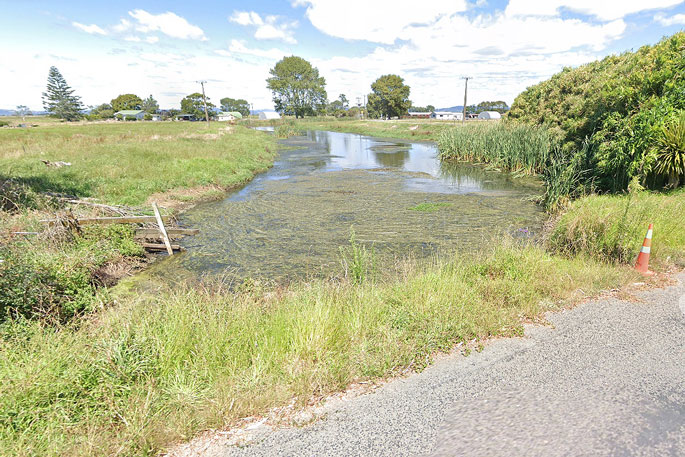
Whakatāne District Council and Bay of Plenty Regional Council will be contributing 50-50 to the cost of a new bridge across a rural road in Thornton.
The bridge, estimated to cost between $600,000 and $800,000, is to replace a culvert on Smith Road, which serves two properties.
The culvert, which allows a tributary of the Tarawera to pass under the road, is the responsibility of the district council as a roading asset.
A report to last week’s infrastructure and planning committee said the culvert is not due for renewal as it had not reached the end of its life, so the project was not budgeted for.
However, the regional council, which is responsible for drainage on the Rangitāiki Plans, had approached the district council to co-fund the project as it wanted to upsize the culvert to allow for better water flow and flood mitigation.
While water was passing through the culvert, it was not large enough to enable a “good flow and flushing for water quality purposes”.
Committee chairman Wilson James reminded councillors that much of the plains as reliant on the regional council’s drainage and pump scheme.
“When that culvert is needed, it is needed big time,” he said.
Infrastructure general manager Bevan Gray said although the culvert had not failed yet, ideally, a culvert should be above the water line, so it was possible to see the water flowing through it.
“It is completely submerged, now, so you get stagnation, and you get weed building up. It’s not draining enough.”
The committee agreed to fund 50 percent of the project through an internal loan. Although the council would seek Waka Kotahi funding to cover part of this, staff were not optimistic as the fact that the road served only two properties meant it did not stack up well against the transport agency’s funding criteria.
However, the report speculated it was possible recent weather events and resilience challenges may affect Waka Kotahi’s position.
Other options were presented to the committee, such as asking the regional council to fund 100 percent of the cost and to recover the district council’s 50 percent as a loan repayment, or not commit to the project at all.
The former of these options would mean possibly having to accept a repayment timeframe that may result in some “funding misalignment” and the latter would leave the council with the full cost of replacing the culvert when the time came and leave the district at risk from a flood mitigation perspective.
A report would go to the regional council’s September meeting for agreement to co-fund the project.
Public Interest Journalism funded through NZ On Air.


0 comments
Leave a Comment
You must be logged in to make a comment.