


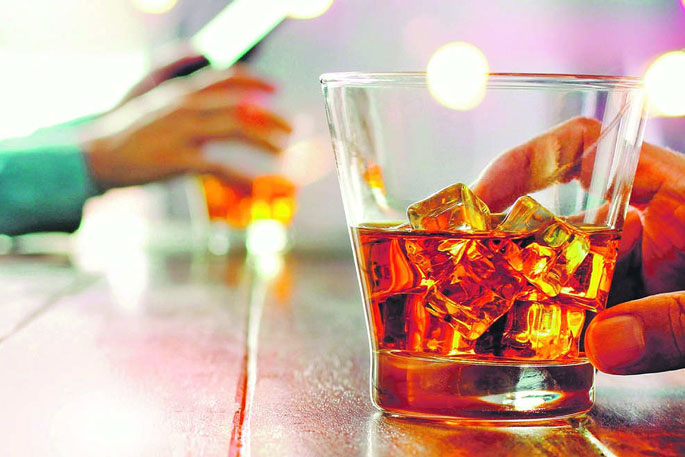
A midnight last call for drinks could "strangle" Whakatāne's late night entertainment possibilities, according to some bar owners.
A hearings committee made up of members of all three Eastern Bay councils will hear submissions on the proposed Local Alcohol Policy on Wednesday.
The draft Local Alcohol Policy has been developed by a joint working group, with membership from Ōpōtiki, Kawerau and Whakatāne district councils, set up in 2021.
The draft policy, which aligns trading hours across all three districts, and extends the definition of sensitive sites to include schools, childcare facilities and playgrounds, places of worship, marae and medical centres, was made public throughout April.
A total of 54 submissions were received, 36 of which came from the sub-region's smallest district, Kawerau.
Eight were received from Whakatāne district and two from Ōpōtiki, while a further eight pertained to all three districts. Of these, 12 indicated that they wish to speak at the hearing.
Trading hours currently differ across the three districts and 51 per cent of submitters agreed to the proposed hours of 9am to 10pm for off-licence stores - with the exception of supermarkets, which would be 8am to 10pm - and 9am to 12 midnight for on-licence businesses and clubs.
After a discussion on supermarket trading hours in February, Whakatāne District Council says it will like to see these aligned with those proposed for other off-licenses.
Of the 54 submissions, 37 per cent disagreed with the proposed trading hours.
Clubs New Zealand, which has six member clubs in the Eastern Bay, submitted that while it's supportive of aligning the hours of trading across the three districts, the hours of 9am to 1am are more appropriate.
It says three of its member clubs currently have trading hours of 9am to 1am and one has trading hours of 9am to 2am.
"These clubs will see a reduction in maximum trading hours despite being reputable and responsible licence holders."
The submission also says many clubs rely on hireage of facilities for events.
"These events allow clubs to remain competitive and attract new members and often these events will run past 12am."
David McCallion, from Slim's Bar in Ōpōtiki, and Rhonda and Grant Webb, from Plains Hotel and Quart House Bar, also believe midnight is too early.
McCallion says Slim's Bar's existing maximum trading hours are 9am to 1am.
"We have always maintained a safe, controlled and supervised premises. My staff and I… believe that a licensee should have the ability to make a decision when deciding whether to close early or not."
"We already operate at more restrictive hours than most of the country," Webb says in his submission, adding that there was no benefit of "lumping three completely different areas together for on obvious benefit".
"It makes no sense to restrict any chance of offering a vibrant and exciting nightlife in Whakatāne that might attract tourists by strangling the late-night entertainment… just to stay uniform with Kawerau."
He says earlier closing times will encourage a "swill mentality" and unsupervised drinking.
"We have a young population who are already forced to find their late night gathering at unlicensed, unsupervised venues or to travel to Tauranga for their fun. As a parent, I would much prefer my children to have trained professionals serving them monitored drinks in a safe establishment and not having to drive an hour away just to be in that environment."
A summary of the submissions shows that 74 per cent agree that applications for new licences should only be for premises in areas zoned for business or industry unless resource consent is granted, and 81 per cent agree with the extension of sensitive sites to include places of worship, marae and medical centres.
Government health agency Te Whatu Ora, among others, submitted that further restrictions to off-licence premises, particularly in lower- decile areas, were needed to combat the harmful effects of alcohol.
Comments from others include the need for off-licence hours to be extended so that shift workers would be able to have access to alcohol after their shifts.
The hearing committee is chaired by Ōpōtiki deputy mayor Shona Browne and members include Ōpōtiki district councillor Barry Howe, Kawerau district councillors Carolyn Ion and Sela Kingi, and Whakatāne district councillors Gavin Dennis, John Pullar and Toni Boynton.
Once the submitters have been heard, the committee will deliberate on the submissions and decide whether there will be any changes to the draft plan.
A report will then be provided to each of the councils, which will each vote whether to adopt the plan.
Local Democracy Reporting is Public Interest Journalism funded through NZ On Air.


1 comment
Overit
Posted on 08-06-2023 12:24 | By overit
How ridiculous, always regulating us.
Leave a Comment
You must be logged in to make a comment.