


Thousands of New Zealanders will be looking to paint the fence, mow the lawns or get up a ladder to clean out the gutters during Autumn, but data shows these activities come with a high risk of injury.
It's common for many families to have jobs still on the summer DIY (do-it-yourself) list and for people to try and get them sorted before the cold and dark of winter sets in.
In 2022, ACC accepted 19,300 DIY injury claims. These injuries came at a cost of $30 million to help people recover. This was the highest cost over the past five years.
The DIY injuries in the Bay of Plenty came at a cost of $2.2 million to help people recover.
ACC injury prevention leader James Whitaker says it's the perfect time to complete those outstanding DIY jobs, but he encouraged people to take a moment to assess the risks of injury.
'No one wants to start doing a DIY job and then end up in Accident and Emergency with an injury,” says Whitaker.
'We know that many people will use this time as an opportunity to do some odd jobs around the house and garden. We're challenging people to 'Have a Hmmm” before they start their DIY project.”
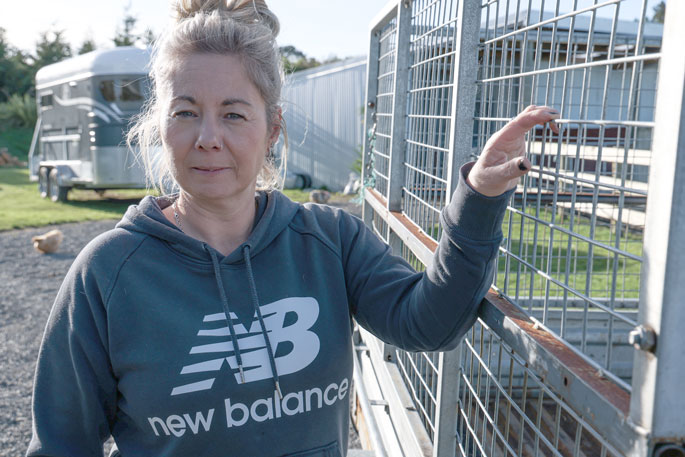
Sarah Payne knows what it's like to suffer a serious DIY injury.
In 2017, the 41-year-old had a horrific hand injury when her family was moving house north of Auckland.
'My ring got caught in the cage on top of the trailer,” she says.
Payne degloved her wedding ring finger from the first to the second knuckle. She later had the finger amputated.
'All I could see was white, from the bone being exposed with all of the skin taken off.”
Sarah has simple advice for anyone working around their house or doing DIY.
'If you're working outside and you are wearing rings, take them off or if you can't, then wear gloves. It's a huge risk to your hands,” she says.
'Slow down. Everyone thinks we have to go at life at a 100 miles per hour and yes, we always have so much to do. But life is not the destination, it is the journey. You have got to enjoy it.”
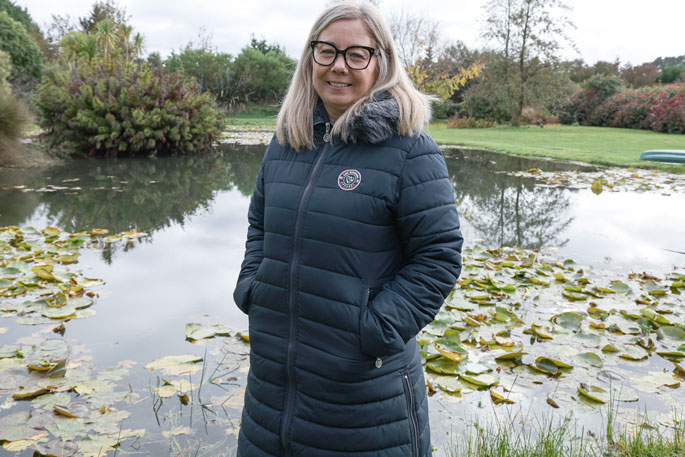 It took Sarah Payne five years to wear her wedding rings again after the trauma of her DIY accident.
Whitaker says around 90 per cent of all DIY injuries are not random events. They're predictable and therefore preventable.
'Our top tip for DIY safety is to slow down,” he says.
'Many accidents in the home happen simply because people are rushing. These can be prevented by simply slowing down and stopping to assess the risks.”
The top five regions for DIY injuries in 2022 were Auckland (5561), Waikato (2338), Canterbury (2150), Bay of Plenty (1607) and Wellington (1532).
Most of the injuries were soft-tissue injuries (11,181) followed by laceration/puncture/sting injuries (4846), ahead of foreign body in orifice/eye (1279) and fracture/dislocation (582).
The most common parts of the body hurt in DIY injuries in 2022 were back/spine (3557) and finger/thumb (3098) ahead of shoulder (1856) hand/wrist (1768) and eye (1615).
The leading age groups for DIY injuries in 2022 were the 65 and older age group (4848) ahead of the 50-54 age group (2077) and the 55-59 (1953).
Men were around three times more likely to hurt themselves in a DIY injury than women.
'We know that when we get hurt, it affects our family, friends, workmates and others too,” says Whitaker.
'We want New Zealanders to have that satisfaction of completing DIY jobs around their home and stay safe, and injury free in the process.”
ACC's Top Five Tips for doing DIY safely
- Slow down and stop to assess the risks.
- Use all the recommended safety gear, such as closed shoes, protective eyewear and earmuffs.
- Make sure someone is supervising the kids, and keep tools and sharp objects out of reach.
- If you're getting up on a ladder, make sure it's angled correctly and on a firm surface.
- Keep paints, sprays, chemicals and solvents with the lids on when you're not using them.

0 comments
Leave a Comment
You must be logged in to make a comment.