


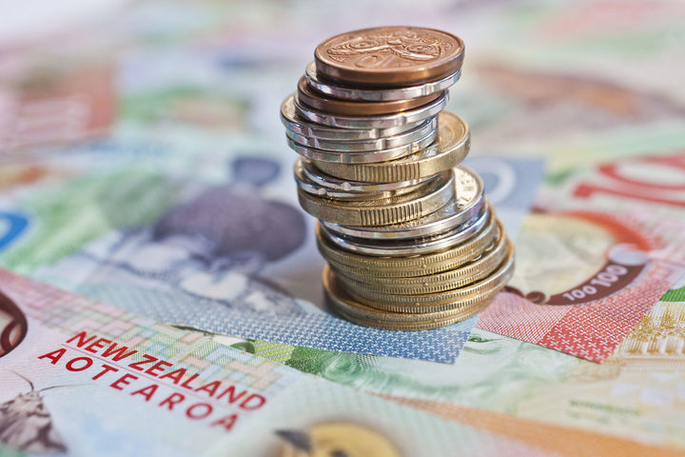
There's a term in economics, the precautionary savings motive, which refers to the point where consumers see enough trouble on the horizon that they start holding onto their cash for a rainy day.
ANZ chief economist Sharon Zollner says Kiwis still have not reached that point, despite repeated warnings from the Reserve Bank about a looming recession, and stance that it would manufacture a slowdown if necessary to tackle inflation.
'The Reserve Bank has been doing its best to freak people out and make them a bit nervous and make them save a bit more and spend a bit less, but so far they've got limited tractions,” she says
Meanwhile, high inflation could not solve inflation, Sharon says.
'All you're going to get is higher wage inflation. If inflation solved inflation we wouldn't have had the 1970s,” she says.
'Inflation is annoying, but it's not a reason not to spend all your money.”
Infometrics principal economist Brad Olsen agreed Kiwis still were not changing their habits despite most knowing a cliff was coming.
He says there was a disconnect between recent consumer confidence surveys, which all showed households felt the outlook was grim, and spending data.
'You look at spending activity, and you're pretty hard-pressed to find any of that negative sentiment.”
Data released last week showed an 8.6 per cent year-on-year increase in spending, which was above inflation, showing Kiwis were still spending more.
'I do think there's an element of people knowing it's coming, but not necessarily adjusting heavily until it hits.”
He says the precautionary savings motive would only be triggered in most Kiwis when things 'hurt like bugger already”.
Sharon says if the Reserve Bank did too little to fight inflation, the country would find itself in a 1988-like situation, when it eventually took double-digit unemployment to bring inflation back under control.
She says the Reserve Bank's pre-Christmas 0.75% hike to the official cash rate (OCR) had rattled people, but come January and February they were back to spending.
'It's like people went away for Christmas and forgot they were supposed to be scared,” she says
The bank hiked the OCR 0.5 per cent last week – a larger hike than most economists predicted.
Sharon says the decision proved inflation was at the top of the bank's priority list.
She says higher mortgage rates were taking more money out of some peoples' pockets, which had a knock-on effect on some consumers spending, but most were still happy to keep spending.
Once the precautionary savings motive did come into play, it would like be felt across the economy.
'Peoples decision about whether they need to put something aside for a rainy day can have a big impact on the economy as well,” says Sharon.
Brad Olsen says the Reserve Bank's decision to make a smaller-than-expected OCR increase in February may have hurt the long-term outlook, as people took it as a sign things were getting back to normal.
'Consumption tends to be very smooth compared to the likes of business investment and exports, which are all over the shop, but it's huge, it's more than half of GDP, so when it does move it has a big impact,' says Sharon.
A wage-price spiral, where workers demand higher wages to keep up with the cost of living, which become costs for suppliers, which results in higher prices, was the 'roundabout” the Reserve Bank was trying to get the economy off, Sharon says.
A wage-price resulted in everyone being poorer as any savings or reserves devalued – a point Zollner said Reserve Bank chief economist Paul Conway recently made in a speech.
'It's a valid point, but I'm not convinced of the power of a speech to change people's decision-making.
At the end of the day people will respond to the incentives in front of them, and they have a very strong incentive to get every dollar they can out of their employer, and push up their prices if everyone else is to maintain their margins.”
Sharon says while the Reserve Bank's actions was bringing forward an economic slowdown, the country was always going to have one.
'This economy has been running on hyper speed, we've been living beyond our means for a long time.”
'The fact is our current account deficit has blown out to nearly 9 per cent of GDP and at some point the world is going to look at us and say ‘we're not funding that any more' – and then that adjustment would happen anyway, it would just be more brutal.”
'You cannot avoid gravity.”
Sharon says the Reserve Bank was beginning to get tractions, and the lag between a change in monetary policy and the effects could take a while.
Brad says his answer to any friend who asked if they should start saving now, was yes.
'I said this personally to the people I knew, and publicly to anyone who interviewed me, summer was the time for the financial detox,” says Brad.
'The best time to do it was yesterday, the second-best time is today.”
1 comment
Hmmmm.
Posted on 11-04-2023 14:49 | By morepork
It's all very well to tell us to save, but what if you can only just cover what you need to and there is no money left for saving? It is kind of ironic to see a government whose profligate spending on political priorities, caused the inflation in the first place, now over-reacting and making large corrections while advising us that we should cut spending and save more. Speaking only for myself, when it comes to saving... "A chance would be a fine thing."
Leave a Comment
You must be logged in to make a comment.