


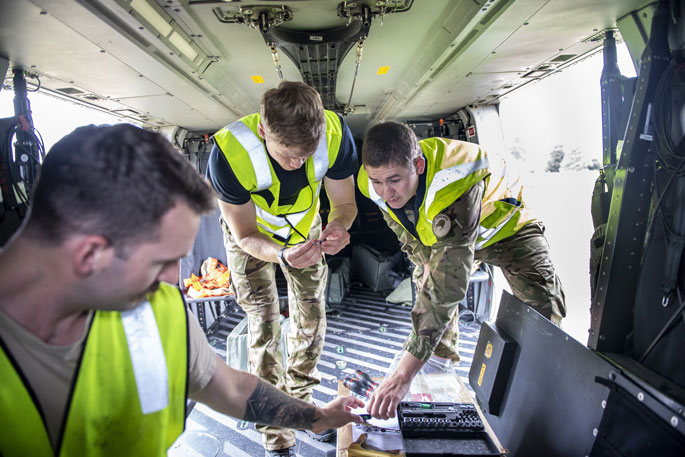
Over a seven-day period, three of the New Zealand Defence Force's NH-90 helicopters were in the sky for more than 120 hours in the wake of Cyclone Gabrielle, with crews flying nearly an entire month's allocation of flying hours in a week.
Keeping a team of helicopters almost constantly airborne is no mean feat, and Royal New Zealand Air Force Detachment Commander Squadron Leader Andy Scrase credits the maintainer crews for making it possible.
'This is probably the highest flying rate we have ever achieved. On other tasks we get the odd eight-hour day of flying, but this is several aircraft doing a big day, every day.”
The feedback from the community around them had been great, he says.
'People have mown helipads into their lawns out in the isolated communities, someone put a big sign saying ‘thank you' on the fence at the end of the runway.”
Squadron Leader Scrase says what was achieved during the Cyclone Gabrielle response would not have been possible without the RNZAF's maintainer crews, who made sure the helicopters were able to keep flying at such a rate.
Among those maintainers was Corporal Rory McLachlan, who was deployed from RNZAF Base Ohakea to the Hastings Aerodrome to help with efforts on the ground.
'I wasn't in the original group we sent over, but there were some of us also supporting from Base Ohakea keeping the services going, keeping the maintenance going in the hangar.
'It was incredibly busy, there would be an aircraft leaving for Hastings every morning, so we were working through the weekend. Then I came through to here.”
Working in the field was a different environment for Corporal McLachlan and the rest of the team, who had to adapt to whatever the weather threw at them.
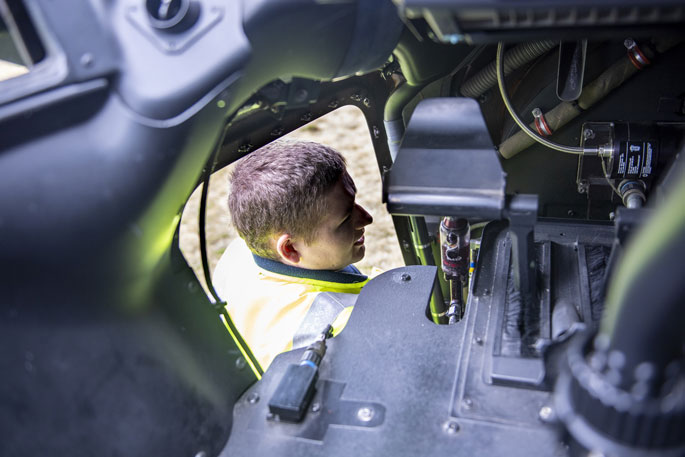 Corporal Rory McLachlan at work on an NH-90 helicopter.
'Working in the rain is a bit of a pain, we are also limited in tools. We just have to do the best that we can with what we have. Without us the whole thing sort of falls over, so we have to keep them up in the air.”
With all the hours the crews have been flying, Corporal McLachlan said their aircrafts' scheduled services were also coming up fast.
'We usually do three 50-hour services a month, but next week we will have three 50-hour services going on back in the hangar that week.”
Corporal McLachlan signed up to be a maintainer in 2017, having always wanted to be around aircraft when he was at school.
Working on an operation like this was rewarding, he says.
'We have had a lot of people stop us in the street and say ‘thank you', and all the food being delivered to where we are operating from and the thank you letters … people really appreciate the support.”

1 comment
I am SORRY
Posted on 07-03-2023 21:02 | By The Caveman
WE, the taxpayers PAY taxes to keep the RNZA in the air !! IF they have aircraft that can be used after a major civil problem, then GET them in the AIR. If they are NOT in the air the "service staff" are still being paid $$$$$$ Set them to work to use their training and EARN the salaries !!
Leave a Comment
You must be logged in to make a comment.