


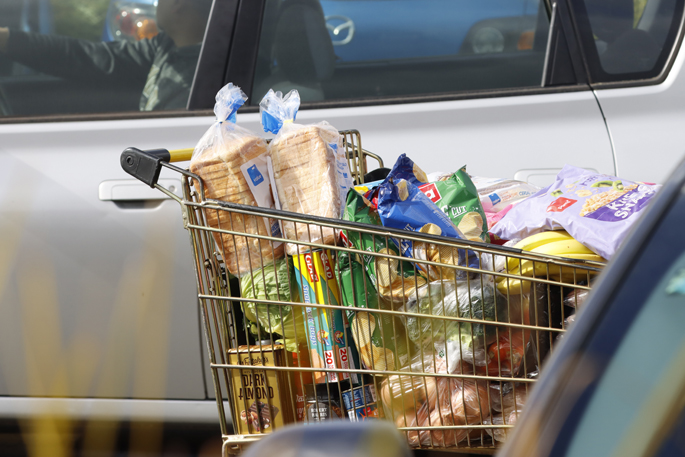
An economist doesn't think there will be any cost of living respite for New Zealanders this year.
A report from economic consultants Infometrics and Foodstuffs has found costs from suppliers to supermarkets rose by close to 11 per cent in the year to December, and economists say multiple factors could result in more pain at the checkout.
People RNZ spoke to on Sunday say they have felt the pinch over the summer period, particularly around the cost of produce.
Infometrics says there's still uncertainty about what will happen to the price of groceries going forward.
Principal economist Brad Olsen says supplier costs make up two-thirds of the price of the goods bought from supermarket shelves.
While global food prices were slowly starting to moderate, here in New Zealand the situation remained tough, says Olsen.
"There is still a lot of pressure on the economy, but difficult to find the people and resource to do that work, so we're waiting in limbo."
Produce supplier costs increased by 24 per cent last month, with several factors resulting in reduced supply and higher costs, he says.
"Local cost pressures and supply challenges, including labour market pressure, interest rates, stubbornly high inflation, and weather, look set to maintain supplier cost pressure into 2023."
Vegetables New Zealand chairperson John Murphy says volatile weather has been a disaster for some growers' ability to bring goods to market.
"We were hoping a few months ago that we would see a more settled summer, where vegetables could be planted on time and easily harvested.
"What we've seen instead is the cyclone (Hale) most recently which has closed roads and affected houses and bogged down our fields."
The transport sector indicated rising "diesel prices and higher labour costs" are being passed on to the consumer.
The government's petrol tax cuts were extended from a January deadline until the end of March but the subsidy will half from the end of February.
Transport New Zealand chief executive Nick Leggett says there will be further hurt once the cuts are abandoned.
"The government recognised the pressure on families and businesses with the transport package," Leggett says.
"They've decided not to continue with it and that is going to add to inflation, probably 0.5 percent as assumed by treasury.
"That's a concern for everybody."
Infometrics says shipping costs and global food prices are starting to ease internationally, but with a constrained labour market, high inflation and poor weather, pressure on budgets could continue for some time yet.

1 comment
Thanks govt
Posted on 17-01-2023 12:52 | By an_alias
This is the natural consequence of lockdowns and restrictions. Just watch taxes go through the roof, even local taxes. This was more than obvious. Fuel tax is a farce, the higher it goes the more the govt makes.
Leave a Comment
You must be logged in to make a comment.