


A Rotorua charitable trust is striving to plant more than 100,000 natives every year.
It has also just received substantial funding to buy the equipment they need to clear suitable land of gorse and blackberry bushes.
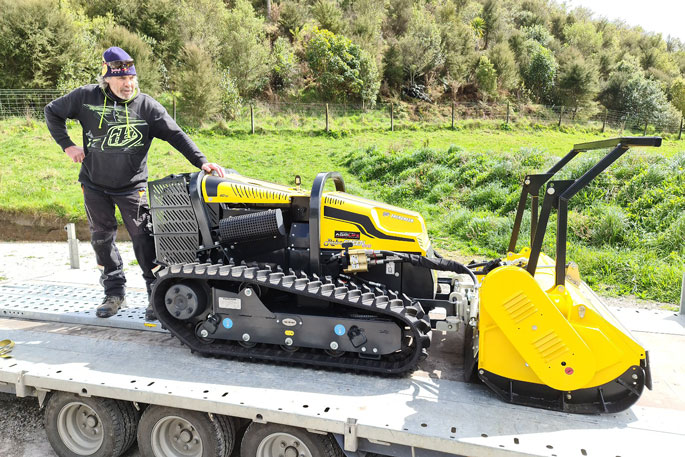
Tipu Waiāriki now has financial backing from BayTrust ($30,000), Rotorua Trust ($81,000) and New Zealand Community Trust ($20,000) and has purchased a high-powered mulcher, ute and trailer to help prepare land for planting.
'The mulcher is remote controlled and weighs a little over a tonne,” explains Rotorua businessman and Tipu Waiāriki founder, Gregg Brown.
'It's at least 20 to 25 times more productive than a person on a hand-operated brush cutter. It can mow blackberry and gorse at about the same speed you can mow your lawn. But it's obviously a lot wider so we can cover quite a bit of ground in a relatively short period of time.”
Brown says he's extremely grateful for the financial support received from community funding agencies.
'It's a recognition of our capability as a bunch of volunteers so that's really nice to have that trust imparted on us. Trying to do the environmental work that BayTrust, Rotorua Trust and NZ Community Trust want to see happen, and being able to facilitate it, is pretty cool.”
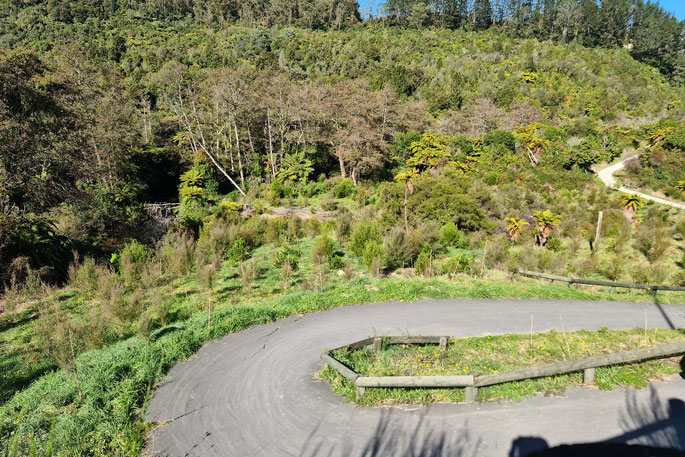 Land cleared of scrub.
Tipu Waiāriki has planted around 20,000 plants so far and is currently in negotiations to secure nursery space in Rotorua so the next crop of seedlings can be grown.
They hope to plant at least another 20,000 next year and ramp up quickly from there.
'We want to get to 100,000 a year sooner rather than later but the retail price is $4.50 to $5 for a plant the size that we like. So you're talking $400,000 to $500,000 a year and there's no funding of that scale. So we have to work out a way of generating our own plants at scale as cheaply as possible.”
Brown was inspired to start Tipu Waiāriki in 2019 after seeing what a harbour care group in Raglan had achieved.
Over a 25 year period, they have planted 2.7 million trees and substantially improved Raglan harbour's water quality.
'It's pretty inspiring stuff. There's no reason we can't do the same here and plant manuka, kanuka, lemonwood, pittosporums, cabbage trees and so on. Native birds will then feed and help spread the seeds further and do a lot of work for us.”
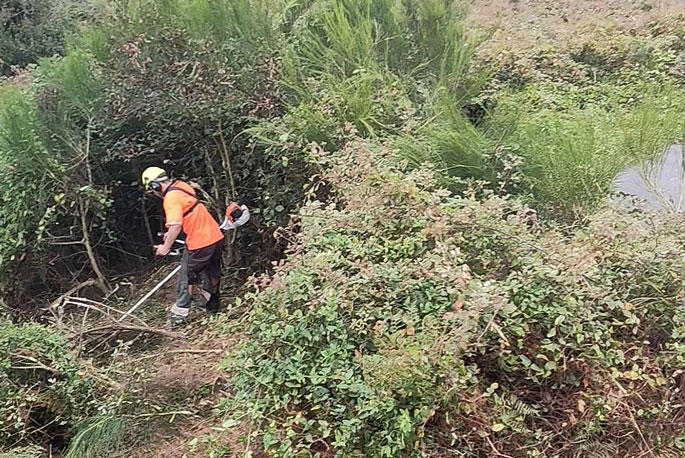 Land being cleared of scrub - before pic.
In future, Tipu Wai hopes to partner with at-risk youth programmes or prisoner rehabilitation programmes to help grow and plant the native seedlings.
Corporates, school groups and community organisations like Rotary are all keen to help with planting out when the time comes.
'We're not choosy about where we plant. It could be private land if it's locked up and safe. But every stream, road and rail corridor is full of weeds like gorse and blackberry so we're not short of opportunities to plant. We are looking for collaboration and I think the more we establish ourselves as capable, the more partnerships that will come about and more projects will come our way.”
BayTrust CEO Alastair Rhodes says Tipu Waiāriki is a wonderful example of a community-lead environmental initiative.
'BayTrust is committed to practicing kaitiakitanga (guardianship) to protect and improve our natural environment for future generations. The vision Tipu Waiāriki has, and their passion to see it through, is very welcome. There's a great opportunity to work with private landowners, Rotorua District Council, forestry, iwi and other businesses to plant marginal strips of land that are otherwise covered in weeds. We're very pleased to contribute towards their new equipment to help bring this project to life, and look forward to seeing what Tipu Waiāriki can achieve in the years to come.”

0 comments
Leave a Comment
You must be logged in to make a comment.