


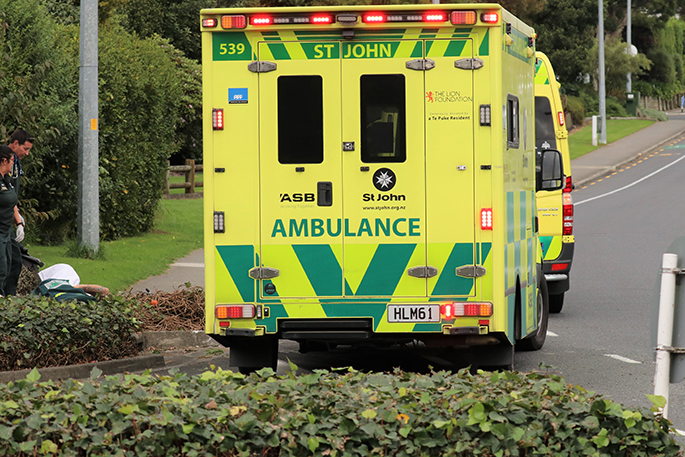
St John Ambulance is experiencing extremely high demand for ambulance services across the country, with incident numbers now exceeding those seen during the Omicron surge.
While high demand during winter is not unusual, this sustained increase in workload has come six weeks earlier than predicted, says Dan Ohs, St John Deputy Chief Executive – Ambulance Operations.
"In the last three weeks, we received 1588 more calls a week (a 13 per cent increase) and 459 more ambulance responses a week (a six per cent increase) than expected for this time of year.
"This is combined with an increase in winter illness, with 100 staff on average being off work each day – which is compounded by 130 vacancies nationally."
Dan says the increase in demand is impacting both 111 communications centres and the services ability to respond with emergency ambulances.
"Callers to our 111 communications centres may experience a delay before their call is answered, and we may not be able to send an ambulance immediately where a problem is non-life threatening.
"For this reason, we are asking the public to call their GP or Healthline for non-life-threatening problems, and to reserve ambulances for life or limb threatening emergencies."
He says where people do request an ambulance for a non-life-threatening problem, they can expect a call back from a Registered Nurse or Paramedic, who will attempt to provide them the same care and advice that would otherwise be afforded to them if an ambulance crew were to attend the scene.
"St John Ambulance has again activated our Emergency Operations Centre in Auckland, which will support our operational response across Ambulance Communications, Emergency Ambulance Service, and Patient Transfer Services.
"The EOC is tasked will monitoring staffing levels and overseeing the welfare of our people during this busy time."
Examples of life or limb threatening problems
- severe chest pain or tightness which could indicate a heart attack (note some mild chest discomfort is common with COVID-19 but this should not be severe)
- difficulty breathing
- choking
- broken arms or legs where circulation to the hand or foot is compromised.
- sudden weakness or difficulty talking, which could lead to a stroke
- fainting or unconsciousness (inability to be woken)
- severe bleeding or bleeding that won't stop.
Examples of avoidable requests for ambulance attendance (actual examples)
- persons who have been to an ED but have gone home and dialled 111 because the ED wait time was too long
- persons with COVID who have run out of paracetamol
- persons wanting to go to hospital but wanting to avoid issues with parking.
- persons wanting reassurance after waking up from a nightmare.
- persons requesting that ambulance personnel remove sutures (stitches).

1 comment
Decades Of It
Posted on 12-06-2022 09:47 | By Yadick
This has gone on in St John for decades and they still don't and won't plan ahead for it. They complain of no money but seem to change Ambulance models left, right and centre. Perhaps a review as to how money is used needs to take place and perhaps better pay equality for the staff would go a long way in recruiting more toward the service.
Leave a Comment
You must be logged in to make a comment.