


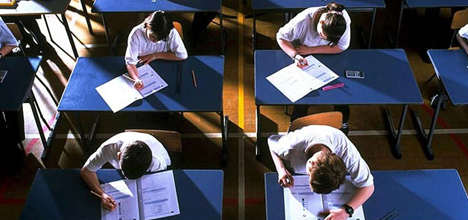
A Western Bay of Plenty teacher association representative says teachers feel 'betrayed” by the Government's pre-Budget education announcement that will see class sizes increase.
On Wednesday Education Minister Hekia Parata announced the Government will invest a total of $511.9million education in the next four years, but this will come at price with larger class sizes.
An extra $60million is being invested over a four year period aimed at boosting teacher recruitment and training.
The Government also mooted the idea of performance pay for teachers.
Western Bay of Plenty PPTA regional chair Graeme Bridges says the Government's promise of more for less is giving public education larger class sizes, fewer teachers and performance pay.
'They are not investing in more teachers but directing their funding to develop an appraisal system focusing on quality teaching and professional leadership.
'Any form of performance pay in education is counterproductive to quality teaching and impossible to measure. How do you measure where one teacher's influence starts and finishes.”
Graeme says it will 'destroy teachers working in collaboration” and freely sharing resources with each other.
'Underperforming students would be unwanted. It is going to impact on the vulnerable and less able.
'Good teachers would be reluctant to teach at poorly performing schools because they know that it would limit their earning ability.”
The Government proposes to keep student to teacher ratios the same for new entrants at one to 15 students and students sitting NCEA in years 11 to 13 will be standardised at one to 17.3 students.
In Years 2 to 10 ratios will be increased from one to 23 to one to 27.5.
Hekia says these changes will free up just over $43million, on average, in each year over the next four years, which will be reinvested back into education.
'About 90 per cent of schools will either gain, or have a net loss of less than one Full Time Teacher Equivalent (FTTEs) as a result of the combined effect of the ratio changes and projected roll growth. These changes will take effect over the next five years.
'These more consistent ratios will give schools greater certainty over their resourcing from year to year.”
Graeme says larger classes mean less teaching time per student and the potential to have more students disengage.
'The $43 million to be saved from public schools by increasing class sizes is almost exactly equivalent to the extra money the government has given to private schools which enables them to keep their low student/teacher ratios.
'We have no difficulty with an increase in professional development and the $60million to be spent on boosting teacher recruitment and training over the next four years but it should not be at the expense of student learning and the removal of frontline teaching staff.”

6 comments
IT IS LOW
Posted on 18-05-2012 12:13 | By TERMITE
Perhaps the test is that the kids are soft and that is a reflection of the teachers. Perhaps this lot should harden up and get the job done a bit better so that they then can keep the job. Anyway the money is being moved around, smarten up and go with the flow on this one I think. 30 or so is not so bad.
LITLE FOKKERS?
Posted on 18-05-2012 12:16 | By TERMITE
Well I think pupils become teachers as they never leave school, the attitude and behaviour patterns just follw that like night follow day ...
Rastus
Posted on 18-05-2012 14:08 | By rastus
Having been in a class of 49 without any complaints about an incredibly good teacher who got 48 out of the 49 through the exam that set most up for their direction in life I would repeat what I have been saying since those school days - there are very good teachers and there are those who should be ashamed to hold their hands out for renumeration. For years with collective bargaining the good teachers have had the millstone of useless (nay idiots) teachers constantly dragging the whole education system down. The good should always be paid far more than the bad and then at last we can reduce the number of illiterate children leaving school unable to read or write and don't even start on arithmetic (or new maths if that makes you feel better - if that description is a problem, then perhaps you are part of that bigger problem) Back to basics and common sense - class size makes no difference if you only have a nincompoop in charge
Posted on 18-05-2012 18:06 | By traceybjammet
Well parents should spend more time with their kids just reading and simple stuff. I had big classes especially at country schools I attended where primary and intermediate were all together we coped. We did alot of reading, drawing and stuff at home. We all remember our really good teachers I had a few and can remember the amazing classes they taught. The better qresults a teacher gets why not pay them more. And as for the comment above that some teachers wont go to the more demanding schools, dont want the kind of teachers that dont care about their pupils anyway
Almost there heading for 3rd World literacy
Posted on 19-05-2012 13:11 | By EYESPY
For God's sake, man up teachers. The minimum class numbers should be 30 pupils we all survived that in our plus more and still made the grade. What's more NZs education reputation by world standards was not going backwards at the rate of knots as it is now with namby pamby PC garbage and lowest common denominator factors prevelant.Turn it round or else take the medicine.
Come on get real whingers
Posted on 29-05-2012 21:07 | By EYESPY
Average class sizes should be 30 to 35. Quality of teachers, proper curriculum and levels of attainment far more critical issues.No dumbing down to lowest denominator would assist.
Leave a Comment
You must be logged in to make a comment.