


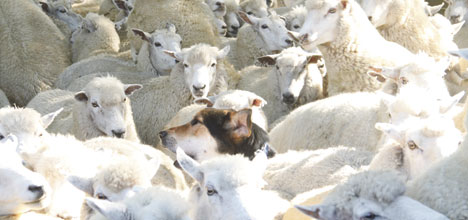
Being a shearer is more than a job; it's a lifestyle. But the lifestyle is under threat as sheep numbers decrease and shearer workloads diminish.
Since Mamaku shearer Wayne Watchorn started shearing 12 years ago, he says sheep numbers in his patch have dropped almost 50 per cent.
There are fewer farmers on their run and picking up enough work for the gang is getting harder.
'Around here, on our little patch, I'm still seeing numbers fall away.
'It might be different in the King Country, where there are bigger farms, but around here dairy farming is so invasive – it's taking over the land.”
The investment has been made into the dairy industry around Rotorua, says Wayne, and sheep farmers are subsidising it.
'It's all turned to dairy grazing, or they're leasing the land to dairy farmers, or they've sold to them.”
Sheep farming is just not sustainable in comparison, says Wayne.
Although he grew up on his family's sheep and beef farm, he can't imagine taking it over one day.
'I can't fathom the debt it's going to take to run that farm – it's millions.
'The return off sheep, until the last couple of years, has been going backwards; it doesn't stack up, you can't compete with the dairy industry – that's the scenario you've got. 'Maybe I'm too small minded, but I like to sleep at night.”
For now Wayne continues to coordinate his shearing gang, trying to find more work as sheep numbers continue to drop.
He has been coordinating the Ngongotaha-based shearing gang for the last 10 years.
The gang, which covers a patch from Manawahe to Kaharoa and around the Rotorua lakes, used to have more than 40 farms on its run.
Now there are only about 30 and the remaining ones have half as many sheep as before.
'When I started, an average flock was about 2000 to 2500 ewes.
'Now it is more like 1000-1200; one of our bigger jobs has gone from 3000 ewes to 1200.
'I know of numerous situations where the farmers have sold or leased out to a dairy farmer; one flock went from 3000 ewes to 600 – he sold half his farm.”
It means there are less sheep and fewer farms for the shearing gang, which makes it tough to recommend shearing as a career for young workers coming through.
'Five years ago, over summer, I had two gangs going through December and January.
'Now I'm doing it all with one gang, all in the same period.
'A young guy starting shearing – you just can't give him consistent work.”
Wool prices are the best they've been in years though; with farmers previously barely breaking even after they'd paid for a day's shearing.
'The wool at the moment is the best it's been in 25 years; there have been spikes, but it always dropped.
'Farmers were struggling to break even just getting us in,” says Wayne.
But that doesn't mean sheep numbers will be on the rise anytime soon to make the most of wool prices – farmers are getting great money for their lambs as well.
The gang isn't charging farmers more, however. Currently, the shearers are able to earn $400-500 per day.
This is with the gang charging $1.80 per sheep and while $400-500 per day seems like good money, Wayne notes it is seasonal work.
'They have to make it last or supplement it with another income.”

0 comments
Leave a Comment
You must be logged in to make a comment.