


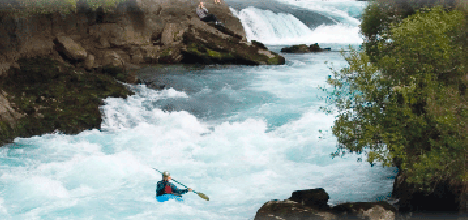
Water in the Waikato River works hard once it leaves Taupo.
A spokesman for Waikato Regional Council estimated that every drop gets used at least seven times before it reaches the sea. Admittedly, it probably goes through several hydro schemes, but also through a lot of dairy sheds and municipal water and wastewater systems, to count just a few.
Since October 2007, when the now well-known Variation 6 was first mooted, the council has been fending off claims and counter-claims, sitting through uncounted late night meetings and finally through weeks and weeks of time in the Environment Court.
The document itself has gone through umpteen versions, sometimes with the text buried in so many amendments and strikeouts as to be virtually unrecognisable.
The claimants were many, even towards the end, with up to 19 objecting parties wanting to press their arguments during the court hearings.
The final ‘clean copy' of Variation 6 compiled by council was handed to the Judge for his decision on August 8, 2011 and the determination released on November 30 contained probably fewer words than any other paper during the whole process.
There is a huge table contained in the Variation document (Table 3-5) which gets mentioned on nearly every page. It contains figures for every part of the Waikato, Waipa and Coromandel catchments, showing what percentage of water must be retained in each waterway, based on a one in five year, seven day low flow rate – or Q5 flow as it has become known – which will both maintain stream and river ecosystems and allow for power generation.
The remaining percentage is what is calculated to be available for farming, horticulture, municipal supplies etcetera.
The judicial decision did make one concession to farming in the region above the Karapiro dam, by increasing the usable percentage of flow from 3.6 per cent to five per cent. Given the huge dairy conversions which have been made in that area, this may go some way to mollifying those who made the conversions without being sure there would be enough water to grow pasture and service them.
The Judge did state during the court hearing, however, they would be wise to make provision to store ‘winter take' water at times of high flow and low drawdown.
So what are the changes for farmers?
Stock drinking water is still a permitted activity until a catchment becomes fully allocated, whereas shed washdown and cooling water has changed to being a ‘controlled activity' requiring a resource consent.
Getting these will involve fencing all waterways on farm, installing water meters, monitoring for leaks and keeping weekly records of take to be supplied to WRC.
Using more than 15m3 of water/day will require some good excuses.
The base date on which calculations are to be made is October 15, 2008 and the threshold of 15m3 of water per day is calculated on the needs of approximately 260 dairy cows.
The other significant change is a clear definition of the words ‘property' and ‘site'. For resource consent purposes, for both surface and groundwater, property means ‘one or more allotments contained in a single certificate of title and also includes all adjacent land that is in the same ownership, but contained in separate certificates of title'. Site means ‘one or more allotments contained in a single certificate of title'.
Given the significant number of matters (about 24), which have to be covered in approving a resource consent, compiling the documentation may well involve using expert outside assistance. It will be a hassle for farmers, but they do have until 2015 to get the consent applications in.
When they are feeling hard done by, however, have a thought for the WRC people who will have to assess, check, calculate by catchment and approve or reject around 2000 consents. They received 100 applications in the first week after the determination.
In the meantime, those same staff are enjoying a measure of praise for their ‘fair and objective' efforts during five years commented on by the Judge in his decision, where a measured criticism of the less objective approaches taken by many of the opposing experts in court was also included.
There's a lot of work for everyone ahead, but from a sustainability point of view, the fact that water in the region will no longer be something taken for granted, is perhaps a significant step. To read the ‘clean copy' Variation visit http://www.waikatoregion.govt.nz/Council/Policy-and-plans/Rules-and-regulation/Water-allocation-variation/

0 comments
Leave a Comment
You must be logged in to make a comment.