


The impact of Psa on the kiwifruit industry is seeing many growers cutting out vines and leaving prime horticulture land bare.
The cash flow from this year's crop will begin to run out early in the new year leaving growers with a ticking time bomb in their hands.
Industry leaders are saying to wait for two years when they will hopefully have a more resistant root stock or a management programme to combat Psa to allow growers to return to a prosperous kiwifruit industry.
In the interim, growers have the daunting challenge of finding another income to fill the void.
The temporary options are, however, limited.
Finding a job in town isn't easy in current economic times and growers are not the only ones in the kiwifruit industry who will be looking for different work – with several packhouses already laying off staff.
Some growers will plant an alterative crop to pay the bills and bide their time.
Other strong export crops such as avocados and citrus take time to grow, however, and years before a decent return is seen.
Some growers are simply cutting wires to allow for tractor access and growing grass silage.
Others are planting short term crops including tamarillos and passionfruit, which growers can grow on the standing kiwifruit structures and hope to harvest fruit in 1-2 years time.
But both tamarillos and passionfruit have their own problems.
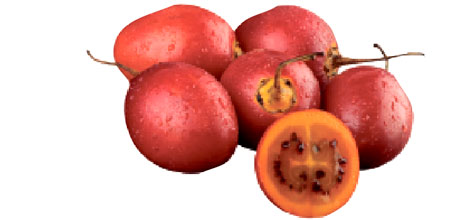
Tamarillo Association manager Robin Nitschke has had many kiwifruit growers ringing him thinking there must be good money in tamarillos if the price in the supermarket is anything to go by.
But the tamarillo industry is collapsing – crippled by the tomato/potato psyllid – which carries a bacteria-like organism called Liberibacter, which it injects into the tree, eventually killing it.
Robin says the TPP is having a bigger effect on tamarillos than annual crops in the solanaceae family such as potatoes and tomatoes.
Since TPP first sneaked into New Zealand in 2006, the annual tamarillo crop has sunk from 1500 tonnes to 350 tonne with the number of growers going from 120 down to 40.
The $6m industry is now worth about $1.5m.
Exporting to Australia has become non-viable due to TPP as NZ tamarillos are now required to be sprayed with a fungicide (methyl bromide).
This process tends to blacken the stalks and make the tamarillos unattractive compared to the locally produced product.
The fruit is mainly exported to America – the origin of the insect.
'It's absolutely devastating at the moment,” says Robin.
'Kiwifruit growers would be moving from one disaster into another.
'So anybody considering going into tamarillos I would strongly recommend them to give us a call and we can take them through some of the problems associated with the industry.
'Our industry is in a perilous state at the moment. It would be very wise to wait for two or three years until we can see where we're going with this.”
Opotiki grower Russell Joblin supplies half of the tamarillos exported from New Zealand and a quarter of the domestic market.
His production has dropped by a half, directly due to TPP, and his income has dropped even more with the cost of production rising.
Spraying
He now sprays every two weeks from December till April and then every six weeks during the off season.
At $150/ha for one spray it is an expensive cost for something which isn't working very effectively.
'There is no guarantee that will be effective.
'If a grower has lost less than 20 per cent of his trees to TPP in a year, it is deemed as very successful.”
All the bigger tamarillo growers have lost 50 to 100 per cent of their trees in the last three years.
Because tamarillos take 18 months before they produce their first ‘half crop', Russell points out that even a 'very successful” grower, who manages to only lose 20 per cent of his trees each year, will end up replacing 40 per cent of his crop during a two year period.
Russell lost 50 per cent of his orchard last season because of TPP infections from the previous summer and as a result, production was down 50 per cent this winter alone.
He usually plants 1500 trees/ha, but is double planting to try and keep up with replacing the numbers he is pulling out.
The tamarillo mosaic virus was historically the main concern for tamarillo growers, but is nothing compared to TPP says Russell.
'The other diseases were just puppies – this is a wolf.
'I would much rather go back a few years when we were getting $3/kg and that was all I had to worry about, than be getting $5/kg and have psyllid.”
Mosaic virus
He is leaving in trees infected with the mosaic virus – which several years ago he would have ripped out of his 7ha orchard immediately.
'The problem with tamarillo mosaic is it will get worse now because we can't afford to cut it out.
'I was removing 15-20 per cent at the end of the year with the virus; I have since stopped doing that because I wouldn't have a crop.”
Aphids will spread the virus more as a result, which affects the look of the fruit and usually means it is second grade and not suitable for export.
'So shortly there will be a lower quality in the shop,” says Russell.
Meanwhile, his partner Debbie started growing passionfruit four years ago on the orchard.
Russell had grown it successfully in the ‘80s and thought it would be a good interest for Debbie.
She got her first crop two years later and then it got crown rot, otherwise known as crown canker or black leg.
Black leg
Black leg can be identified on a vine by the blackening of the trunk, which is often accompanied by the appearance of an orange/pink fungus, eventually killing the vine. Like Psa, there is no known cure at this time.
It is causing vine losses of more than 80 per cent and is widely spread in the major passionfruit growing areas in New Zealand.
Debbie says the next two patches she planted, in full knowledge about black leg, have also been infected, despite her 'finicky” hygiene practices.
Debbie winces when she hears of growers planting thousands of passionfruit vines.
'I just assume they've (kiwifruit growers) done their research.
'Check your market, the market for passionfruit is very small and are only exportable to the United States.
'It's obviously not good for existing passionfruit growers or the industry as a whole, if the market gets swamped, but it's certainly not good for newcomers hoping to help bolster kiwifruit losses.”
With the high labour costs involved in passionfruit, the vines would need to last a few years to make their money back.
Russell says there is scope to genetically modify passionfruit plants to try and resist the black leg pathogen in the soil and to create a more resistant tamarillo tree against psyllid.
'This was successfully done in 1995 and a genetically modified plant was produced that was resistant to all six (tamarillo) viruses, but because of our political stance, this seed remained locked in a fridge.
'I'm hoping the clout of the kiwifruit industry may allow genetic modification to produce a resistant stock because it will certainly help tamarillo growers and the black leg situation in passionfruit.”
Plant & Food Research, with the tamarillo and potato industries, is actively trialling sprays and doing work to come up with answers to the TPP problem.
Russell is in the mean time trying to convince Debbie on moving to Australia where there is no TPP, a population of more than 20 million to sell produce to and 'the government assists much more”.

0 comments
Leave a Comment
You must be logged in to make a comment.