


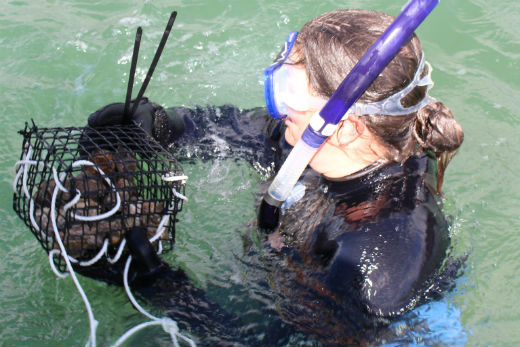
Cages full of oysters are being dropped around Tauranga Harbour as a means of checking contamination levels over the summer months.
The cages of Pacific Oysters from Ohiwa are intended to determine levels of oil and metals.
Amy Platt deploys a cage full of oysters. Photos: Supplied.
'This oyster study will add to our data set along with a five-year sediment accumulation study that we're now three years into,” says Regional Council Coastal Scientist Rob Win.
Rob, with the help of summer student Amy Platt, has already begun deploying the cages of oysters.
'We already have a good handle on sediment contamination, faecal contamination, nutrient, and clarity levels through our annual monitoring work,” says Rob.
'Oysters are filter feeders, so if there's pollution in the water column it will be absorbed into the oyster tissues.
'We have some great data from an oyster study that was completed in 1991, so it's timely to repeat the study and see what changes and trends can be seen.”
The cages are dropped at ten sites about the harbour and will be retrieved in February for tissues sampling.
The samples will be compared with the Ohiwa source population, as well as wild oysters which will also be collected from Tauranga Harbour.
A 1991 study found a range of metals and oil-based hydrocarbon pollutants present throughout the harbour, but not at levels of concern to human health. The highest concentrations were found in Waikareao Estuary and around the Port.
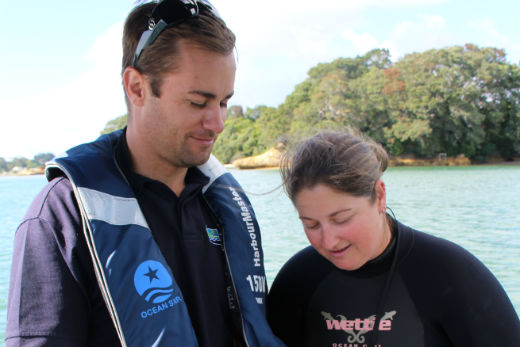
Regional Council Coastal Scientist Rob Win (left) and summer student Amy Platt.
A sediment contamination study completed last year found levels of metal and oil pollutants in the harbour bed are within safe limits. Some elevated levels were detected at one site in Waimapu Estuary, near Fraser Cove.
'That prompted pollution audits of 80 business premises in the Maleme Street and Fraser Cove industrial areas,” says Rob.
'One problem with a wash bay was found and fixed. Pollution Prevention staff are now helping 50 of the other audited businesses to make minor improvements that will reduce storm water pollution.”
Oil and metal pollution could enter the harbour from road run off, poorly maintained boats or illegal discharges, says Rob.
This year's oyster study will help council identify any further pollution problem areas that need investigation.
In the meantime, scientists have plenty to do while they wait for the oysters. There are 60 sediment plates throughout the harbour that need to be measured and they'll be collecting weekly bathing water samples from ten popular harbour and river swimming spots.
'We're checking the sediment plates four times a year so we can measure seasonal changes and detect sediment accumulation hotspots,” says Rob.
'Our Land Management team are already working closely with landowners to reduce sediment run-off, but having a clearer picture of sediment dynamics in the harbour will help us to make sure we're targeting locations and activities that will make the biggest difference.”
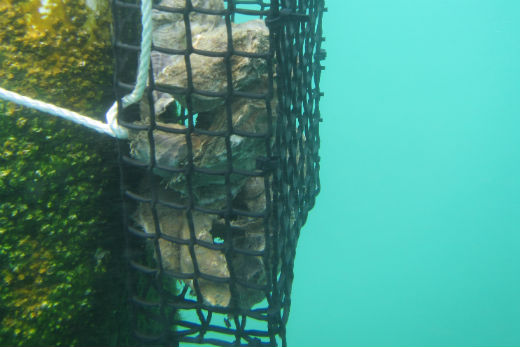
One of the oyster cages in place.

2 comments
oil and metals
Posted on 21-12-2015 14:00 | By Crash test dummies
The important thing not listed is sewerage and nutrients from run off. These two items are in hot debate as to which (76%/11% respectively) are responsible for the massive amounts of sea lettuce in the Harbour and on the beaches and so on.
Good corporate citizens
Posted on 22-12-2015 00:20 | By awaroa
.. Oysters need to be placed near Port. Daily run off from Port activities needs closer monitoring. Maybe then the Port will take better responsibility for their exploitation for profit of the harbour and give back a little.
Leave a Comment
You must be logged in to make a comment.