


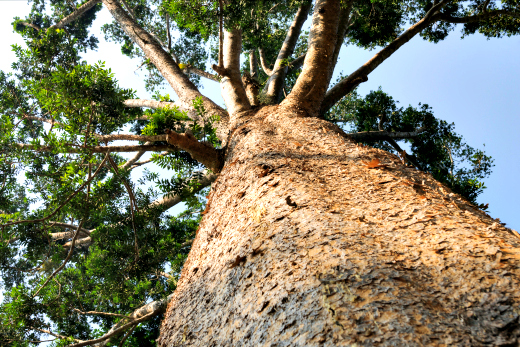
People having their picture taken while hugging a kauri tree is a classic photo for both locals and tourists alike.
But Waikato Regional Council are warning that getting up close and personal with one of the famous trees can increase the risk of spreading the deadly kauri dieback disease which is affecting our native forest giants.
Show your love for our kauri by taking simple steps to help stop the spread of the deadly kauri dieback disease. Photo: File.
Kauri are naturally found in the Waikato to about 38 degrees south, roughly a line from Kawhia to Tauranga. So far, kauri dieback has been detected at five sites in the Waikato region – all of which are on the Coromandel Peninsula.
WRC's kauri dieback project manager Kim Parker says walking up to the kauri for the hug is where the danger lies, not necessarily in the hug itself.
'If there's a boardwalk, not a problem,” says Kim, 'but if you're walking in and around the soil, you could be passing on the deadly disease, or affecting the shallow kauri feeder roots.”
When heading in and around forests which have kauri, make sure you keep to the track, and thoroughly clean all the dirt of your shoes before and after the visit.
If you do feel the need to show a kauri some love remember: 'It's best to do this from a distance,” says Kim.
KAURI DIEBACK – HOW IT'S SPREAD AND HOW YOU CAN HELP
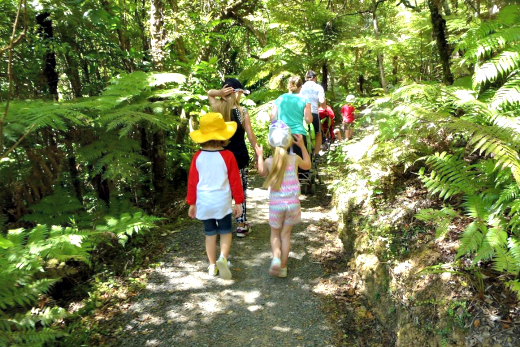
An easy way you can help to prevent the spread of the deadly kauri dieback disease is by sticking to already formed walking tracks. Photo: File.
The disease spreads through the movement of soil on footwear, hiking and biking equipment, and other sports gear.
Before and after visiting bush areas people should thoroughly wash their boots, and tramping and sports equipment, with detergent or diluted bleach.
Cleaning the wheels of vehicles after being in bush areas is also important because the more people can avoid moving even small amounts of soil between areas, the better.
Even one person could be enough to spread kauri dieback to a new area, and tiny amounts of soil have been shown to have the pathogen which causes the disease.
Another strong recommendation is for people to stay on already formed tracks and avoid walking on kauri roots.
For more information visit the Kauri Dieback Programme website at: www.kauridieback.co.nz
If you are concerned about a sick kauri you can Freephone: 0800 NZ Kauri (0800 695 2874)

0 comments
Leave a Comment
You must be logged in to make a comment.