


Two significant environmental projects involving the Waikato Regional Council have won at the national Green Ribbon Awards held recently.
The awards recognise the outstanding contributions made by individuals, organisations, businesses and communities to protecting and enhancing New Zealand's environment.
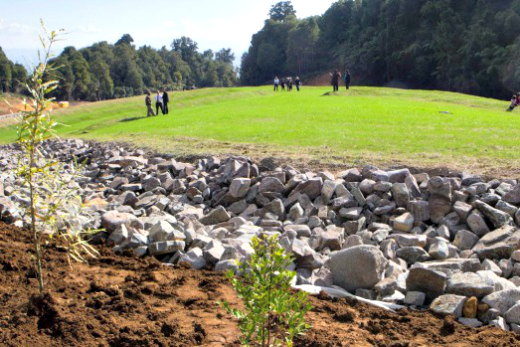
The Tui Mine Remediation project at Mount Te Aroha has won a national Green Ribbon Award recently. Photo: Chris Hillcock/stuff.co.nz
Winning awards on the night were Tui Mine Remediation Project principal technical advisor Ghassan Basheer and water scientist Dr Bruno David.
Ghassan accepted the ‘public sector leadership' category award while Bruno received the award in the ‘caring for our water' category for his involvement in the CarpN Neutral Project.
Attending the event held in in Wellington last week was WRC chairperson Paula Southgate, deputy chair Tipa Mahuta and CEO Vaughan Payne.
Paula says the council was very pleased to be recognised for public sector leadership and innovation.
'The benefits of these projects are huge,” says Paula. 'We have cleaned up one of New Zealand's dirtiest sites and are well on the way to managing one of New Zealand's pest problems, the koi carp. The water quality and ecology are both winners.
'We have top quality staff who work hard to find innovative solutions to difficult issues. And, what is more, this shows how working in partnership with Government and local communities works well for our regional community.”
Dubbed ‘New Zealand's most contaminated site', the old Tui Mine site at Mount Te Aroha is the first project of its kind in the country.
It took about 160,000 hours of planning, management, engineering, and construction time to successfully remediate the site. The total cost of the project was $21.7million.
As a direct result, the major risks to human health and safety posed by the mine have dramatically and permanently reduced and the environment can finally start to heal.
'This was a truly collaborative effort,” says Paula, 'between Waikato Regional Council, the Ministry for the Environment, Matamata-Piako District Council, the Department of Conservation, iwi and the local Te Aroha community.”
The CarpN Neutral project has mainly targeted koi carp which contribute to declining water quality in the region.
Paula adds: 'CarpN Neutral involved building a trap at Lake Waikare to remove the pest fish and turn them into products that tackle other environmental issues, such as fertiliser and animal pest baits. It was a really innovative project.”
The council's sustainable procurement project, headed by sustainable business advisor Anna D'Arcy, was also a finalist in the public sector leadership category.
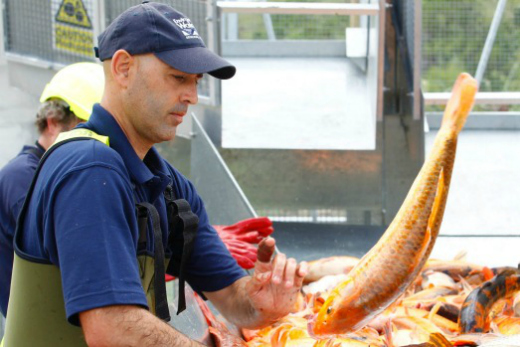
Dr Bruno David with koi carp caught in the Waikato River. Photo: Mark Taylor/stuff.co.nz

0 comments
Leave a Comment
You must be logged in to make a comment.