


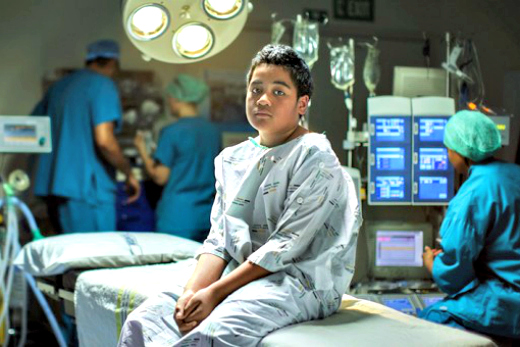
The Waikato DHB is working with communities around the region to provide a free Sore Throat Management services across Waikato.
Children and young adults with sore throats can now access free drop-in clinics at medical centres and general practices, plus school based health services/clinics at many lower decile secondary schools.
The Waikato DHB says free sore throat clinics are now available across Waikato for eligible Maori and Pasifika children and young adults. Photo: Waikato DHB
This service is available and free to all Maori and Pacific children aged four to 19 across the Waikato DHB district who are eligible and present with a sore throat.
This is part of a national campaign to prevent rheumatic fever in at-risk sections of the population.
Rheumatic fever can develop from untreated sore throats, and is a very serious illness that can cause heart damage.
The district board says it's partnered with three primary health organisations and Midlands Community Pharmacy Group to provide a coordinated response to the prevention campaign.
'Phase one of the Waikato campaign includes 51 general practices throughout the Waikato belonging to the Midlands Health Network, plus 14 school based health services in secondary schools.
'Joining them through April will be ten general practices from Hauraki PHO and three general practices from National Hauora Coalition.”
In some cases, access to a free sore throat service will be available from local pharmacies, secondary schools or laboratory.
Phase two services, planned for May, will bring on board more than 30 pharmacies, PathLab and two after-hours medical clinics in Hamilton.
Health Minister Dr Jonathan Coleman says the Government has invested more than $65 million to prevent rheumatic fever.
'A range of initiatives are making a difference, but there is more work to be done,” says Jonathan. 'Targeted drop-in clinics in general practices, secondary schools and pharmacies offer easy access to free effective care for high risk children and young adults.
'There are now 202 drop-in clinics in Northland, Auckland, Waikato, Rotorua, Gisborne/East Coast, Porirua and the Hutt Valley. More clinics will also be opening in the coming months in Hawke's Bay.”
Jonathan says this will that more than 200,000 young people in high-risk areas will have access to prompt assessment and treatment for sore throats.
More than 14,800 children most at risk of developing rheumatic fever have had their sore throat checked at a drop-in clinic in the past year.
This is in addition to the children being assessed and treated through the school-based programme which operates in over 200 North Island schools.
The latest figures on rheumatic fever released in February show a 14 per cent decrease in first episode rheumatic fever hospitalisations since the target was introduced in 2012.
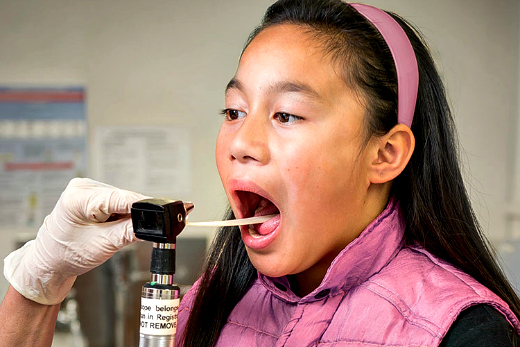
Rheumatic fever can start with a sore throat caused by a ‘strep throat' – a bacterial infection called Group A Streptococcus. Photo: Waikato DHB
THE FACTS ABOUT SORE THROATS AND RHEUMATIC FEVER
Rheumatic fever is a serious but preventable illness. It mainly affects Māori and Pacific children and young people (aged four to 19 years).
Rheumatic fever can start with a sore throat caused by a ‘strep throat' – a bacterial infection called Group A Streptococcus. If the ‘strep throat' is not treated it may lead to Rheumatic Fever.
Usually, strep throat gets better on its own, but in some people an autoimmune response – where the body attacks its own tissues – is caused and the heart, joints (ankles, wrists, knees, elbows), brain and skin can become inflamed and swollen.
If a child or young person gets rheumatic fever they become very unwell, causing them to have severe tiredness, breathlessness and low energy.
In some cases it can lead to serious heart problems causing rheumatic heart disease, where the heart valves become damaged and heart operations are needed.
In New Zealand, 92 per cent of all cases of rheumatic fever affect Māori and Pacific Island children.
The areas with the highest incidence of rheumatic fever are Northland, Auckland (Counties-Manukau and Waitemata), Waikato, Tairawhiti, Bay of Plenty, Lakes, Hawkes Bay and Wellington (Hutt Valley and East Porirua). There are relatively few cases in the South Island.
Rheumatic fever is linked to poor housing conditions, overcrowding, and lack of treatment of ‘strep throat' caused by the Group A Streptococcus (GAS) throat infection.

Health Minister Dr Jonathan Coleman

0 comments
Leave a Comment
You must be logged in to make a comment.