


The importance of effective communication between health professionals across all services has been highlighted in a recently released coroner's report.
Coroner Gary Evans' findings into the deaths of Casey Nathan and her baby son Kymani in 2012, which was released over the weekend, provides plenty of learning opportunities for the Waikato DHB.
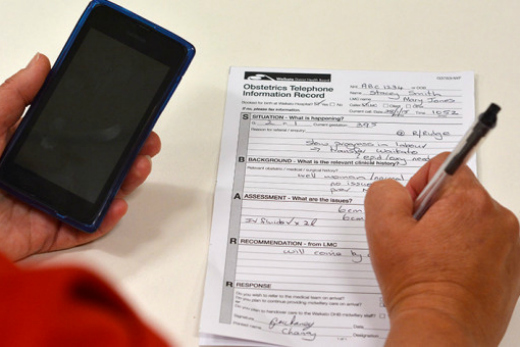
A clinical communication tool called Situation Background Assessment Recommendation Response is used to document telephone conversations between health professionals. Photo: Waikato DHB
DHB Nursing and Midwifery director Sue Hayward says many of those learning opportunities have now been implemented.
'After Casey and Kymani's death,” says Sue, 'we increased the opportunities for our hospital midwives and community-based lead maternity carers to communicate key clinical information with each other in an appropriate way.
'Waikato DHB considers it of utmost importance that we take any learnings arising from the inquest and apply those across the district.”
A world-renowned clinical communication tool called Situation Background Assessment Recommendation Response was already in place in the DHB's Women's Health unit.
SBAAR is used to help document telephone conversations between health professionals, such as lead maternity carers, St John, clinicians and midwives.
In a DHB first, the neonatal team implemented the tool for all phone calls in June last year after clinicians considered evidence given at Casey and Kymani's inquest.
Using SBARR prompts staff to formulate information with the right level of detail.
It was originally used in the military and aviation industries and subsequently developed for healthcare.
Sue says: 'The SBARR form is completed during or immediately after the telephone conversation with, for example, a lead maternity carer, and is filed in a woman's medical records.”
The DHB has a Maternity Quality and Safety Programme to lead, develop and implement a key set of policies, procedures and guidelines across the district which also applies to all primary birthing units.
There are 10 primary birthing units in Waikato, four of them owned and operated by the DHB.
These units are designed for healthy women who have no complications during pregnancy and are run and staffed by midwives.
They do not have facilities for epidural pain relief or caesarean sections.
Sue adds: 'We are also in the process of developing an obstetric emergency procedures' flip chart for use in all primary birthing units.”
The flip chart sets out key contact numbers, such as the direct phone numbers for the Delivery Suite.
It also sets out flow charts relating to a number of obstetric scenarios including birth before arrival to the unit; rapid birth without a midwife; cord prolapse, shoulder dystocia, eclampsia, antepartum haemorrhage, post-partum haemorrhage and a flat baby.
Sue says privately owned and/or operated primary birthing units have asked whether they can access the flip charts.
'We are very supportive of that and so we will roll those out across the district,” says Sue. 'We are in the process of substantively reviewing our current flip chart in terms of its content, and the topics covered. The outcome of the review may result in additional topics being added to the flip chart.”
'Finally, we've taken steps to ensure all lead maternity carers/primary birthing unit staff can easily contact obstetric and neonatal teams in an emergency.”
Sue adds that the DHB has implemented a revised maternity consultation and transfer of care procedure to Waikato Hospital.
This is to allow lead maternity carers, hospital midwives and medical staff know who is responsible for clinical care at any given time.
While none of those measures would bring Casey and Kymani back, for the DHB it is important they learn from what happened, says Sue.
'Our condolences go to Casey and Kymani's friends and families,” says Sue. 'We thank Mr Evans for his thoughtful consideration of all that happened in May 2012.
'He has our assurance that Waikato DHB considers it of utmost importance that we take any learnings arising from the inquest and apply those across the district.”
To Read the Ministry of Health response click here.
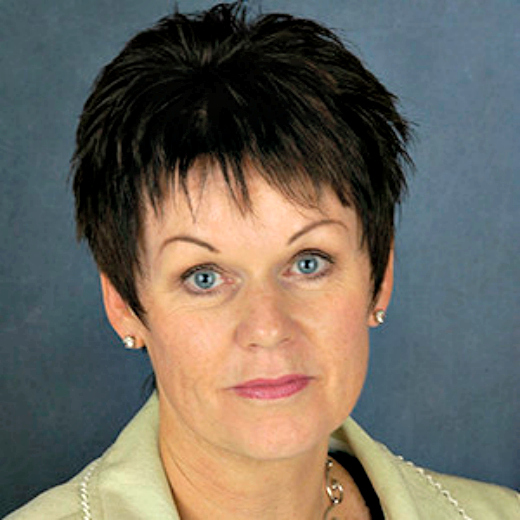
Waikato DHB Nursing and Midwifery director Sue Hayward

0 comments
Leave a Comment
You must be logged in to make a comment.