


Three years ago today residents of Mount Maunganui and Tauranga awoke to the reality of what would become the region's greatest environmental disaster on their doorstep.
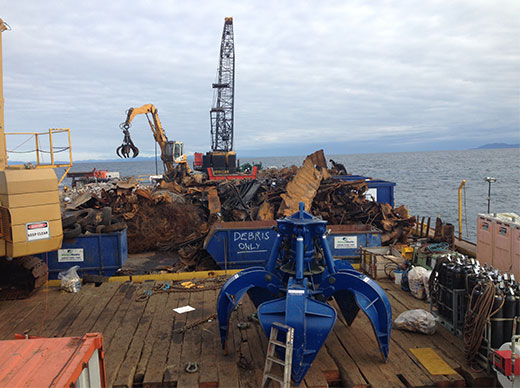
Rena debris is stowed on the deck of the barge before being brought ashore.
It's been a stormy relationship with much ill feeling. Three years on fishers and divers are still excluded from going within 3kms of Astrolabe Reef.
Once visible from the mainland, the Rena has now diminished from view. First breaking in two and then sinking, the larger stern section beneath the waves.
The bow section stuck fast on the reef by the force of the impact, remained a testimony to her builders. The bow section had to be whittled down below the low tide level by salvors who learned that working in the Bay of Plenty is no easy task.
The salvors and divers are working from barges and require relatively flat water. Wave heights at the reef over the last two years have prevented work for 57 per cent of the available days.
The Astrobale Reef is a steep sided mountain in the middle of the sea, 12 nautical miles offshore it catches all the ocean currents and swells.
The downtime is a major factor in the Rena salvage being the most expensive, second to the Costa Concordia. It's estimated to have cost about $US300 million so far, and that will more than double if the entire wreck is removed.
They salvors will continue over the next year to clear the mess on the reef between the two sections.
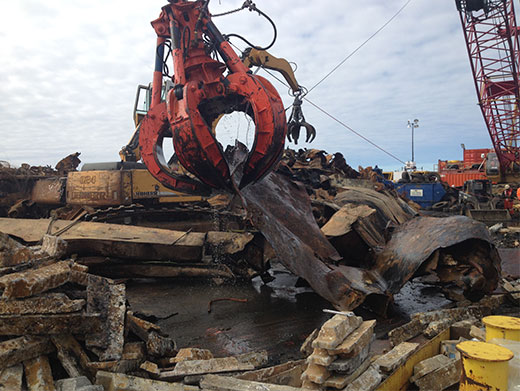
Described as an underwater wrecking yard, observers say the barge loads of scrap that come ashore are a pretty good illustration of the underwater state of the reef.
Cleaning it up is the focus of the work for the next year. The salvors Resolve Salvage and Fire are using grabs and have obtained tested and deployed a magnet grab to pick up bits of metal that evade the claws of the grabs.
The tonnage of recovered debris is being recorded, says project spokesman Hugo Shanahan, but there isn't an estimate on how much remains to be recovered.
And meanwhile the weather and decay processes continue to work on the bow section remnant.
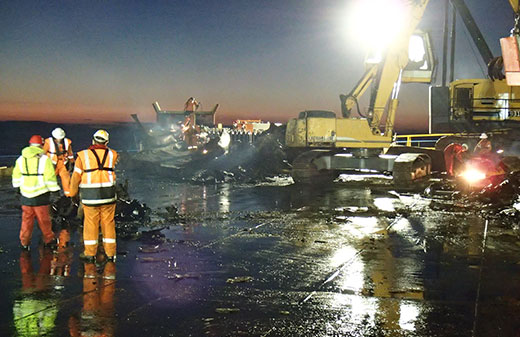
'The bow has broken down into sections with the bulbous bow piece now sitting in the leeward side at approximately 18m of water,” says Hugo. 'The entire bow has not fallen off the top of the reef. Most of what remains is still in its original position.”
Resolve's focus remains on debris removal while the next episode in the Rena saga, the courtroom drama, gets underway.
The Rena owners and insurers, Daina Shipping and The Swedish Club are seeking a resource consent to leave the remains of the Rena's aft section on the reef.
Most of it is in deep water beyond the 30 metre or so limit for recreational divers. Much of the debris field between the two ship sections is accessible to divers.
The application to the Environment Court is expected to be filed later this month, but there is no telling when a court date will be set.
Read part one of SunLive's covergae of the Rena, here. For part two, click here.

0 comments
Leave a Comment
You must be logged in to make a comment.