


Declining whitebait numbers are predicted to rise as residents continue to step up and care for their local waterways.
Bay of Plenty Regional Council reports whitebait numbers have been in decline for many years, mainly due to land use change causing a loss of breeding habitat and declining water quality.
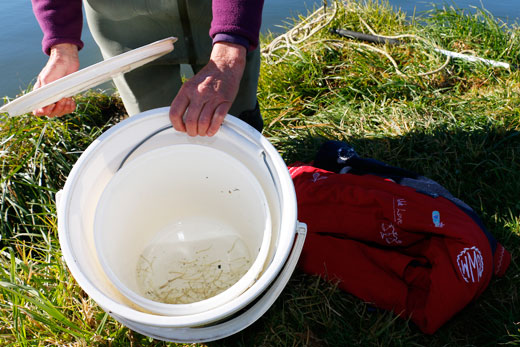
Whitebaiting on the Wairoa River.
But landowners are stepping up and turning those figures around, says council's western land manager Robyn Skelton.
'This year, 58 private landowners have signed up for our help to fence and plant waterways in the Tauranga Harbour catchment.
'Together we've fenced 78 kilometres of river and stream margins and put 100,000 plants in the ground this year. It all helps to improve water quality and create safe-havens for whitebait to live and breed in.”
She says some farmers have gone a step further by re-contouring their drains and installing fish friendly flap gates on their culverts, so that whitebait can complete their breeding cycles again.
'It's an easy fix for channelised waterways that makes a big difference for the fish.”
Whitebait are the juveniles of five different native fish species.
Every autumn, adult fish lay their eggs among plants and grasses along estuary and stream edges.
They usually lay in tidal zones where salt and fresh water mix. If kept shaded and untrampled, the eggs will survive in situ for several weeks, until they're swept out to sea as larvae by the next spring tide and flood.
'The larvae turn into fish and fatten up over winter before they ‘run' back upstream as fritter fodder in spring. The lucky few that escape nets and frying pans continue upstream and grow to become adults that lay eggs in following years,” says Robyn.
'We offer funding and advice to anyone that wants to improve the way they care for waterways on land that they own, lease or manage.
'It's not just the whitebait and fishermen that benefit. Clean streams mean healthier livestock, great swimming and a harbour that everyone can enjoy.”
The official whitebait season runs from August 15 until November 30 and includes all areas in New Zealand except the West Coast of the South Island and the Chatham Islands.
More information about Regional Council funding and advice is available at www.boprc.govt.nz/landmanagement or by calling 0800 884 880.

0 comments
Leave a Comment
You must be logged in to make a comment.