


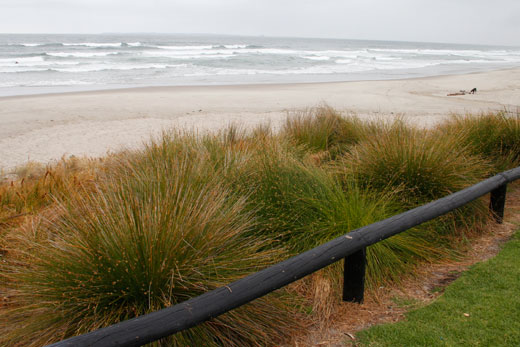
The environmental effects of Tauranga City Council's dune spraying programme don't match the city vision, according to residents calling council to account.
Resident Sue Furey says the dune spraying programme is not protecting public health and is killing off the dune's ecosystem.
Residents are concerned about council's dune spraying programme they believe is destroying the dune's ecosystem.
'The dunes have been annihilated,” says Sue in her submission to council's draft annual plan.
'We have found dead birds. All of the bees and butterflies have gone, as have the skylarks and wax eyes. I have not seen a skink in over eight months.
'Native lizards and skinks are protected under the wildlife Act. Is TCC exempt from this act?”
Sue argues the dune spraying programme developed in the last 18 months with the intention of replacing the mixed plant life with natives, is neither urgent, nor important.
'It's a nice to have idea, but the dunes were actually fine,” says Sue.
'The public health is at risk especially for those of us living close to all this spraying, and there was abundant bird and insect life in the dunes, which has been adversely affected.”
Oceanbeach Road resident Antje Lankenau says the council's continued use of toxic agri-chemicals being used to eliminate introduced plant species is against the council's own policy.
'We are not aware of any of the plant species being eradicated are classified as pests in the register of the Bay of Plenty Regional Council,” says Antje's submission.
The council is also in breach of its policy's prime objective of protecting public health, says Antje.
At present all life is being sprayed out of the dunes area; trees including mature Norfolk Pines, bees, bumble bees, butterflies, stick insects and birds, including kingfishers, tui and sky larks, have all disappeared.
After recent spraying, Antje says she found three dead sparrows near Oceanbeach Road, she believes died as a result of spraying.
'They had been feeding on what was growing in the sand dunes,” says Antje.
'They have been spraying ice plants, which have to be taken out by hand. The spray is still on there. The community service workers are sent there and they touch all this stuff. The spray takes months to break down.
'I don't think it is a very good place to go on with spraying, I don't see why we have to put up with it.”
The spay drifts along the gardens and into homes badly affecting people with respiratory illness, migraines and other health issues, says Antje.
If noxious plants have to be removed, they would be removed by digging them out.
There is also confusion between the dune zones, with both the city council and regional council claiming responsibility over part of the dunes, but with neither being able to clearly define their area of responsibility.
Antje suggests the current method of heavy spraying and later removal benefits only the contractor. The more time it takes, and the more spray that is used, the better the profit.
She submits that a gardening contractor could take the plants out in the same or shorter amount of time and dispose of them elsewhere.
Replanting could be done as part of the same process, because they would not have to wait for toxic substances in the soil to recede.
She suggests the council trial an approach that gives a contractor responsibility for a section of the dunes and specify the desired result to be achieved in a certain timeframe. It would improve public health and that of the environment while saving costs, says Antje.

7 comments
Toxic sprays
Posted on 06-05-2014 13:24 | By YOGI BEAR
What else is new ... "do as I say not as I do ...".
Spray Safe
Posted on 06-05-2014 14:24 | By sangrae
It would be interesting to know if these contractors all hold current spray certificates? ALSO WHY DO THEY SPRAY THE STREETS WHEN IT IS BLOWING can the council answer these questions,probably not.
A toxic existence
Posted on 06-05-2014 15:03 | By space cadet
We have been assured for as long as glysophate weedkillers have been around that it is environmentally friendly, safe to use and safe for human consumption. In 2009, a French court found Monsanto guilty of lying; falsely advertising its Roundup herbicide as "biodegradable," "environmentally friendly" and claiming it "left the soil clean." Proof of lying - why did that company need to lie about its products? Are they still lying? If this product is unsafe to use, why are we still authorising council to destroy our environment for the sake of convenience and economy? Why indeed are we now using it to produce food in ever increasing amounts? Instead of believing 'if you want to keep your job' corporate scientific reports and syncophantic, unquestioning news articles, perhaps we should start digging into a plethora of information on why we should be reconsidering the use of these products. http://articles.mercola.com/sites/articles/archive/2013/06/09/monsanto-roundup-herbicide.aspx
What Vision?
Posted on 06-05-2014 15:32 | By Murray.Guy
The comment, 'the environmental effects of Tauranga City Council's dune spraying programme don't match the city vision', begs the question, "What Vision?" Mayor Crosby waxed lyrical about 'his new 100 day vision' and community input, due last February. We've yet to see it, or have a chance to contribute to it! Makes it a bit difficult to submit to an 'annual plan', which in part is about 'vision fulfilment', achieving your goals and we don't yet know what they are!
Overit
Posted on 06-05-2014 15:33 | By overit
I hate to think what the Council have Citycare spraying in Welcome Bay in the Waikereo Valley. Its a wetland and they seem intent on clearing it of vegetation. The stream runs into the Harbour. I really must phone and enquire.
All for less chemicals..
Posted on 06-05-2014 17:27 | By yikes61
and more hard labour weeding. Spraydrift wouldnt happen if council contractors applied in the correct conditions and with appropriate equipment. I've seen said contractors methods of applying chemical and its a disgrace, blowing a gale but they must get the job done! Ive seen council contractors weeding (or rather pulling out the top part of grasses and leaving the roots and they get paid for that! How about some accountability from those giving out these contracts, any QA checks in place or are they too busy playing with their dog amongst the volunteers working on the dunes? Native plants on the dunes act as a buffer against the elements, binding the sand. Without them, the dunes would disappear faster and those enjoying coastal views would be paddling quicker. Given that council appears to have abandond spraying the weed grasse on the dunes, maybe time to get the unemployed weeding!
Just
Posted on 07-05-2014 13:16 | By Capt_Kaveman
to add since when has bark been natural to the beach front, the only thing anyone should be doing is hand pulling of exotic plants and the rest left to do its course
Leave a Comment
You must be logged in to make a comment.