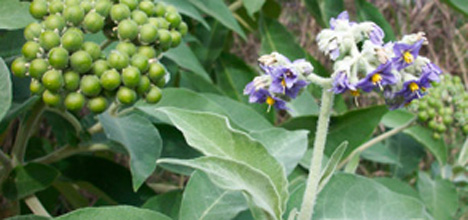
A bug that eats the noxious plant woolly nightshade is to be imported into the Bay of Plenty.
Managing woolly nightshade has been the Bay of Plenty region's most costly weed control programme, says Environment BOP chairman John Cronin.
'We have spent $2 million during the past 18 years in a bid to control this invasive plant,” says John.
Photo supplied by Environment bay of Plenty.
Environment BOP made the application to ERMA to import the woolly nightshade eating lace bug as a representative of the national Biocontrol Collective. The collective includes regional councils, unitary authorities and the Department of Conservation, working together with Landcare Research.
'We are hoping the lace bug will assist in control of woolly nightshade and help reduce the plant's vigour,” says John.
The lace bug is like woolly nightshade, a native of Brazil. It was released in South Africa in 1999 and has caused massive defoliation of woolly nightshade at one of the original release sites.
It did not damage any other plant species. The New Zealand natives from the same genus; the two poroporo species and the small-flowered nightshade, were tested in South Africa and were not attacked or damaged by the lace bug. All of the cropping Solanums, such as potato, tomato and tamarillo, were also tested.
Environment Bay of Plenty Senior Pest Plant Officer John Mather says the lace bug will feed on woolly nightshade leaves and stunt growth by reducing its ability to photosynthesise.
'This means the plant will put its energy into simply staying alive and won't have as much power to produce fruit,” says John.
'The fruit have seeds that are easily dispersed by birds.
'The lace bug will hopefully be a big help in reducing the density of infestations in forestry and scrubby blocks of land, many of which are close to Tauranga.”



08-Nov 07:00
From five-year-olds to teachers
07-Nov 19:02
Results show no change for Bay electorates
07-Nov 18:08
Coroner unable to find cause of infant’s death
07-Nov 16:00
Hot rods rev up for animal charity
07-Nov 12:00
Young actors debut on public stage
07-Nov 11:45
Check labels if you want NZ ham for Christmas
07-Nov 07:00
Yellow-belt siblings sweep national golds
06-Nov 18:00
Wairoa Bridge cycleway fully closes from Monday
06-Nov 17:00
Two-way traffic returns past gorge's biggest slips
06-Nov 16:00
Weekend events postponed due to rain
06-Nov 14:00
More than 10,000 people expected at Sika Show
06-Nov 12:10
Bay of Plenty on alert for severe thunderstorms
COMPETITIONS

0 comments
Leave a Comment
You must be logged in to make a comment.