


With sieves and microscopes in hand marine enthusiasts of all ages are been given a hands on shot at learning about Tauranga's thriving marine environment.
Today the University of Waikato's Coastal Marine Field Station is opening its door to the public for its annual open day with a range of activities and specimens on show.
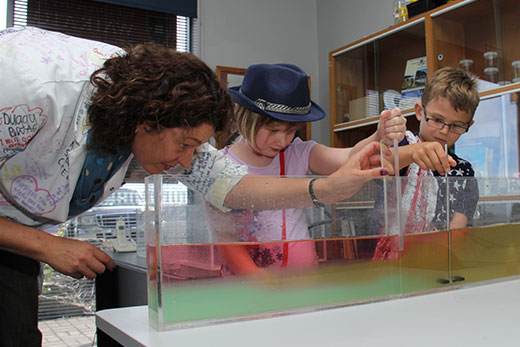
House of Science director Chris Duggan teaching Zoe Sherlock, 7, and Lachlan Domett, 7, about the density of salt water at the open day today. Photos: Tracy Hardy.
The field station was officially opened in December 2011 and within a year premises was extended to cope with a significant increase in research activity.
The station is now the Bay of Plenty's hub for numerous undergraduate and postgraduate research being conducted in Tauranga Harbour and around the Bay.
University of Waikato marine ecologist Phil Ross says staff began the day 'with a difference” this year taking a family-friendly bike ride along the Tauranga Harbour coastline trails, and parts of Waikareao Estuary.
En route, Professor Chris Battershill and Caine Taiapa discussed with about 30 participants about the area's biodiversity and numerous ecological and cultural points of interest during the two-hour ride.
'The idea was being able to talk to people about some of the coastal issues both ecological and economic. So things like sea lettuce blooms, mangroves, coastal development, biosecurity, a whole bunch of things,” says Phil
'There was a whole range of people and we meandered around the estuary and stopped and talked about things we saw and people asked us questions. It was pretty cool and we had a good turnout.”
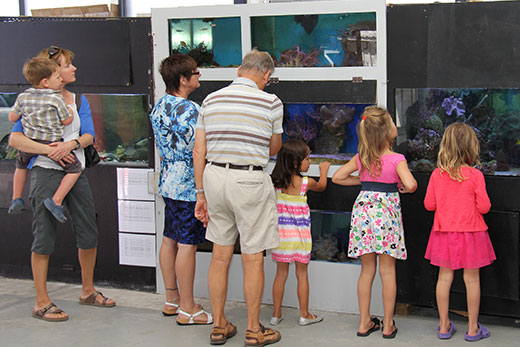
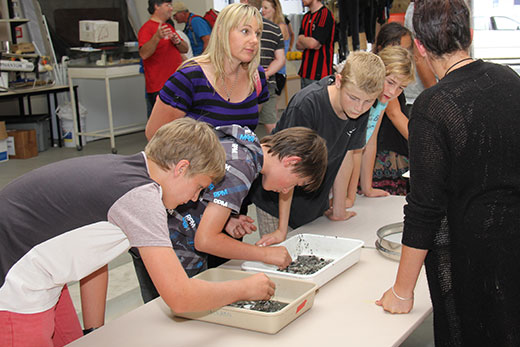
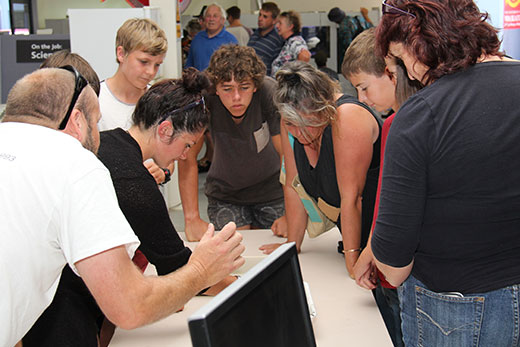
From midday to 4pm children and parents explored the sights and hands on exhibits at the marine station – including observing microscopic marine life, searching sand core samples for small marine organisms, conducting simple science experiments and a scavenger hunt.
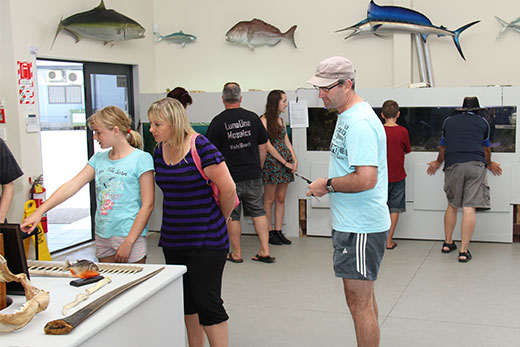
'We have got sediment cores that we have collected form the estuary, we have got water samples and we have got fish tanks both tropical and local.
'We have got collections of some pretty bizarre sea creatures that are dead and preserved. We have got swards from swordfish, tails from rays.”
Also on hand was House of Science director Chris Duggan offering advice and insight for children and their families about the benefits of studying science.
The House of Science is a charitable trust providing a range of services helping make science accessible and fun for teachers, students and the wider community.
'What she [House of Science director Chris Duggan] is trying to do is bridge the gap between secondary schools and university; so getting kids into the House of Science and getting them into science education.
'It's about showing them that science is cool, worth doing at school, there are jobs and some pretty exciting careers to be had in science.”
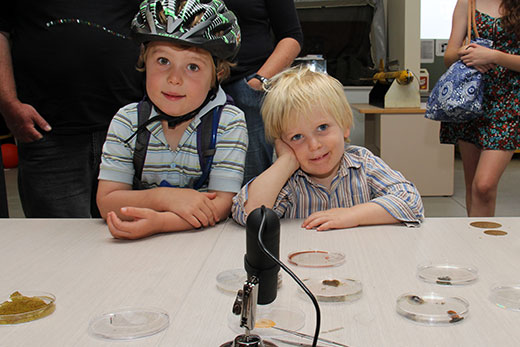
Noah, 4, and Ari, 2, Ross looking at samples through a microscope.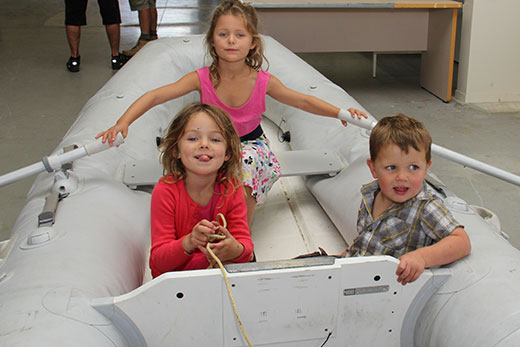
Poppy, 4, Grace, 6, and Charlie, 3, Richardson trying out the IRB.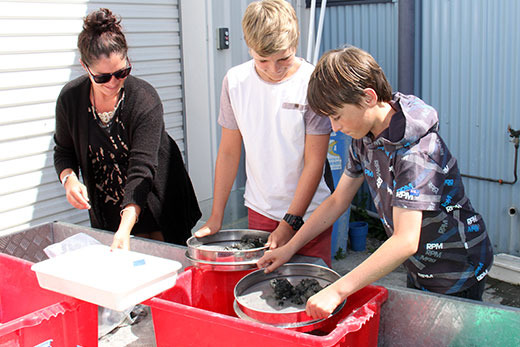
Masters student and demonstrator Te Puea Dempsey teaches Gene Hughes, 13, and Connor Cambourn, 12, how to sieve sand and shell samples.

0 comments
Leave a Comment
You must be logged in to make a comment.