


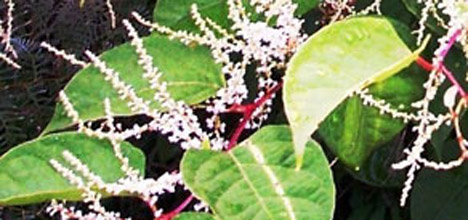
Asiatic Knotweed, one of the world's invasive weeds is being targeted by Environment BOP for control.
There are a number of Asiatic Knotweed infestation sites in the Bay of Plenty region with the largest number around the Rotorua area.
The plant poses a serious threat as it smothers and takes over native growth says Environment BOP pest plant officer Richard Mallinson.
Asiatic Knotweed.
'Asiatic Knotweed is such a threat to the region that we're carrying out a control programme to get on top of the weed before it reaches the plague proportions it is capable of,” says Richard.
'We're very keen to hear from anyone who may know of, or may have seen, Asiatic Knotweed anywhere in the region.”
Asiatic Knotweed dies back over winter and in the spring hollow stems emerge, similar to bamboo. The reddish tinged stems can grow to a height of more than two metres and support large leaves that are a distinctive pale green with sprays of drooping, small white flowers that are produced from December through to March.
Asiatic Knotweed is a native of Japan, Northern China and Korea and was originally introduced as an ornamental plant, but its invasive nature has caused it to become a serious problem in parts of North America and Europe and in the United Kingdom it's considered to be the most invasive of all introduced weeds.
The pest plant can be spread by dumping of garden waste or can be washed out as fragments down waterways, says Richard.
'People need to be very aware of how they're disposing of their green waste,” says Richard.
'We're currently controlling Asiatic Knotweed at 75 locations where this plant has established itself. There will undoubtedly be other sites that need to be treated before they spread so the more the public can tell us, the more effective we can be.”

0 comments
Leave a Comment
You must be logged in to make a comment.