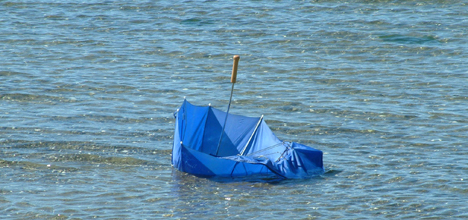
The yacht, ‘Time to Burn', capsized on September 1 2008 and its skipper Michael Claudatos 52, drowned near Motiti because the owner did not understand how the ‘Z' keel was attached to the hull.
The Maritime New Zealand report on the accident says attempted repairs in Gisborne were not checked and the owner declined the designer's offer of assistance.
Instead he sailed the 12.5 metre racing yacht to Tauranga for repairs, and capsized 11 nautical miles from the Tauranga Harbour entrance.
The keel fell off when welds attaching it to the keel plate failed.
The crew, Warren Clark 49, noted cracks in the keel fairing and some movement when checking the vessel prior to the voyage.
The MNZ accident investigation report found the crew attempted to fix the problem by tightening the keel bolts that attached the keel plate to the hull. They did not carry out further checks to see if the movement had been eliminated, or consider other methods of getting the vessel to Tauranga, like road transport or motoring with the mast removed to make her more stable in case of keel failure.
Time to Burn was a high performance one-off design. It was fitted with a new ‘Z' keel in 2000. In 2006, the vessel struck a whale, breaking the rudder and damaging the keel bulb.
Later checks showed a crack in the fairing where the keel attached to the keel plate.
Just before the accident, the yacht was motor-sailing comfortably when Warren Clark felt the yacht suddenly slow to about four knots. He joined the skipper on deck, and checked overboard with a torch, but neither man could see anything unusual.
Time to Burn held her track for a further 100 metres before rolling on her port side with her mainsail lying on the surface of the sea.
The men donned type 401 coastal lifejackets, manually activated the vessel's emergency beacon and attempted a mayday call on a hand-held VHF radio from within the cabin. They were not able to pass on their position owing to poor reception.
Neither man could get his cell phone to work, but they managed to fire distress flares. The vessel's life raft was stowed below under a table, to keep it out of the way. After Time to Burn rolled, they could not reach it.
The yacht then rolled upside down. Both men escaped.
Both men tried to climb on the vessel's hull, but could not. Michael Claudatos drowned before help could arrive. His life jacket is believed to have been incorrectly fastened and repeatedly slipped over his head.
Warren Clark tried to help but became exhausted. He was kept afloat by his correctly donned lifejacket and was later able to scramble onto the hull to await help. He was spotted from the air and rescued by a Coastguard vessel.
Key findings of the MNZ report include:
Tightening the keel bolts had no effect on the damaged keel as the structural defect indicated by the cracked fairing did not involve the keel bolts that attached the keel plate to the hull.
Insufficient understanding of how the keel was constructed led to the incorrect belief that tightening the keel bolts would rectify the movement in the keel.
The decision to secure the life raft below deck from where it was virtually impossible to deploy when capsized was a contributing factor in the loss of the skipper.
Corroborative evidence indicated that the skipper's lifejacket was not properly secured and may not have been correctly donned. This also was a contributing factor in his loss.
The inability of the crew to provide their position delayed the time it took to be rescued.
The keel failed partly because a single six millimetre fillet weld specified on stressed and critical joints was inadequate.
The keel was fixed to the keel plate by a single run of weld on the exterior of the keel plate. There was no secondary means of attachment. This placed the vessel at risk if the weld failed.



13-Nov 15:41
Microsoft outage affect users worldwide
13-Nov 14:00
Pōwhiri to bring cultures together in Tauranga
13-Nov 13:20
‘Kiwi hot’ at Bay Oval
13-Nov 11:45
Don't wash raw chicken, food safety officials warn
13-Nov 11:07
Cast your line for Coastguard
13-Nov 10:02
Delivery truck stolen from BOP dairy, man charged
13-Nov 08:30
Sunny weekend as high pressure settles in
13-Nov 06:00
Police issue 29 tickets in mobile phone crackdown
12-Nov 21:16
One dead after vehicle crashes down bank
12-Nov 18:00
New men's fund launched to tackle isolation in BOP
12-Nov 17:00
SH2 roadworks bring overnight lane closures
12-Nov 14:35
Te Puke, Rotorua players score Lotto wins
COMPETITIONS

0 comments
Leave a Comment
You must be logged in to make a comment.