


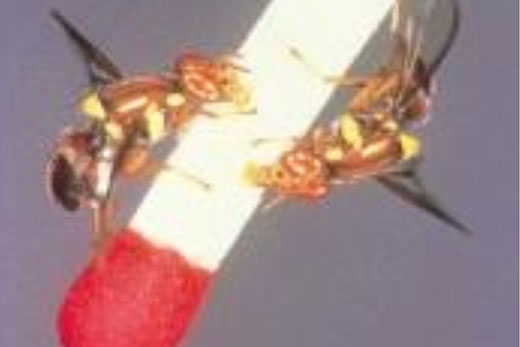
Field work continues in Whangarei to check whether this week's detection of a single fruit fly is a solitary insect or whether there is a wider population in the area.
The insect is an unwanted and notifiable organism that could have serious consequences for New Zealand's horticultural industry.
File photo.
Some 80 personnel [from Ministry of Primary Industries and operations service provider
AsureQuality] are today putting out further surveillance traps and inspecting gardens and rubbish bins for any signs of fruit flies.
As of 8am there are 83 traps in the area closest to the original find [known as Zone A] and traps are being deployed in the Zone B area which goes out to 1.5km from the detection.
MPI Deputy compliance and response director-general, Andrew Coleman, says the Whangarei community has been hugely supportive, accepting that this situation requires restrictions on the movement of fresh fruit and some vegetables out of the Controlled Area that has been established.
'We are very appreciative of this support.
'It is vital material that could contain the fly is not taken out of the zone, just in case there is a breeding population present in the area, which takes in Parihaka, Riverside and parts of central Whangarei.”
Restricted produce includes all fruit and some vegetables. Leafy and root vegetables are not hosts for fruit fly and their movement is not restricted.
Andrew says the key fruits and vegetables that should not be taken out of the Controlled Area are: citrus fruit, stone and pip fruit, tomatoes, capsicums and avocados.
A field laboratory is up and running this afternoon, ready to examine samples of fruit from the area.
The lab will also work to identify any suspect insects found in the increased traps in the zone.
First results from this trapping will be available tomorrow.

0 comments
Leave a Comment
You must be logged in to make a comment.