


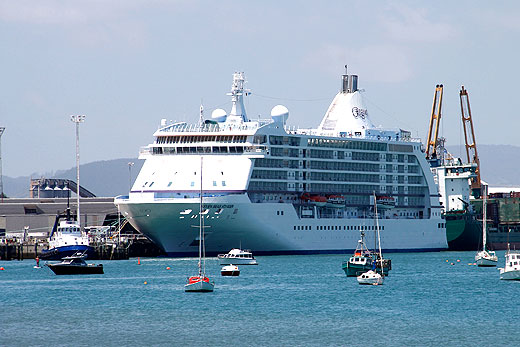
Requiring all fruit and vegetables on visiting cruise ships to meet New Zealand import standards will reduce bio-security risks, says Kiwifruit Vine Health.
The kiwifruit biosecurity organisation programmes manager Andrew Harrison says this is one of the proposals being explored following a productive meeting with the Ministry of Primary Industries Border Clearance Services Directorate.
Cruise ship docked at the Port of Tauranga.
'KVH believes this could be a sensible approach to further reduce the risk of an incursion, as well as improve efficiency of border operations, and has asked the Ministry for Primary Industries to consider this,” says Andrew.
Andrew says it was a constructive and useful meeting at which KVH also suggested New Zealand follow Australia's lead and take stronger action to encourage importers to take more responsibility for biosecurity.
The proposal is to reship non-compliant imports back to where they came from when there is a serious breach, such as dirty imported machinery, an approach Australia already implements. It would only take a couple of such examples to create a strong deterrent for importers and others, KVH believes.
KVH believes the approximately 6000 facilities permitted to unload shipping containers in New Zealand is too many from a biosecurity perspective.
'MPI appears to be seriously looking at this issue and potential solutions, and KVH will support a well-designed programme to reduce this number and strengthen biosecurity at transitional facilities,” he says.
KVH is also working with the Port of Tauranga on establishing a programme to achieve biosecurity excellence standards at the port. MPI has confirmed its interest in being involved, and KVH and the port authority are currently discussing the proposal with other stakeholders.
In another move, KVH is working to finalise a Fruit Fly Operational Agreement with MPI and other horticultural sectors.
As well looking for opportunities to strengthen New Zealand's ability to detect fruit fly early and respond if it arrives, MPI and horticultural industries are also working together to achieve agreements with import countries, so they do not close their borders to New Zealand should fruit fly be found here. This includes recognising use of coolstorage as a means of mitigating the survival of the fruit flies.
KVH has also welcomed the release of MPI's new report 'Biosecurity Risk Management of Entry Pathways for Pasture Pests”. It covers biosecurity risk management of pathways by which pasture and also horticultural pests might enter New Zealand. The scope of the biosecurity challenge to New Zealand is considerable, with the following items crossing New Zealand's borders on an annual basis:
- 29,000 aircraft visits
- 90,000 used vehicles and machinery
- 17,000,000 tonnes of cargo
- 600,000 containers
- 4 million passengers
- 330,000 animals including horses, pets and fish
The report focuses on the use of pre-border and border interventions to manage such a considerable risk, but acknowledges zero biosecurity risk is unattainable. Therefore, post-border surveillance such as fruit fly trapping is also an essential component of the biosecurity system. The report can be found at: www.biosecurity.govt.nz/regs/imports/ihs/risk/pasture-pest-hazard-identification

2 comments
Don't forget ...
Posted on 23-01-2014 09:19 | By Murray.Guy
... and all persons, their clothing and possessions fumigated before stepping foot on NZ soil as 'this will reduce risk'!
watering down
Posted on 23-01-2014 12:57 | By yikes61
This government have systematically reduced bio-security at New Zealand borders, reducing funding and manpower. Given that a second fruit fly has been found in Northland, the Govt need a big kick up the arse to put in place funding and policy for stricter controls . Be proactive not reactive!
Leave a Comment
You must be logged in to make a comment.