


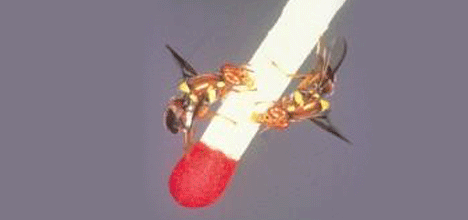
Changes to fruit fly controls in Australia potentially put New Zealand's horticultural industries at greater risk from an incursion of the pest, says the CEO of Kiwifruit Vine Health.
'Australia has relaxed movement controls between states designed to reduce the risk of spreading fruit fly because moves to create fruit fly free areas have not succeeded,” says Barry O'Neil, who believes this increases the risk that produce with fruit fly may be imported to New Zealand.
Those concerns were heightened when on December 3, the Ministry for Primary Industries intercepted live cucumber fruit fly larvae (Bactrocera cucumis) on rock melons imported from Australia. MPI have acted to suspend the import pathway of rock melon and honeydew melon from Australia, until an investigative audit of the treatment pathway has been completed.
MPI says that only rock melon and honeydew melon imports require the chemical dimethoate as a fruit fly treatment. Therefore, there are no implications for other import pathways.
'KVH is comfortable with the approach MPI is taking to managing the risk in this situation.
'KVH has reviewed the threat cucumber fruit fly poses to the New Zealand kiwifruit industry, and determined that this organism does not impact kiwifruit, as it has a host range specific to cucurbits (melons, cucumbers, courgettes and pumpkins) and tomatoes. Kiwifruit is not a known host of this organism.”
Barry says the fact the larvae arrived here is a clear illustration of the risks to our horticultural industry.
'When fruit fly was discovered in Auckland in 1996, China shut its doors to our exports for two years. We can't risk that happening again.”
The fruit fly risk is among the reasons KVH, on behalf of the kiwifruit industry, has agreed to sign up to the Biosecurity Government Industry Agreement (GIA) on behalf of the kiwifruit industry, making it among the first industries to formally do so.
Barry says being part of the agreement means the industry will have a role in deciding how a biosecurity incursion is responded to.
'If we are not at the table with MPI the ministry may decide not to respond and if it does, could send us a bill. If we are part of the process we expect MPI will cover 80 per cent of the costs with industry sharing the balance, which could be in kind as well as in cash.
'Early signatories benefit financially from signing as MPI will agree to pay 100 per cent of any response costs for the first three years, along with most of the readiness costs.
'Certainly within the kiwifruit industry we have resources and expertise which would be invaluable in helping manage a response to a disease or pest incursion.”
KVH also wants to finalise a Fruit Fly Operational Agreement with MPI and other horticultural sectors which will include means of mitigating the survival of the any possible pests on New Zealand export produce, including the use of coolstorage, so that importing countries would hopefully not close their borders to New Zealand should fruit fly be found here.

0 comments
Leave a Comment
You must be logged in to make a comment.