


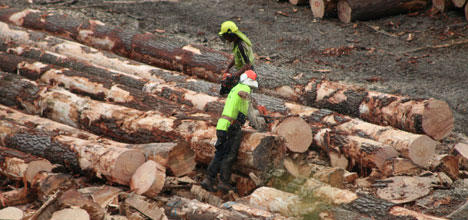
A series of inquests into forestry related deaths are scheduled for early next year, as New Zealand's deadliest industry goes under the microscope.
The Ministry of Justice announced four forestry inquests in the Bay of Plenty will be held next March as part of the ministry's quarterly case study, similar to previous coronial inquiries into cycling and quad bike deaths.
Four forestry-related deaths in the Bay of Plenty will go under the microscope next year.
Conducted by Rotorua-based coroner Wallace Bain, the inquests cover the four deaths in the Bay's forestry sector recorded between March 6, 2012 and July 19, 2012.
The announcement follows the release last Friday of the findings of a six-year analysis of forestry-related deaths, conducted by the Chief Coroner's office.
It finds the forestry sector has the highest rate of fatal work-related injuries in the country with ACC claims almost six times the rate for all sectors – per 100,000 workers within the industry.
The report shows 31 forestry deaths were recorded between July 2007 and August 2013 – an average of five per year. In most cases forestry workers were men aged between 36 and 45 years old with a high proportion of victims Maori.
The analysis also shows 39 per cent of deaths were due to tree felling and almost a quarter were due to breaking out, which involves the gathering and hauling of logs to skid sites.
The reports shows the number of serious incidents is also increasing with 188 serious-harm notifications lodged in the last five years.
There have been six deaths so far this year and by 2014 about 9000 people will be employed in the forestry sector, according to the Ministry of Business, Employment and Innovation.
The high injury rate is among issues to be tackled by an independent safety review, supported by stakeholders including unions, workers, forestry owners and industry organisations.
A statement published in the Ministry's quarterly report shows the Forest Industry Contractors Association highlighting the need to carefully consider any learning recommendations following a forestry death in Carterton in 2009.
'Many employers use their own practical measures and often the skills of in-house trainers/assessors to make practical on-site assessments of the skills of the new employees,” says the statement.
'Changes to the information contained in the record of learning would be potentially quite helpful, as standards for its details and format can be applied using systems in place by forestry's industry training organisation.”

0 comments
Leave a Comment
You must be logged in to make a comment.