



Marine scientists scouring Tauranga Harbour in search of the aquatic pest Mediterranean Fanworm have failed to find any more trace of the worm.
The dive team from the Waikato University marine studies programme, BOP Polytechnic and the BOP Regional Council, has failed to find any more examples of the marine animal since a single fanworm was found by a diver on a rock in Pilot Bay on September 13.
Fanworm hunters: Hamish Lass, BOPRC biosecurity officer, Phil Ross, David Culliford, Jane Cope, Rex Fairweather.
The search has widened from Pilot Bay and divers were on Wednesday inspecting pilings round the Edgewater pontoons on The Strand.
Divers spent a couple of days checking pilings under the Mount Maunganui wharf, and expect to be exploring down the western side of the harbour in the next couple of days, says marine ecologist Phil Ross.
They need to do more work in Pilot Bay, but strong westerly winds are preventing that.
The original 5cm long fanworm located near the Pilot Bay boat ramp is likely to have come from the infested hull of a visiting vessel.
Phil says the original fanworm was about four to six months old. There are established populations of Mediterranean fanworm in Auckland and Lyttelton. While they look like a plant, they are a marine worm.
'Now they are showing up at a few other ports as well,” says Phil.
'They are likely to have spread from some sort of boat traffic in and out of these locations.
'The more people are aware of invasive species and recognise them, the better chance we have of detecting them.”
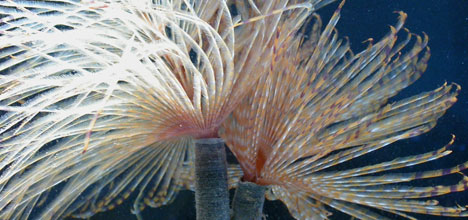 An example of the aquatic fanworm.
Divers have over the last month been methodically searching the high risk areas of the Tauranga Harbour and visually checking Pilot Bay from the shoreline to the channel edge, including mooring blocks, hulls of moored vessels, and the reef out to Stoney Point.
High risk sites in the marinas, wharves and port area of the south-eastern end of the harbour are also being checked.
The tube-dwelling Mediterranean fanworm grows up to 40cm in length and is always anchored to a hard surface, and topped with a single spiral fan or radiole. It grows in clumps, forming dense mats that take light and nutrients from native plants.
According to the Ministry of Primary Industries fanworm, although not yet recorded to have had significant impacts on fisheries or aquaculture, could become a nuisance to recreational and commercial fishers through the clogging of dredges and fouling of other fishing gear.
For more on the Mediterranean fanworm, visit www.mpi.govt.nz or read the factsheet.

0 comments
Leave a Comment
You must be logged in to make a comment.