


Tremor levels at White Island have declined since the marine volcano's moderate eruption on Friday, but GNS scientists say the potential for further eruptions with little or no warning remains.
The aviation colour code has been lowered from orange to yellow, but the volcanic alert level remains at two.
Duty volcanologist Gill Jolly says volcanic tremor levels gradually decreased after the eruption on Friday and are now at levels equivalent to the middle of last week.
'Measurements of sulphur dioxide gas emissions from the last week show an increase in gas levels towards the end of the week with a maximum of over 1000 tonnes/day of sulphur dioxide on October 11.
'This is one of the highest values that we have measured since June last year.”
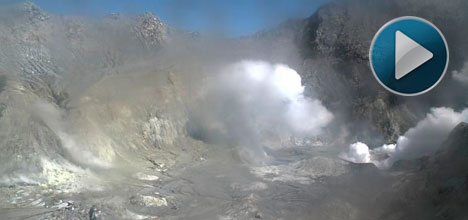
Gill says photos taken from the crater rim camera show the effects of the eruption with one image from the day before the eruption and the other from the morning after.
'Note how the dark grey mud coats the crater floor and crater walls. The eruption was larger than previous events over the last year, in terms of the area impacted by mud, and would have been life threatening if there had been people on the island.”
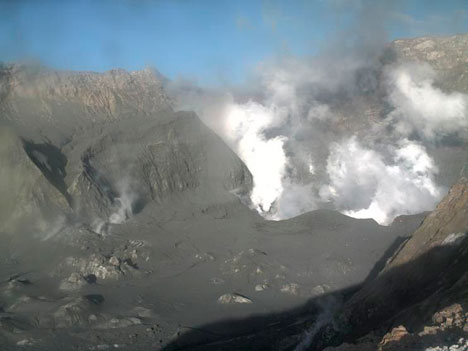
Sunday, October 12 at 6.50am. Next day image showing the effects of the eruption on Saturday evening. Note how the dark grey mud coats the crater floor and crater walls.
Gill says a range of eruptive activity has occurred over the last 15 months, with more frequent events in the last couple of weeks.
She says eruptive activity can be expected with prior warning.
'The larger eruptions can eject mud and rocks and may impact the crater floor area to which visitors have access to.
'GNS Science is continuing to closely monitor the activity at White Island (and other New Zealand volcanoes) through the GeoNet project, and will provide more information as it becomes available.”

0 comments
Leave a Comment
You must be logged in to make a comment.