


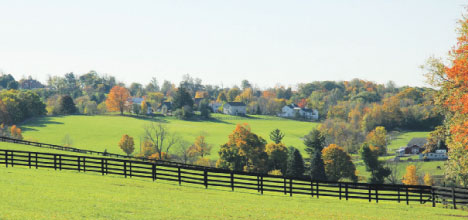
Land subdivided into blocks of less than six hectares is likely to be lost to primary production which is why the Western Bay of Plenty District Council has set that as a minimum size for subdivision, says WBOPDC resource management manager Phillip Martelli.
Council's aim is to protect versatile soils in locations, which are valuable for growing food and fibre, to help meet the needs of a rapidly increasing world population – and the new rules are now in place as part of its district plan, says Phillip.
The change brought little objection during the submission process.
'Council let everybody know what was intended and the result was we got a year's worth of subdivision applications in just three months, as people moved to get in before the plan change. However, many of those who applied for subdivision rights have not gone ahead but instead let their application lapse.”
Phillip suspects this is due to costs of completing subdivisions and reduced demand for lifestyle blocks. 'In the mid-1990s there were around 2000 vacant rural lots in our district, and there is now over 4000, so supply obviously outstrips demand. However, some of the blocks which have been subdivided in the past are probably not highly desirable because of where they are or the shape and contour of the land.”
Council did however, listen to submitters who challenged its original intention to create a minimum lot size for versatile land of 10ha, reducing that to 6ha. To qualify for new titles on 'non-versatile” land a land owner must have a minimum of 80 ha of land so the minimum size for new lots is 40 ha.
Phillip says research council has carried out since the mid-1990s shows on average, rural land subdivided into small lots is lost to primary production, and is used instead for residential or other purposes.
Primary production
The 2005 report titled ‘Agricultural productivity changes due to rural subdivision in the Western Bay of Plenty District', carried out by Sandy Scarrow and Ruth Underwood of Fruition Horticulture (BOP) Limited, shows 27 per cent of land subdivided into titles smaller than 20 hectares is likely to be removed from primary production, with titles under 1.5 hectares particularly unlikely to be used for primary production.
This is at odds with the views Jim Bennett, retired economics and geography teacher from Whakatane, expressed in the August issue of Coast & Country. He believes small rural blocks can be economically productive and even lead to innovative new industries. Income earned off the land should also be taken into account, says Jim.
He credits the willingness in the past of councils to allow 10 acre blocks to be subdivided from larger farms with the growth of kiwifruit, alpaca and deer industries, saying restricting small subdivisions is a backward step. Phillip agrees with Jim that small blocks can be productive, but the Western Bay experience is this happens only in a small number of cases.
Coast & Country columnist Brent Trial has also warned that lifestyle blocks may become a rare commodity in the Waikato and Waipa districts, thanks to new district plans. Those changes are likely to restrict opportunities for farmers, who want to retire locally with less land, or sell some land to provide capital for farm development.
However, Phillip says Western Bay council is confident its minimum 6ha lot size will enable land to be economically viable for primary production; and if people want smaller lots, plenty already exist.
Tighten up
Council attempted to slow down the creation of smaller lots in 2000 with its ‘Fields for the Future' plan but it drew so much opposition, council pulled back. 'In effect people didn't know in advance what was proposed, but this time round council was very open about what its intentions were.
'Council needed to tighten up on subdivision and protect versatile soils, which are the best for producing food and fibre. Land which has been subdivided into smaller lots and has houses built on it is unlikely ever to go back into primary production.”
Council has zoned areas at Minden, Te Puke and Katikati for lifestyle blocks in response to public calls to make small lots of land available, close to schools, shops and amenities.

0 comments
Leave a Comment
You must be logged in to make a comment.